Category: TV Guides

  • OLED vs QLED vs Mini-LED: Which TV Technology Should You Buy in 2026?

    OLED vs QLED vs Mini-LED: Which TV Technology Should You Buy in 2026?

    You’re standing in front of a wall of stunning TVs, and they all look incredible under those bright store lights. But which technology actually delivers the best picture in your living room? The answer depends on how you watch, where you watch, and what you’re willing to spend.

    Key Takeaway

    OLED offers perfect blacks and infinite contrast for dark rooms. QLED delivers superior brightness and vibrant colors for bright spaces. Mini-LED splits the difference with excellent contrast and high brightness at a lower price. Your room lighting and viewing habits determine which technology wins for your setup.

    How Each Technology Actually Works

    OLED panels use organic compounds that emit their own light. Each pixel turns on and off independently. No backlight needed.

    QLED is Samsung’s branding for quantum dot LCD panels. These use a traditional LED backlight with a quantum dot layer that enhances color accuracy and brightness. The backlight stays on, and liquid crystals block or allow light through.

    Mini-LED uses thousands of tiny LEDs as the backlight behind an LCD panel. More dimming zones mean better contrast control than standard LED TVs, but still not pixel-level like OLED.

    The fundamental difference comes down to this: OLED creates light at the pixel level. QLED and Mini-LED block and filter light from behind.

    Picture Quality Breakdown

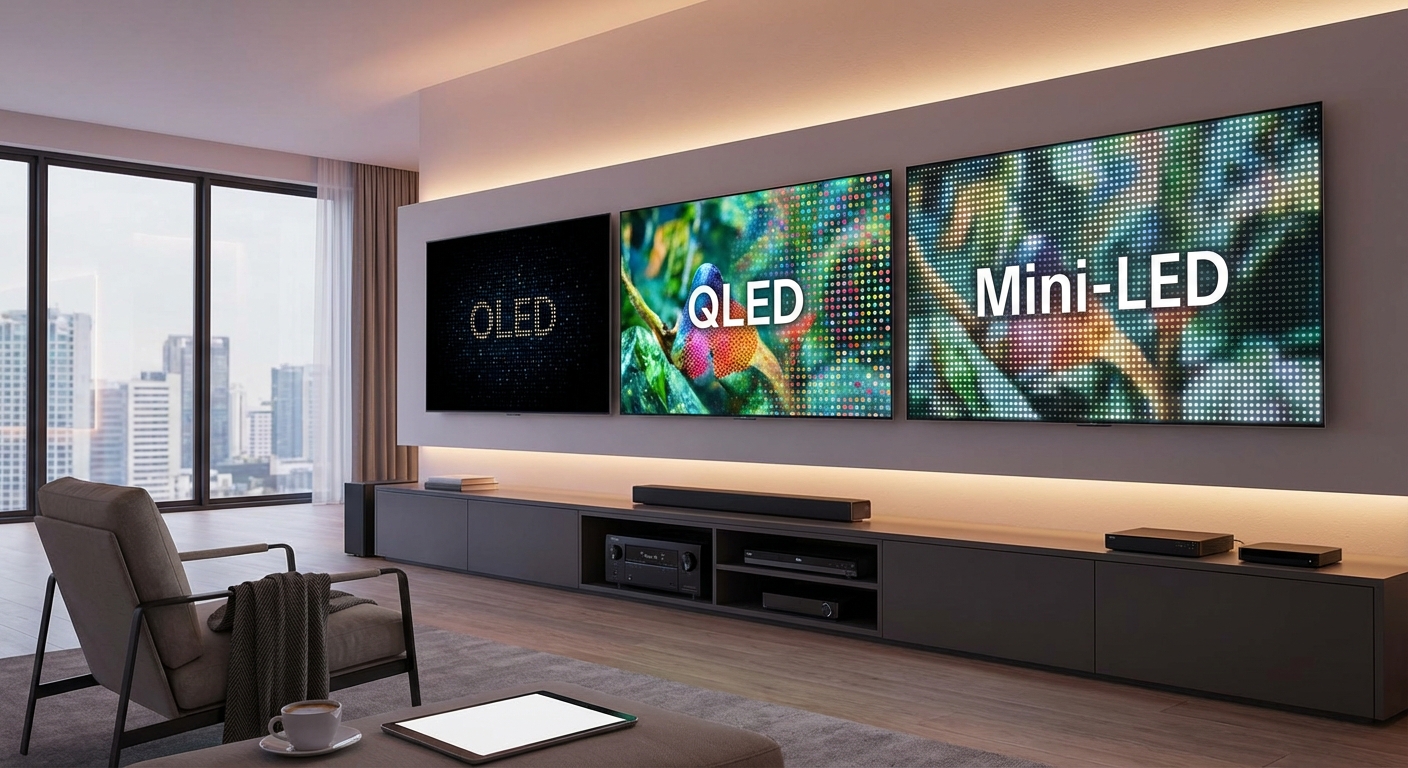
    OLED vs QLED vs Mini-LED: Which TV Technology Should You Buy in 2026? - Illustration 1

    Black Levels and Contrast

    OLED wins here without contest. Turn off a pixel, and you get true black. Zero light emission. This creates infinite contrast ratios because you’re dividing by zero.

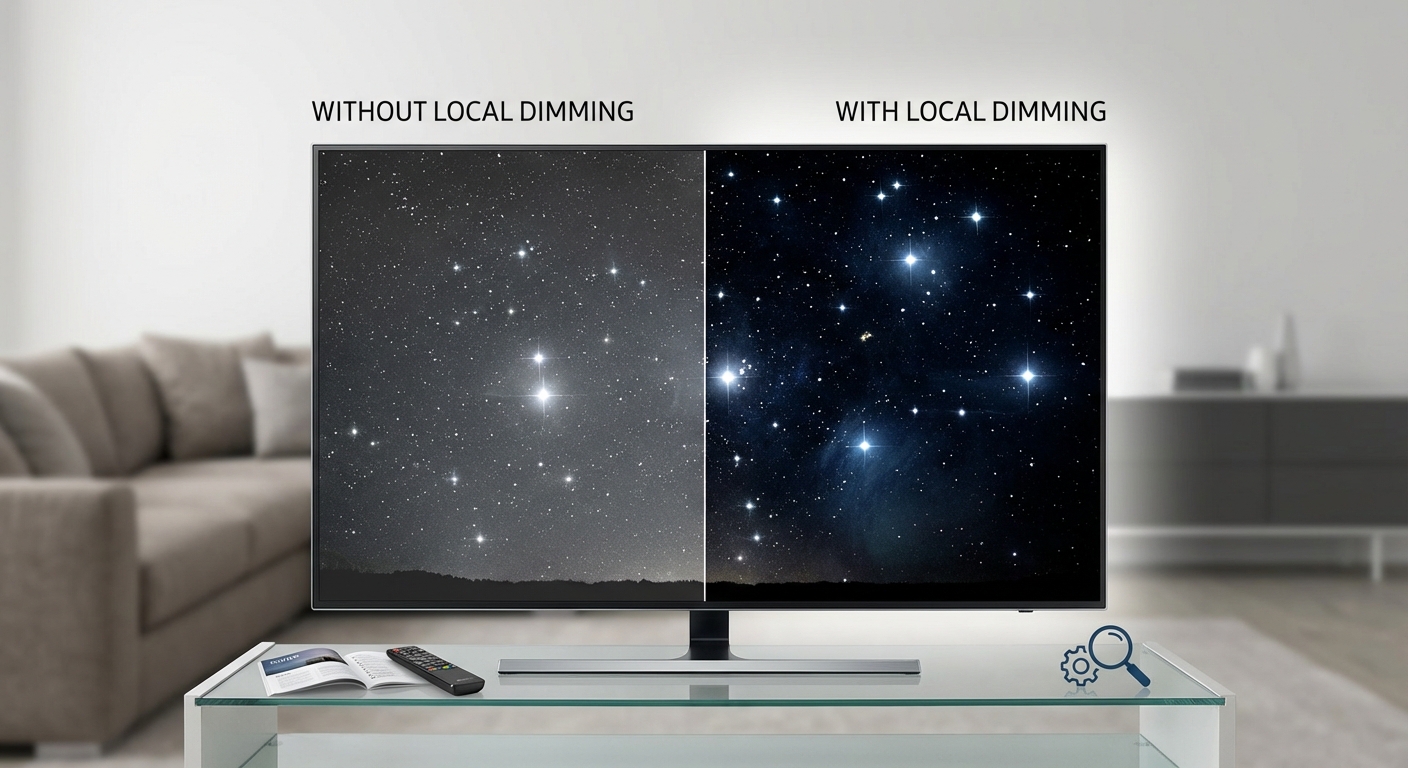
    QLED struggles with blacks because the backlight always glows to some degree. Even with local dimming, you’ll see blooming around bright objects on dark backgrounds. Watch a space movie and notice the halo around stars.

    Mini-LED improves on traditional QLED by using hundreds or thousands of dimming zones instead of dozens. High-end models approach OLED-like blacks, but physics still limits them. Some backlight bleed remains.

    Brightness and HDR

    QLED dominates brightness tests. Premium models hit 2,000 to 3,000 nits peak brightness. Sunlight streaming through your windows? No problem.

    Mini-LED matches QLED brightness while maintaining better contrast. You get bright highlights without sacrificing shadow detail.

    OLED tops out around 800 to 1,000 nits on most models. Newer QD-OLED panels push higher, but still can’t match QLED. For HDR content in bright rooms, this matters.

    If your TV room has large windows and you watch during the day, prioritize brightness over contrast. A dim TV with perfect blacks still looks washed out in sunlight.

    Color Performance

    QLED and Mini-LED with quantum dots produce the widest color gamut. They cover nearly 100% of the DCI-P3 color space that HDR content uses.

    OLED delivers excellent color accuracy but slightly narrower volume because of brightness limitations. Colors look natural and film-like.

    The difference shows most in bright, saturated scenes. Animated films, nature documentaries, and sports broadcasts favor quantum dot technology.

    Real-World Viewing Scenarios

    Your room determines which technology performs best.

    Dark room theater setup: OLED wins. Those perfect blacks create incredible depth and immersion. Movies look exactly as the director intended.

    Bright living room: QLED or Mini-LED. You need that extra brightness to overcome reflections and ambient light. OLED looks gray and washed out.

    Mixed lighting: Mini-LED offers the best compromise. Good blacks when lights are off, enough brightness when they’re on.

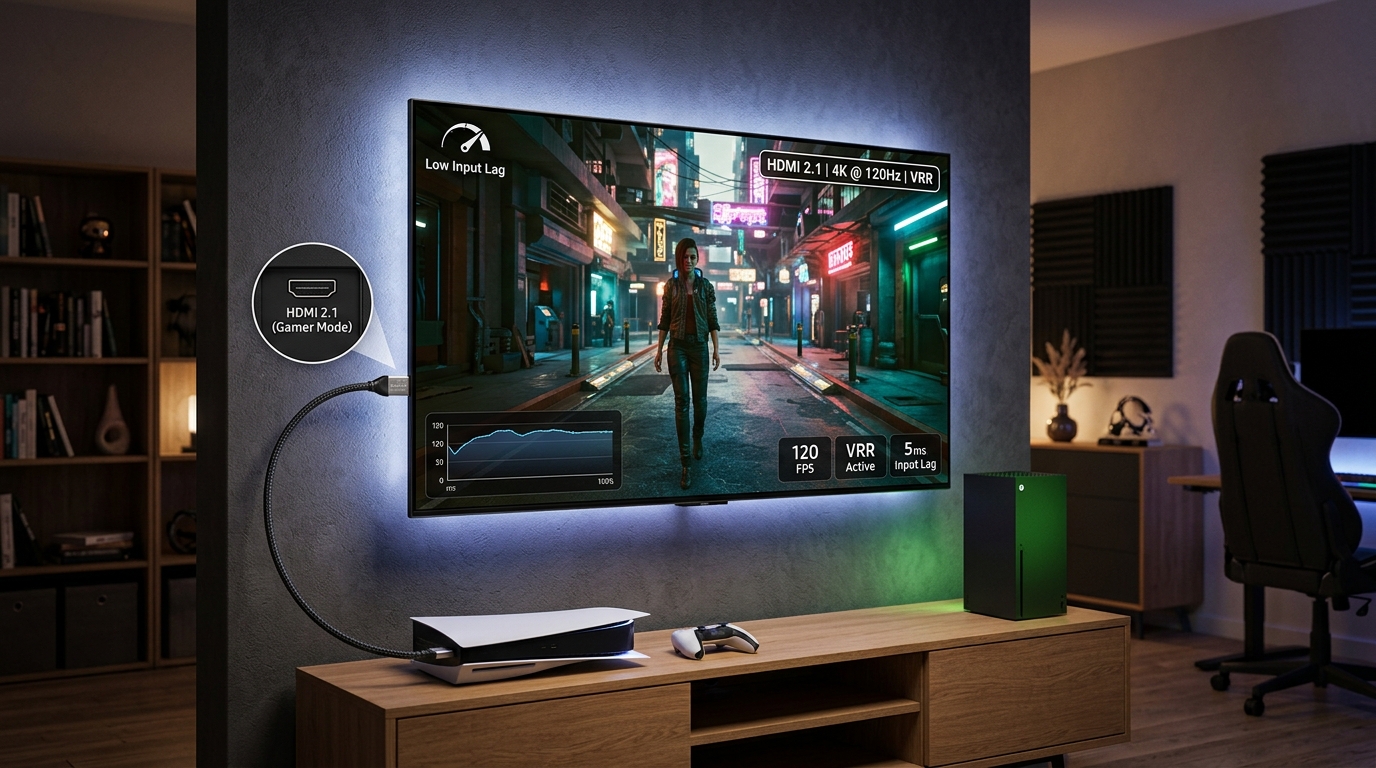
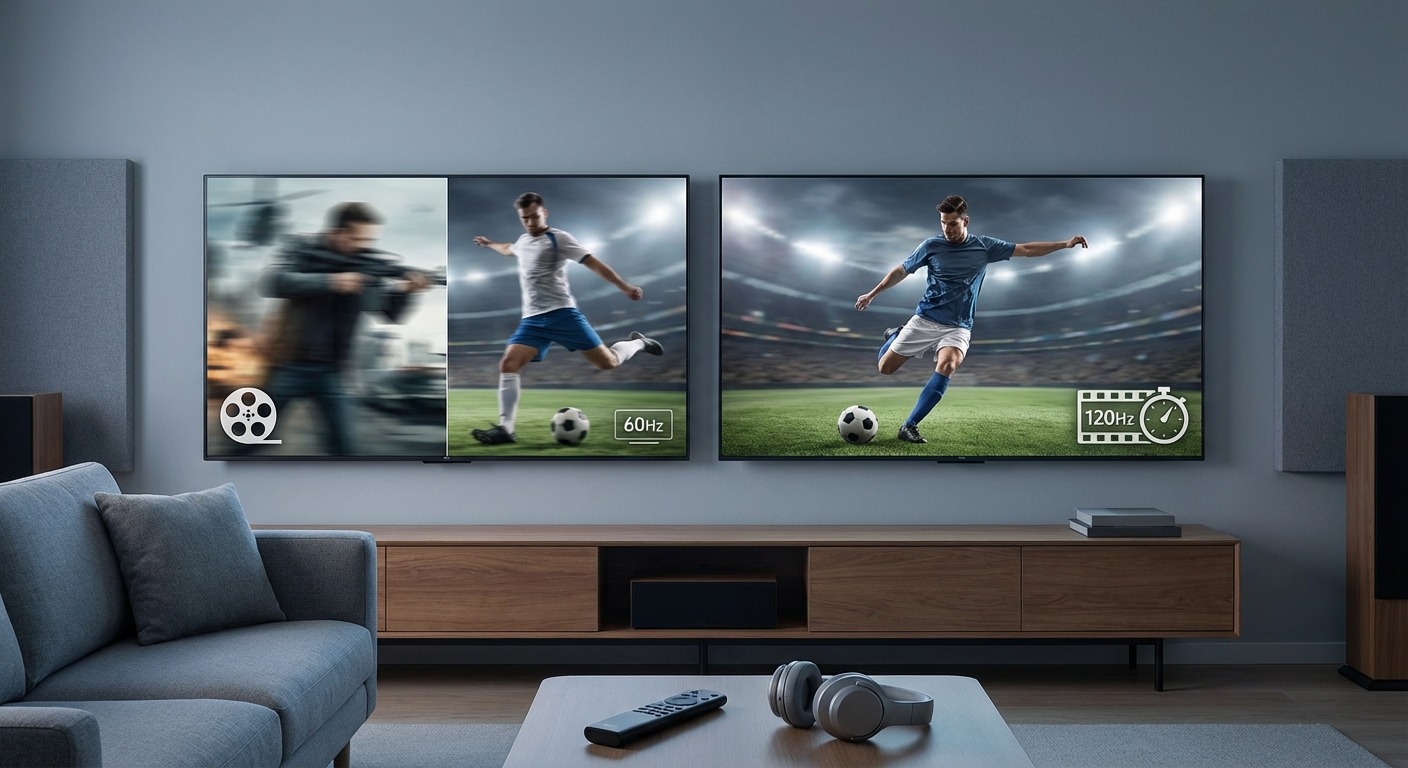
    Gaming: OLED provides instant response times and supports 120Hz at 4K. Risk of burn-in exists if you play the same game for thousands of hours. Mini-LED avoids burn-in while delivering excellent gaming performance.

    Lifespan and Burn-In Concerns

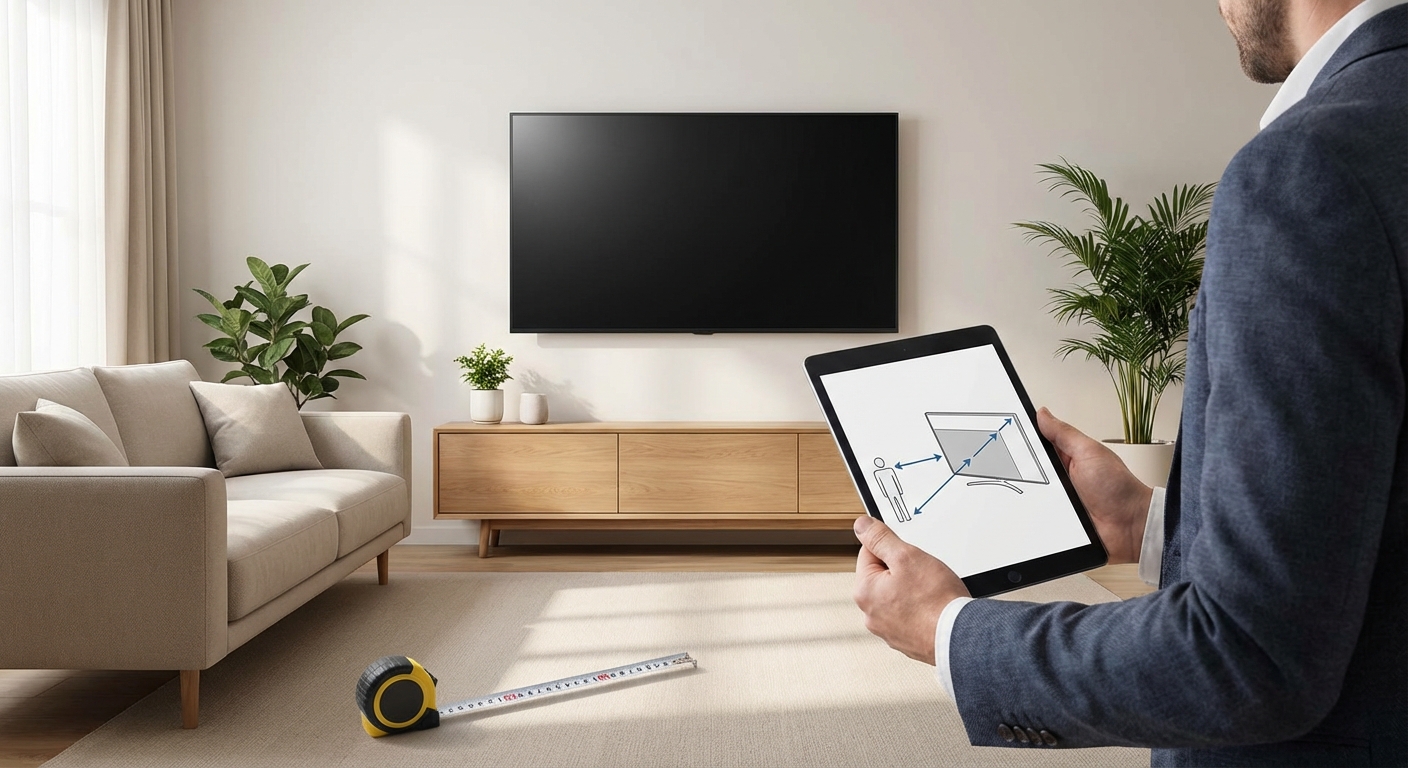
    OLED vs QLED vs Mini-LED: Which TV Technology Should You Buy in 2026? - Illustration 2

    OLED panels degrade over time. The organic compounds dim with use. Expect 50,000 to 100,000 hours before noticeable degradation.

    Burn-in remains a real concern. Static elements like news tickers, channel logos, or game HUDs can permanently ghost into the screen. Modern OLEDs include pixel shifting and screen savers, but heavy static content still poses risk.

    QLED and Mini-LED use inorganic materials. No burn-in risk. Lifespan typically exceeds OLED by years.

    If you watch varied content, OLED burn-in risk stays low. If you leave CNBC on for eight hours daily, choose QLED or Mini-LED.

    Price Comparison Across Sizes

    Here’s what you’ll pay for premium models in each category:

    Screen Size OLED Price QLED Price Mini-LED Price
    55-inch $1,200 – $1,800 $800 – $1,400 $700 – $1,200
    65-inch $1,600 – $2,500 $1,200 – $2,000 $1,000 – $1,600
    77-inch $2,800 – $4,500 $2,200 – $3,500 $1,800 – $2,800
    83-inch+ $5,000 – $8,000 $3,500 – $6,000 $2,500 – $4,500

    Mini-LED typically costs 20 to 30% less than comparable OLED. QLED pricing overlaps both depending on brand and features.

    Budget matters, but don’t cheap out on size. A 65-inch Mini-LED beats a 55-inch OLED for most living rooms.

    Making Your Decision in Three Steps

    Follow this process to match technology to your needs:

    1. Assess your room lighting. Take photos of your TV location at different times of day. Lots of windows and bright ambient light? QLED or Mini-LED. Dedicated theater room or basement? OLED shines.

    2. Identify your content mix. Mostly movies and prestige TV shows? OLED’s cinematic quality pays off. Sports, news, and daytime TV? QLED’s brightness and color pop matter more. Gaming with static HUDs? Mini-LED avoids burn-in.

    3. Set your budget and size target. Determine the largest screen that fits your space and budget. Compare models in that size across all three technologies. Sometimes a larger Mini-LED beats a smaller OLED for total viewing experience.

    Common Mistakes to Avoid

    People make these errors when comparing TV technologies:

    • Judging picture quality in store lighting. Best Buy’s fluorescent lights favor QLED. Your dimly lit living room tells a different story.

    • Ignoring viewing distance. Sitting eight feet from a 55-inch TV wastes money on premium technology. You can’t see the difference. Size up or save money.

    • Obsessing over specs instead of content. A TV that measures perfectly but shows mostly compressed streaming content delivers mediocre results. Match the TV to what you actually watch.

    • Forgetting about sound. All flat panels sound terrible. Budget for a soundbar or speakers regardless of display technology.

    Feature Parity Across Technologies

    Modern TVs share most smart features regardless of panel type:

    • 4K resolution standard across all three
    • HDMI 2.1 for gaming on premium models
    • Variable refresh rate and auto low latency mode
    • Dolby Vision and HDR10 support
    • Built-in streaming apps
    • Voice control integration

    Panel technology affects picture quality, not features. Don’t let marketing confuse you.

    What About QD-OLED?

    Samsung and Sony now offer QD-OLED panels combining quantum dots with OLED’s self-emissive pixels. You get OLED’s perfect blacks plus wider color and higher brightness.

    These panels cost more than standard OLED. They still face burn-in risk. Consider them if you want the absolute best picture quality and have the budget.

    For most buyers, the premium doesn’t justify the cost. Standard OLED or high-end Mini-LED delivers 95% of the experience.

    Brand Differences Within Each Technology

    Not all OLEDs perform identically. LG makes most OLED panels, but Sony and LG process the image differently. Sony typically delivers better motion handling and upscaling.

    Samsung dominates QLED with its proprietary quantum dot filters. TCL and Hisense offer budget QLED options with fewer dimming zones and lower brightness.

    Mini-LED varies wildly by zone count. Premium models pack 1,000+ zones. Budget versions use 200 or fewer. More zones mean better contrast control.

    Research specific models, not just technology categories.

    Future-Proofing Your Purchase

    TV technology evolves slowly. A quality set lasts seven to ten years.

    OLED continues improving brightness and reducing burn-in risk. QLED pushes higher brightness and more dimming zones. Mini-LED zone counts keep climbing.

    MicroLED promises OLED-like performance without burn-in, but costs remain astronomical. Don’t wait for it.

    Buy the best TV for your current needs and room. Technology will improve, but your purchase will remain excellent for years.

    Matching Technology to Room and Habits

    Here’s the simple decision tree:

    • Dedicated home theater, controlled lighting, movie focused: OLED
    • Bright living room, daytime viewing, sports and news: QLED
    • Mixed use, variable lighting, gaming and movies: Mini-LED
    • Unlimited budget, want the best: QD-OLED

    Your viewing environment matters more than spec sheets. A mismatched TV disappoints regardless of technology.

    The Right Display for Your Space

    No universal best choice exists. OLED, QLED, and Mini-LED each excel in specific situations.

    Visit a showroom and compare models in person, but remember that store lighting skews results. Read professional reviews that test in controlled environments. Check return policies so you can test at home.

    Trust your eyes in your actual viewing space. The TV that looks best in your room with your content wins, regardless of what technology powers it.

    Choose based on where and how you watch. The right match transforms your viewing experience. The wrong one leaves you wondering why everyone raves about picture quality you can’t see.

  • OLED vs QLED vs Mini-LED: Which TV Technology Should You Buy in 2026?

    OLED vs QLED vs Mini-LED: Which TV Technology Should You Buy in 2026?

    You’re standing in front of a wall of stunning TVs, and they all look incredible under those bright store lights. But which technology actually delivers the best picture in your living room? The answer depends on how you watch, where you watch, and what you’re willing to spend.

    Key Takeaway

    OLED offers perfect blacks and infinite contrast for dark rooms. QLED delivers superior brightness and vibrant colors for bright spaces. Mini-LED splits the difference with excellent contrast and high brightness at a lower price. Your room lighting and viewing habits determine which technology wins for your setup.

    How Each Technology Actually Works

    OLED panels use organic compounds that emit their own light. Each pixel turns on and off independently. No backlight needed.

    QLED is Samsung’s branding for quantum dot LCD panels. These use a traditional LED backlight with a quantum dot layer that enhances color accuracy and brightness. The backlight stays on, and liquid crystals block or allow light through.

    Mini-LED uses thousands of tiny LEDs as the backlight behind an LCD panel. More dimming zones mean better contrast control than standard LED TVs, but still not pixel-level like OLED.

    The fundamental difference comes down to this: OLED creates light at the pixel level. QLED and Mini-LED block and filter light from behind.

    Picture Quality Breakdown

    OLED vs QLED vs Mini-LED: Which TV Technology Should You Buy in 2026? - Illustration 1

    Black Levels and Contrast

    OLED wins here without contest. Turn off a pixel, and you get true black. Zero light emission. This creates infinite contrast ratios because you’re dividing by zero.

    QLED struggles with blacks because the backlight always glows to some degree. Even with local dimming, you’ll see blooming around bright objects on dark backgrounds. Watch a space movie and notice the halo around stars.

    Mini-LED improves on traditional QLED by using hundreds or thousands of dimming zones instead of dozens. High-end models approach OLED-like blacks, but physics still limits them. Some backlight bleed remains.

    Brightness and HDR

    QLED dominates brightness tests. Premium models hit 2,000 to 3,000 nits peak brightness. Sunlight streaming through your windows? No problem.

    Mini-LED matches QLED brightness while maintaining better contrast. You get bright highlights without sacrificing shadow detail.

    OLED tops out around 800 to 1,000 nits on most models. Newer QD-OLED panels push higher, but still can’t match QLED. For HDR content in bright rooms, this matters.

    If your TV room has large windows and you watch during the day, prioritize brightness over contrast. A dim TV with perfect blacks still looks washed out in sunlight.

    Color Performance

    QLED and Mini-LED with quantum dots produce the widest color gamut. They cover nearly 100% of the DCI-P3 color space that HDR content uses.

    OLED delivers excellent color accuracy but slightly narrower volume because of brightness limitations. Colors look natural and film-like.

    The difference shows most in bright, saturated scenes. Animated films, nature documentaries, and sports broadcasts favor quantum dot technology.

    Real-World Viewing Scenarios

    Your room determines which technology performs best.

    Dark room theater setup: OLED wins. Those perfect blacks create incredible depth and immersion. Movies look exactly as the director intended.

    Bright living room: QLED or Mini-LED. You need that extra brightness to overcome reflections and ambient light. OLED looks gray and washed out.

    Mixed lighting: Mini-LED offers the best compromise. Good blacks when lights are off, enough brightness when they’re on.

    Gaming: OLED provides instant response times and supports 120Hz at 4K. Risk of burn-in exists if you play the same game for thousands of hours. Mini-LED avoids burn-in while delivering excellent gaming performance.

    Lifespan and Burn-In Concerns

    OLED vs QLED vs Mini-LED: Which TV Technology Should You Buy in 2026? - Illustration 2

    OLED panels degrade over time. The organic compounds dim with use. Expect 50,000 to 100,000 hours before noticeable degradation.

    Burn-in remains a real concern. Static elements like news tickers, channel logos, or game HUDs can permanently ghost into the screen. Modern OLEDs include pixel shifting and screen savers, but heavy static content still poses risk.

    QLED and Mini-LED use inorganic materials. No burn-in risk. Lifespan typically exceeds OLED by years.

    If you watch varied content, OLED burn-in risk stays low. If you leave CNBC on for eight hours daily, choose QLED or Mini-LED.

    Price Comparison Across Sizes

    Here’s what you’ll pay for premium models in each category:

    Screen Size OLED Price QLED Price Mini-LED Price
    55-inch $1,200 – $1,800 $800 – $1,400 $700 – $1,200
    65-inch $1,600 – $2,500 $1,200 – $2,000 $1,000 – $1,600
    77-inch $2,800 – $4,500 $2,200 – $3,500 $1,800 – $2,800
    83-inch+ $5,000 – $8,000 $3,500 – $6,000 $2,500 – $4,500

    Mini-LED typically costs 20 to 30% less than comparable OLED. QLED pricing overlaps both depending on brand and features.

    Budget matters, but don’t cheap out on size. A 65-inch Mini-LED beats a 55-inch OLED for most living rooms.

    Making Your Decision in Three Steps

    Follow this process to match technology to your needs:

    1. Assess your room lighting. Take photos of your TV location at different times of day. Lots of windows and bright ambient light? QLED or Mini-LED. Dedicated theater room or basement? OLED shines.

    2. Identify your content mix. Mostly movies and prestige TV shows? OLED’s cinematic quality pays off. Sports, news, and daytime TV? QLED’s brightness and color pop matter more. Gaming with static HUDs? Mini-LED avoids burn-in.

    3. Set your budget and size target. Determine the largest screen that fits your space and budget. Compare models in that size across all three technologies. Sometimes a larger Mini-LED beats a smaller OLED for total viewing experience.

    Common Mistakes to Avoid

    People make these errors when comparing TV technologies:

    • Judging picture quality in store lighting. Best Buy’s fluorescent lights favor QLED. Your dimly lit living room tells a different story.

    • Ignoring viewing distance. Sitting eight feet from a 55-inch TV wastes money on premium technology. You can’t see the difference. Size up or save money.

    • Obsessing over specs instead of content. A TV that measures perfectly but shows mostly compressed streaming content delivers mediocre results. Match the TV to what you actually watch.

    • Forgetting about sound. All flat panels sound terrible. Budget for a soundbar or speakers regardless of display technology.

    Feature Parity Across Technologies

    Modern TVs share most smart features regardless of panel type:

    • 4K resolution standard across all three
    • HDMI 2.1 for gaming on premium models
    • Variable refresh rate and auto low latency mode
    • Dolby Vision and HDR10 support
    • Built-in streaming apps
    • Voice control integration

    Panel technology affects picture quality, not features. Don’t let marketing confuse you.

    What About QD-OLED?

    Samsung and Sony now offer QD-OLED panels combining quantum dots with OLED’s self-emissive pixels. You get OLED’s perfect blacks plus wider color and higher brightness.

    These panels cost more than standard OLED. They still face burn-in risk. Consider them if you want the absolute best picture quality and have the budget.

    For most buyers, the premium doesn’t justify the cost. Standard OLED or high-end Mini-LED delivers 95% of the experience.

    Brand Differences Within Each Technology

    Not all OLEDs perform identically. LG makes most OLED panels, but Sony and LG process the image differently. Sony typically delivers better motion handling and upscaling.

    Samsung dominates QLED with its proprietary quantum dot filters. TCL and Hisense offer budget QLED options with fewer dimming zones and lower brightness.

    Mini-LED varies wildly by zone count. Premium models pack 1,000+ zones. Budget versions use 200 or fewer. More zones mean better contrast control.

    Research specific models, not just technology categories.

    Future-Proofing Your Purchase

    TV technology evolves slowly. A quality set lasts seven to ten years.

    OLED continues improving brightness and reducing burn-in risk. QLED pushes higher brightness and more dimming zones. Mini-LED zone counts keep climbing.

    MicroLED promises OLED-like performance without burn-in, but costs remain astronomical. Don’t wait for it.

    Buy the best TV for your current needs and room. Technology will improve, but your purchase will remain excellent for years.

    Matching Technology to Room and Habits

    Here’s the simple decision tree:

    • Dedicated home theater, controlled lighting, movie focused: OLED
    • Bright living room, daytime viewing, sports and news: QLED
    • Mixed use, variable lighting, gaming and movies: Mini-LED
    • Unlimited budget, want the best: QD-OLED

    Your viewing environment matters more than spec sheets. A mismatched TV disappoints regardless of technology.

    The Right Display for Your Space

    No universal best choice exists. OLED, QLED, and Mini-LED each excel in specific situations.

    Visit a showroom and compare models in person, but remember that store lighting skews results. Read professional reviews that test in controlled environments. Check return policies so you can test at home.

    Trust your eyes in your actual viewing space. The TV that looks best in your room with your content wins, regardless of what technology powers it.

    Choose based on where and how you watch. The right match transforms your viewing experience. The wrong one leaves you wondering why everyone raves about picture quality you can’t see.

  • How to Choose the Right TV Size for Your Room Distance

    How to Choose the Right TV Size for Your Room Distance

    You just measured your living room wall and now you’re staring at a sea of TV sizes online, wondering if 65 inches is too big or if 55 inches will leave you squinting at subtitles. Getting the screen size wrong means either neck strain from sitting too close or missing details because you’re too far away.

    Key Takeaway

    The ideal TV size depends on your viewing distance. For 4K TVs, divide your seating distance in inches by 1.5 to get the recommended screen size. A person sitting 8 feet away should consider a 65-inch screen, while 10 feet works best with 75 to 80 inches. Room layout, resolution, and personal preference also play important roles in your final decision.

    Understanding the Viewing Distance Formula

    The relationship between screen size and viewing distance changed dramatically when 4K became standard. Older rules told you to sit far back to avoid seeing pixels. Modern 4K displays pack so many pixels that you can sit much closer without any quality loss.

    Here’s the math that actually works. Take your viewing distance in inches and divide by 1.5. That gives you the minimum comfortable screen size.

    Sitting 96 inches away (8 feet)? That’s 96 ÷ 1.5 = 64 inches. A 65-inch TV fits perfectly.

    At 120 inches (10 feet), you get 120 ÷ 1.5 = 80 inches. A 75 or 77-inch screen works well here.

    This formula assumes you want an immersive experience where the screen fills your field of view without requiring head movement. Some people prefer a less immersive setup. That’s fine. Just know this gives you the starting point.

    Screen Size Chart by Distance

    How to Choose the Right TV Size for Your Room Distance - Illustration 1

    Here’s a reference table that matches common viewing distances to appropriate TV sizes:

    Viewing Distance Minimum Size (4K) Ideal Range Maximum Comfortable
    5 feet 40 inches 43-50 inches 55 inches
    6 feet 48 inches 50-55 inches 60 inches
    7 feet 55 inches 55-65 inches 70 inches
    8 feet 64 inches 65-70 inches 75 inches
    9 feet 72 inches 75-77 inches 85 inches
    10 feet 80 inches 75-85 inches 90 inches
    12 feet 96 inches 85-98 inches 100+ inches

    These numbers assume 4K resolution. If you’re looking at a 1080p TV (which you shouldn’t be in 2024), add about 30% to these distances.

    Measuring Your Room Properly

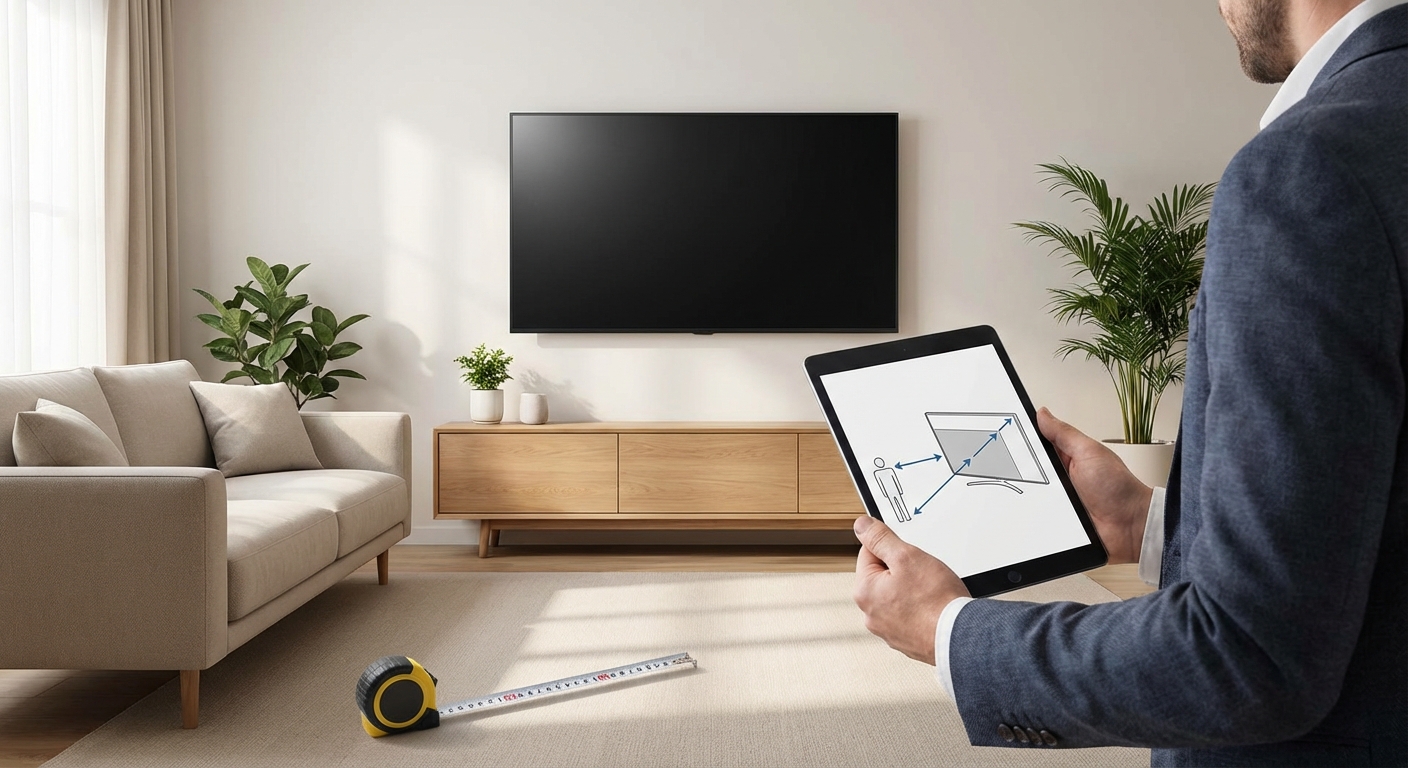
    Getting accurate measurements prevents expensive mistakes. Here’s how to measure correctly:

    1. Find your main seating position where you’ll watch most content.
    2. Measure from that spot to the wall where the TV will mount or sit.
    3. Account for any TV stand depth or wall mount offset (usually 2 to 4 inches).
    4. Subtract that offset from your total distance.
    5. Write down the final number in both feet and inches.

    Don’t measure from random spots around the room. Use the actual couch or chair position where you plant yourself for movie night.

    If you have multiple seating areas at different distances, optimize for the primary viewing spot. Secondary seats will still get a decent experience even if they’re not at the perfect distance.

    Room Layout Factors That Matter

    How to Choose the Right TV Size for Your Room Distance - Illustration 2

    Your room’s physical setup affects which TV size works best. Wall width limits how big you can go. A 75-inch TV measures about 66 inches wide. Add another 6 to 12 inches for a stand or clearance on each side.

    Ceiling height plays a role too. Mounting a massive screen in a room with 7-foot ceilings creates an overwhelming, unbalanced look. Higher ceilings handle larger screens better.

    Window placement affects viewing during daytime. Glare from windows behind or beside the screen makes any size harder to watch. Consider room lighting before committing to a size.

    Furniture arrangement matters more than people think. An open floor plan where you might rearrange seating calls for a more conservative size. A dedicated media room with fixed seating lets you maximize screen size.

    The biggest mistake people make is buying too small, not too big. After a week with a properly sized TV, your brain adjusts and the screen feels normal. But a too-small screen will bother you every single viewing session.

    Field of View and Immersion

    Theater designers use a 40-degree field of view as the sweet spot for immersive content. This means the screen edges should occupy about 40 degrees of your horizontal vision when looking straight ahead.

    That viewing angle is what the 1.5 multiplier achieves. Sitting closer increases immersion but requires more head movement during action scenes. Sitting farther back reduces immersion but feels more relaxed for casual viewing.

    Sports fans often prefer sitting a bit farther back than the formula suggests. Following a basketball or soccer ball across the screen is easier when you don’t need to turn your head.

    Movie enthusiasts typically want maximum immersion and prefer sitting at or slightly closer than the calculated distance.

    Resolution Makes a Difference

    4K resolution changed everything about TV sizing. The pixel density is high enough that you won’t see individual pixels even sitting close. This is why modern recommendations suggest much larger screens than old guides from the 1080p era.

    With 8K TVs entering the market, you could theoretically sit even closer. But 8K content remains rare and expensive. Stick with 4K sizing recommendations for now.

    If you’re considering a 1080p TV for a secondary room, use the old 2.5 multiplier instead. That means sitting 8 feet from a 1080p screen requires only a 38-inch TV for comfortable viewing.

    Common Sizing Mistakes to Avoid

    Here are the traps people fall into:

    • Showroom misjudgment: TVs look smaller in big box stores with high ceilings and bright lights
    • Furniture first: Buying a TV stand before choosing the TV locks you into a size range
    • Ignoring upgrades: Getting a smaller TV now means replacing it sooner when you want more immersion
    • Bedroom assumptions: Bedrooms often have closer viewing distances than you think
    • Corner placement: Angled viewing from a corner requires sitting farther back for the same comfort
    Mistake Why It Happens Better Approach
    Buying too small Worried about overwhelming the room Trust the distance formula
    Ignoring wall width Focused only on screen size Measure total TV width with stand
    Forgetting viewing angle Only considering distance Check if off-center seats have clear views
    Skipping the mockup Hard to visualize sizes Tape the dimensions on the wall
    Following old rules Using outdated 1080p guidelines Use modern 4K formulas

    Testing Before You Buy

    Create a mockup before purchasing. Cut cardboard to match the outer dimensions of your target TV size. Tape it to the wall at the mounting height you plan to use.

    Sit in your normal viewing spot for 20 minutes. Does it feel too big? Too small? Can you see the entire screen without moving your head uncomfortably?

    Have someone else sit there while you stand back and look at the room balance. Does the size fit the space aesthetically?

    This simple test catches problems that measurements alone miss. A 75-inch screen might measure perfectly but feel wrong in a room with specific proportions or furniture.

    Special Situations and Adjustments

    Some rooms need custom thinking:

    Open floor plans: Go slightly smaller than the formula suggests since the lack of walls makes screens feel larger.

    Dedicated theater rooms: You can push 10 to 15% larger than standard recommendations since the dark walls and controlled lighting enhance immersion.

    Bright rooms with lots of windows: Size matters less than brightness and anti-glare features. Focus on those specs first.

    Multi-purpose rooms: If the TV room doubles as a play area or office, consider how the screen size affects other activities.

    Mounting height: Screens mounted above a fireplace or high on a wall should be slightly smaller since the viewing angle already creates distance.

    Budget and Size Trade-offs

    Bigger isn’t always better when budget enters the picture. A 65-inch TV from a quality brand with good HDR and processing often delivers a better experience than a cheap 75-inch model with poor picture quality.

    Price per inch drops as you go bigger, but only within the same product line. A 65-inch mid-range TV typically costs less per inch than a 55-inch model from the same series.

    Consider this: would you rather have a 75-inch screen with mediocre contrast and color, or a 65-inch screen with excellent picture quality? The smaller screen with better performance usually wins.

    Set your budget first, then find the largest high-quality TV that fits within it and matches your viewing distance.

    Making Your Final Decision

    You’ve measured your room, calculated the ideal size, and checked your budget. Now it’s time to choose.

    Start with the size that matches your viewing distance using the formula. If that lands between two common sizes (like needing 70 inches when stores offer 65 or 75), go with the larger option if your budget allows.

    Check the total dimensions including the bezel and stand. Make sure it physically fits your space with a few inches of clearance.

    Consider your content preferences. Mostly watching movies and gaming? Lean toward the larger size. Mostly news and casual TV? The smaller end of the range works fine.

    Think about the next five years. TVs last a long time. Will you wish you had gone bigger after living with it for a year?

    Getting the Size Right From the Start

    Choosing the right TV size for your room distance sets the foundation for years of comfortable viewing. The formula is simple: divide your seating distance in inches by 1.5 for 4K TVs. Measure carefully, test with a mockup, and trust that a properly sized screen will feel natural after a few days.

    Your room layout, budget, and viewing preferences all factor into the final decision, but distance remains the primary consideration. A TV that matches your space correctly disappears into the experience instead of constantly reminding you it’s too big or too small.