
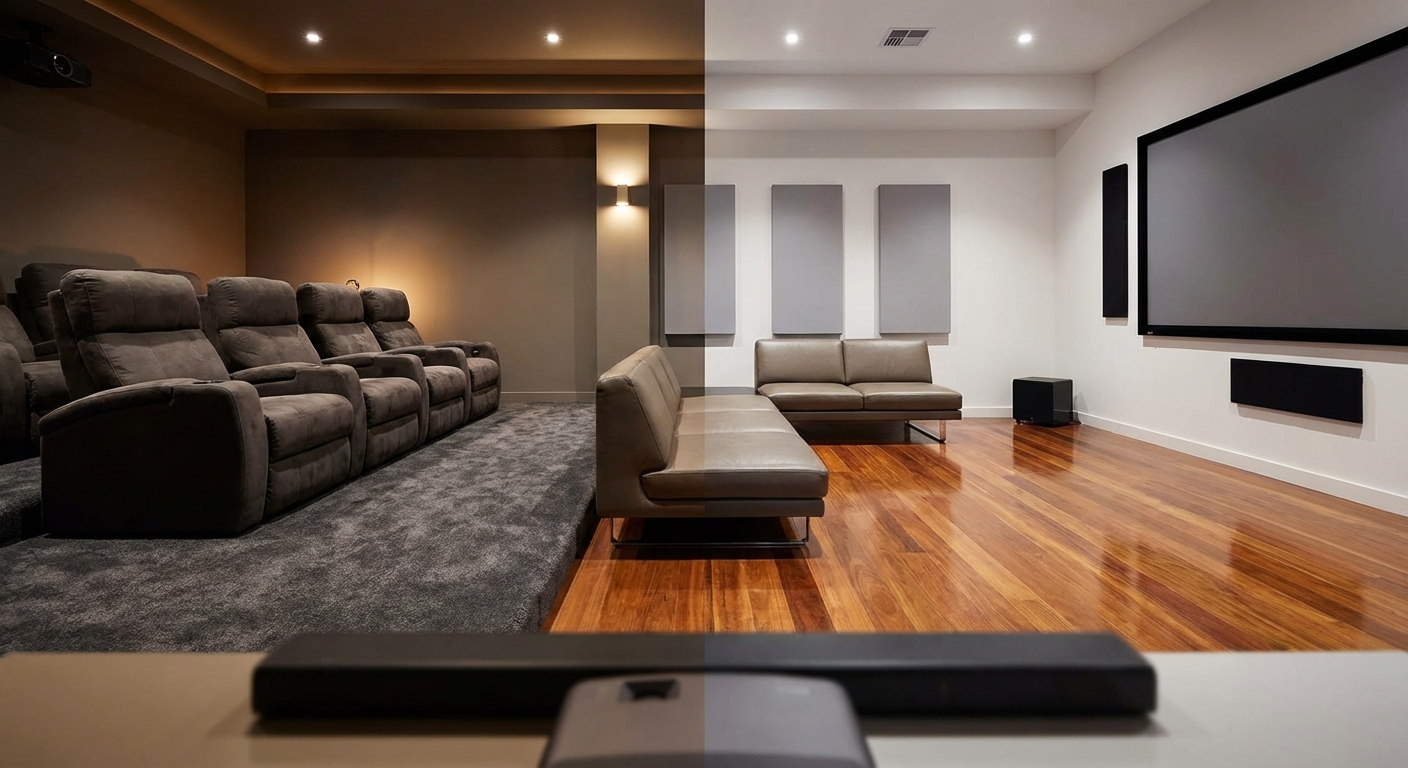
You’re building a dedicated home theater and staring at the subfloor. The walls are framed. The projector is ordered. But you’re stuck on one question: carpet or hardwood?
This isn’t just about looks. Your floor choice affects how movies sound, how much your neighbors hear, and whether you’ll be comfortable during a three-hour director’s cut.
Carpet wins for dedicated home theaters due to superior sound absorption, reduced echo, and better noise isolation. Hardwood creates cleaner aesthetics and easier maintenance but requires extensive acoustic treatment with rugs, panels, and bass traps to control reflections. For serious home theater performance, thick carpet with quality padding delivers better results at lower cost than treating hardwood floors.
How each floor type affects your audio
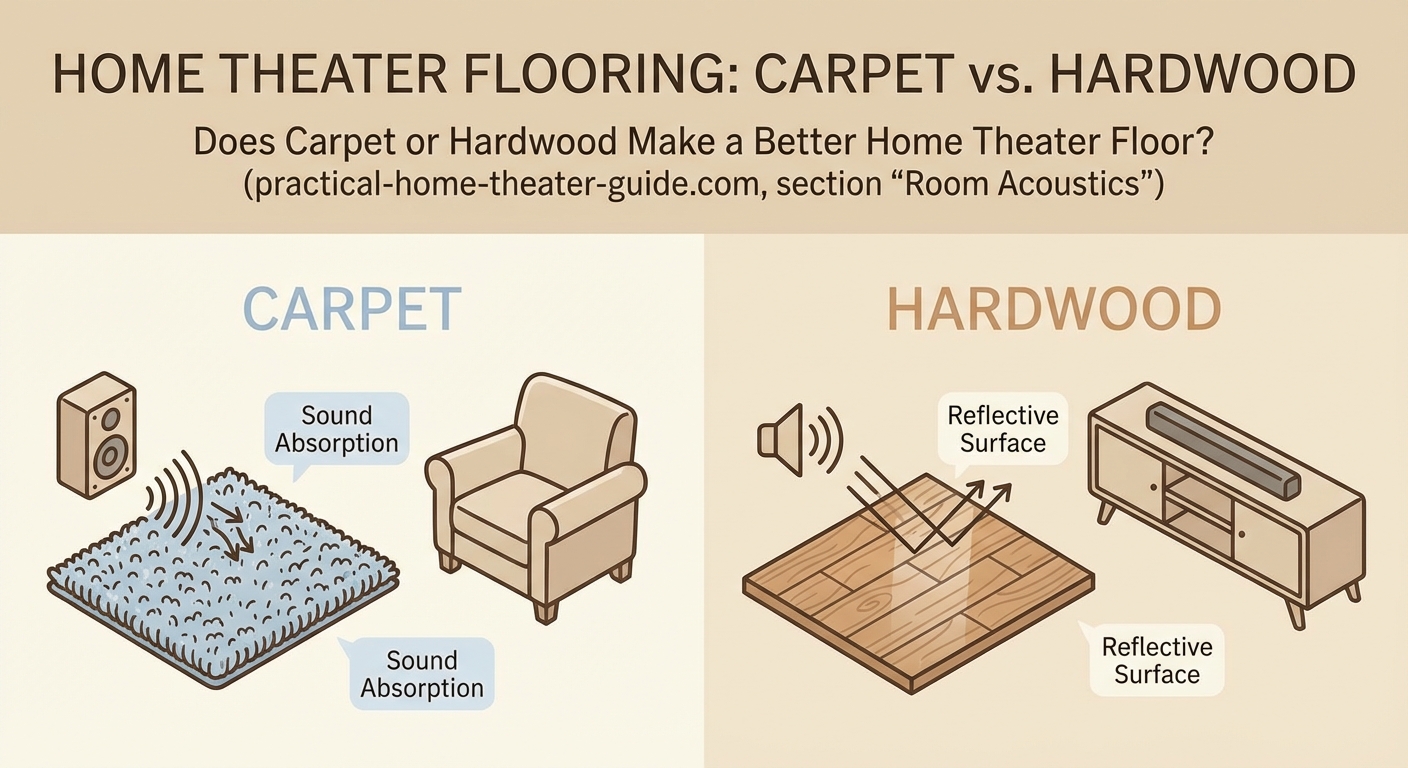
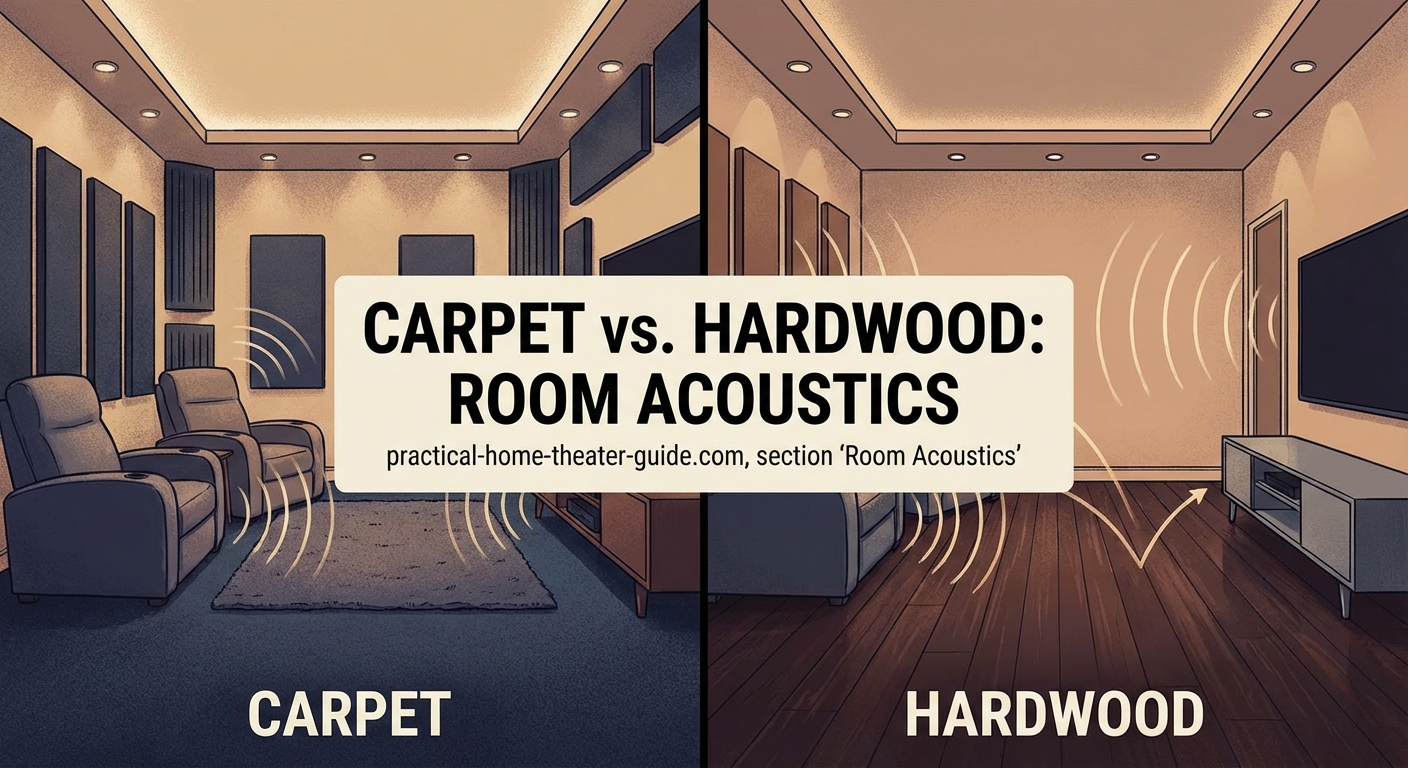
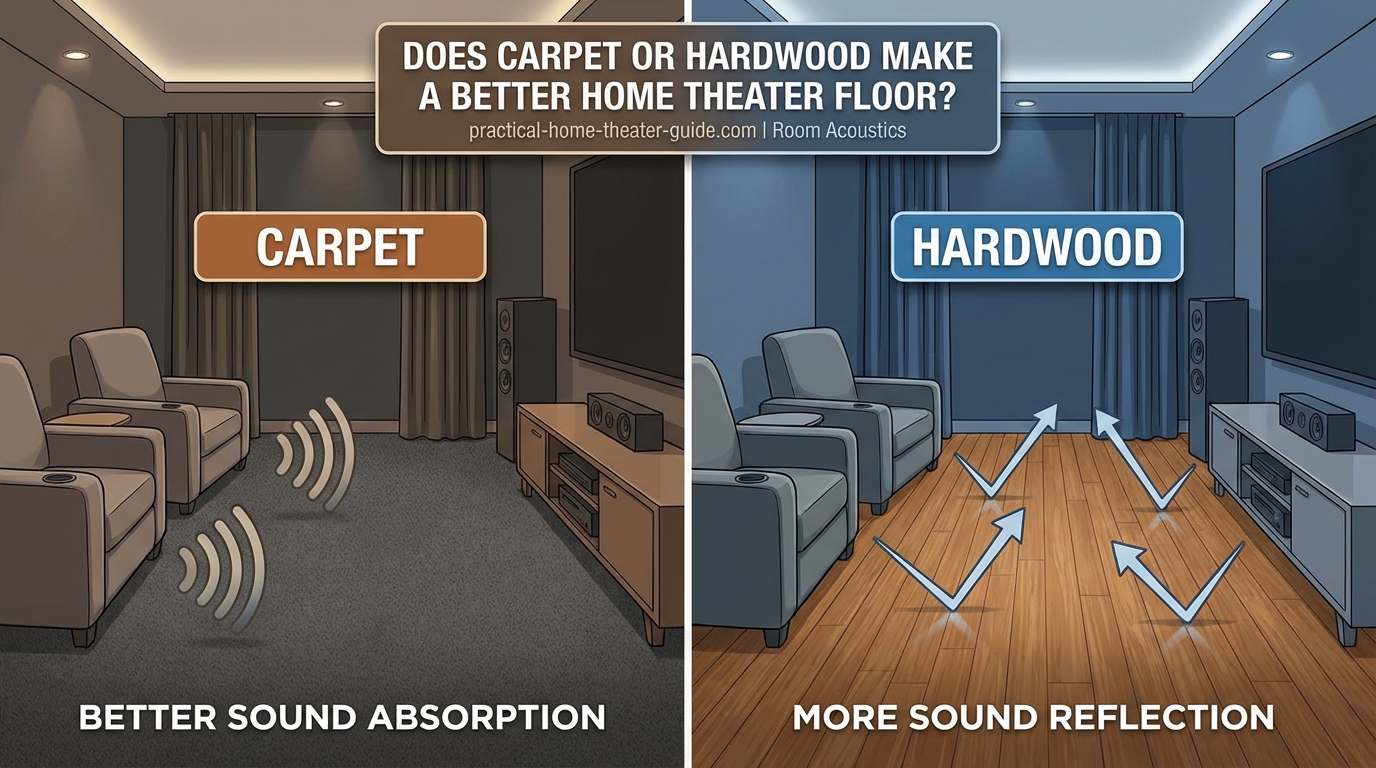
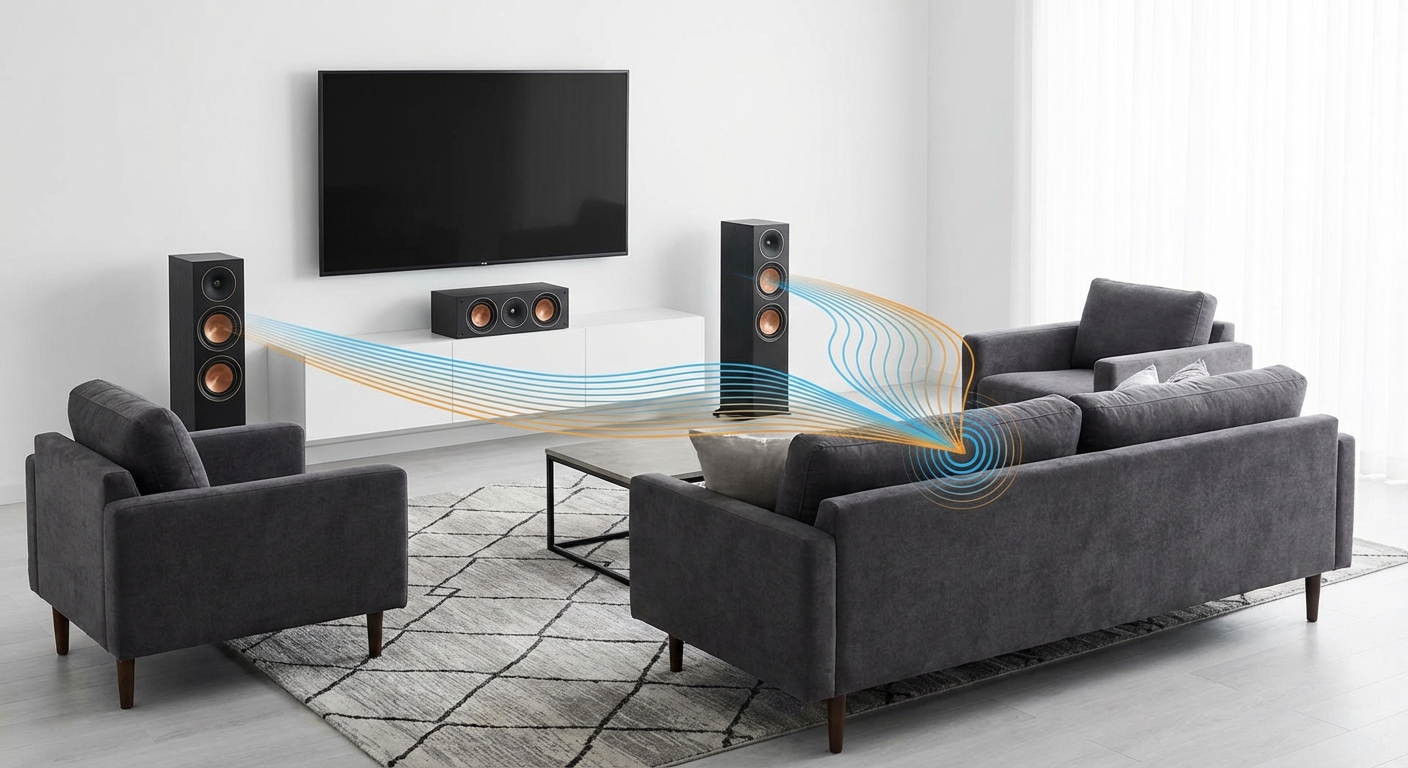
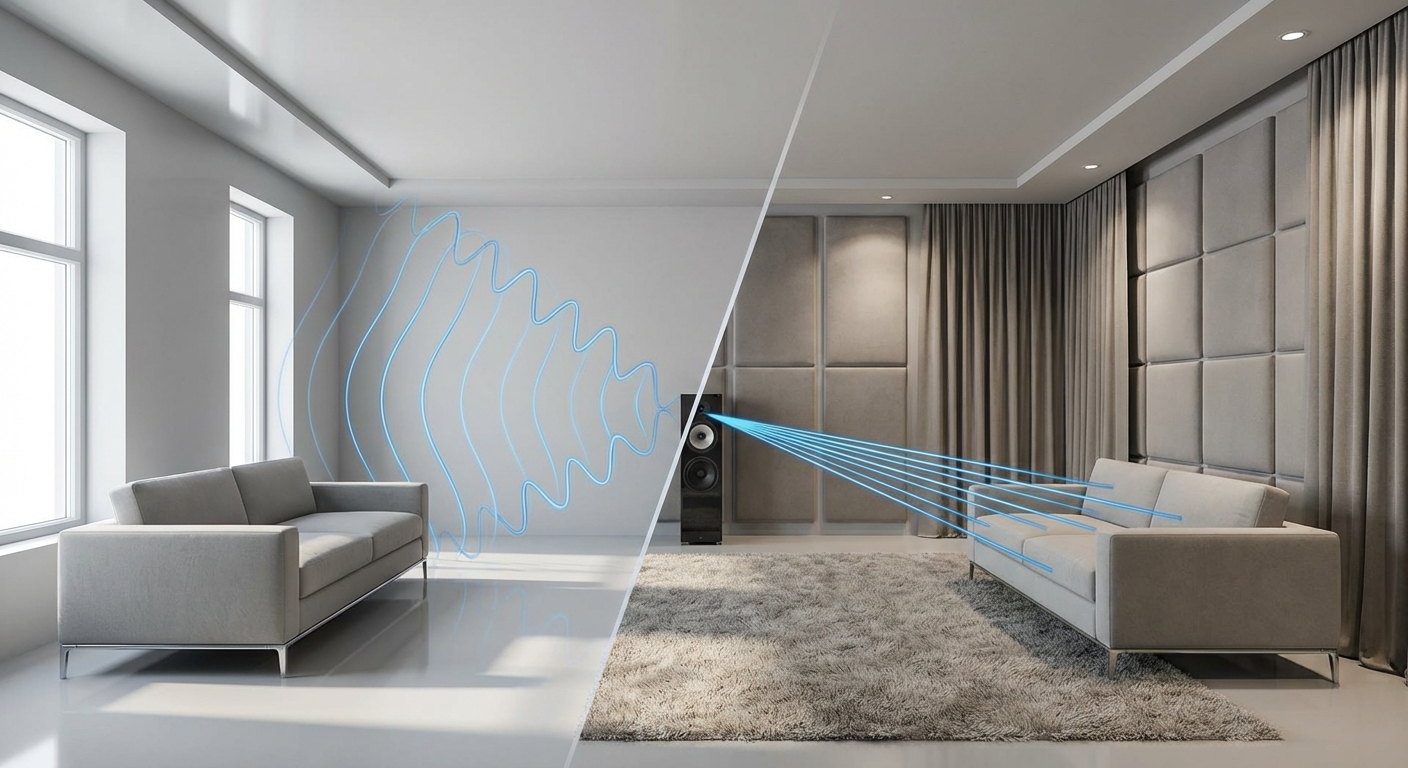
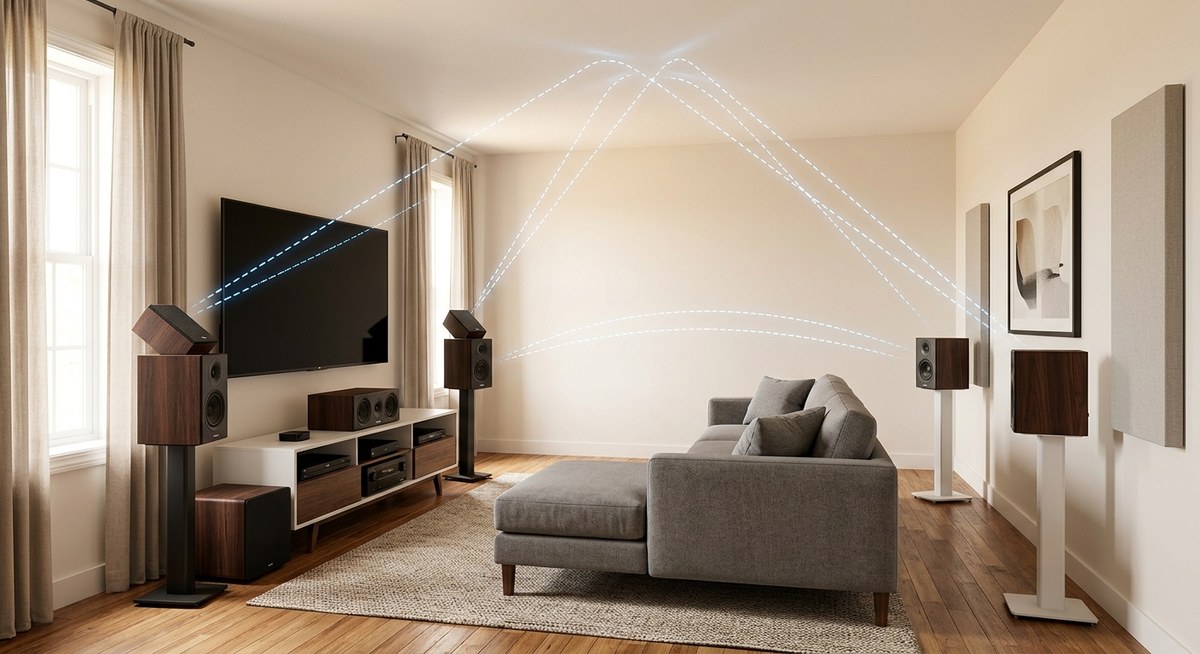
Sound behaves differently depending on what it hits. Hard surfaces reflect sound waves back into the room. Soft surfaces absorb them.
Hardwood floors bounce sound around like a racquetball court. Every explosion, dialogue line, and musical note reflects off the floor before reaching your ears. This creates echo and makes voices sound hollow or tinny.
Carpet absorbs mid and high frequencies. The fibers trap sound energy and convert it into tiny amounts of heat. This reduces echo and makes dialogue clearer.
The difference becomes obvious during action scenes. Hardwood amplifies the sharp crack of gunfire and makes it ring through the room longer. Carpet tames those harsh reflections and lets you hear the subtle details buried in the mix.
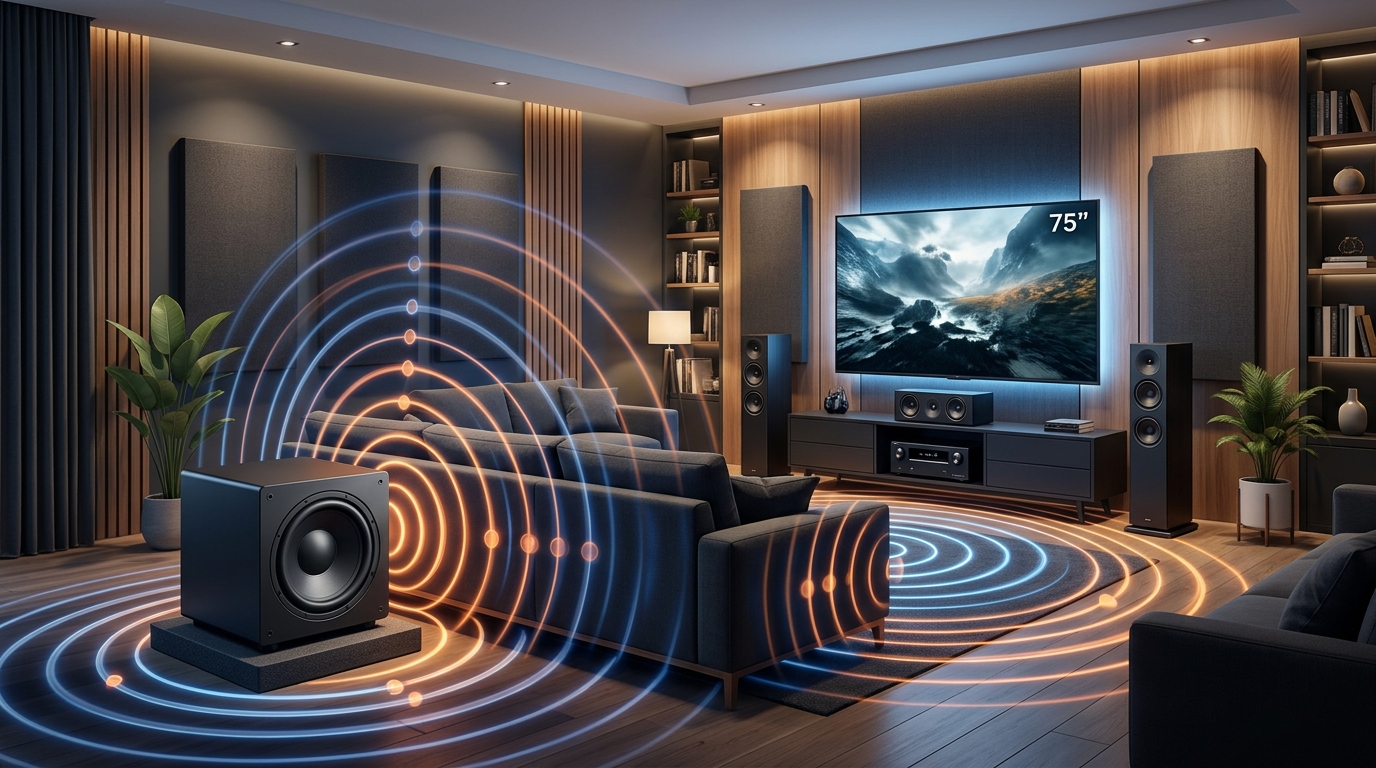
Bass frequencies behave differently. Neither carpet nor hardwood absorbs low-end rumble effectively. You’ll need dedicated bass traps for both options.
Acoustic benefits of carpet in home theaters
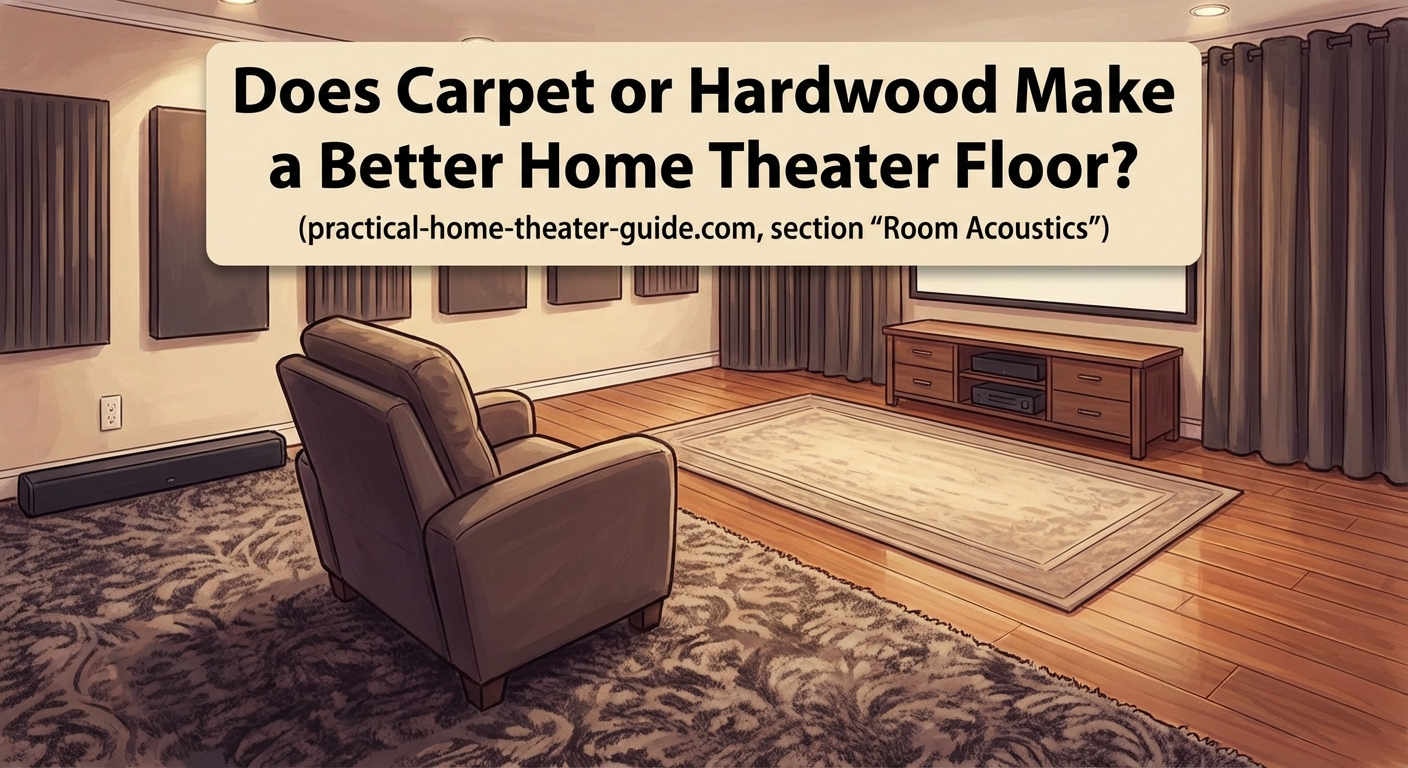
Carpet excels at controlling room acoustics without additional treatment.
Thick carpet with quality padding creates a two-layer absorption system. The carpet fibers catch mid and high frequencies. The padding underneath adds extra absorption and prevents sound from bouncing off the concrete or wood subfloor.
This natural absorption reduces reverberation time. Reverberation is how long sound lingers in a room after the source stops. Shorter reverberation times make dialogue more intelligible and create a tighter, more controlled sound.
Carpet also helps with noise isolation. If your home theater sits above another room, carpet and padding reduce how much sound transfers through the floor. Your family can sleep while you watch movies at reference volume.
The absorption isn’t perfect. Carpet mostly affects frequencies above 500 Hz. You’ll still need corner bass traps to control the lowest frequencies. But carpet handles 70% of the acoustic work right out of the gate.
A properly carpeted home theater needs far less acoustic treatment than a hardwood room. You can skip most wall panels and focus your budget on bass traps and diffusers instead.
Why some people choose hardwood anyway
Hardwood appeals to homeowners who want a multi-purpose space.
A carpeted room screams “dedicated theater.” Hardwood keeps your options open. You can use the space as a game room, exercise area, or spare bedroom without feeling locked into one purpose.
Hardwood also survives spills better. Drop a soda on carpet and you’re grabbing towels and carpet cleaner. Drop it on hardwood and you wipe it up in ten seconds.
Maintenance takes less effort with hard floors. Vacuum weekly and mop monthly. Carpet requires regular deep cleaning to prevent dirt buildup and odors.
Some people simply prefer the aesthetic. Hardwood feels more upscale. Carpet can look dated depending on the style and color you choose.
But these benefits come at an acoustic cost. You’ll need to add back the absorption that carpet would have provided naturally.
Making hardwood work acoustically
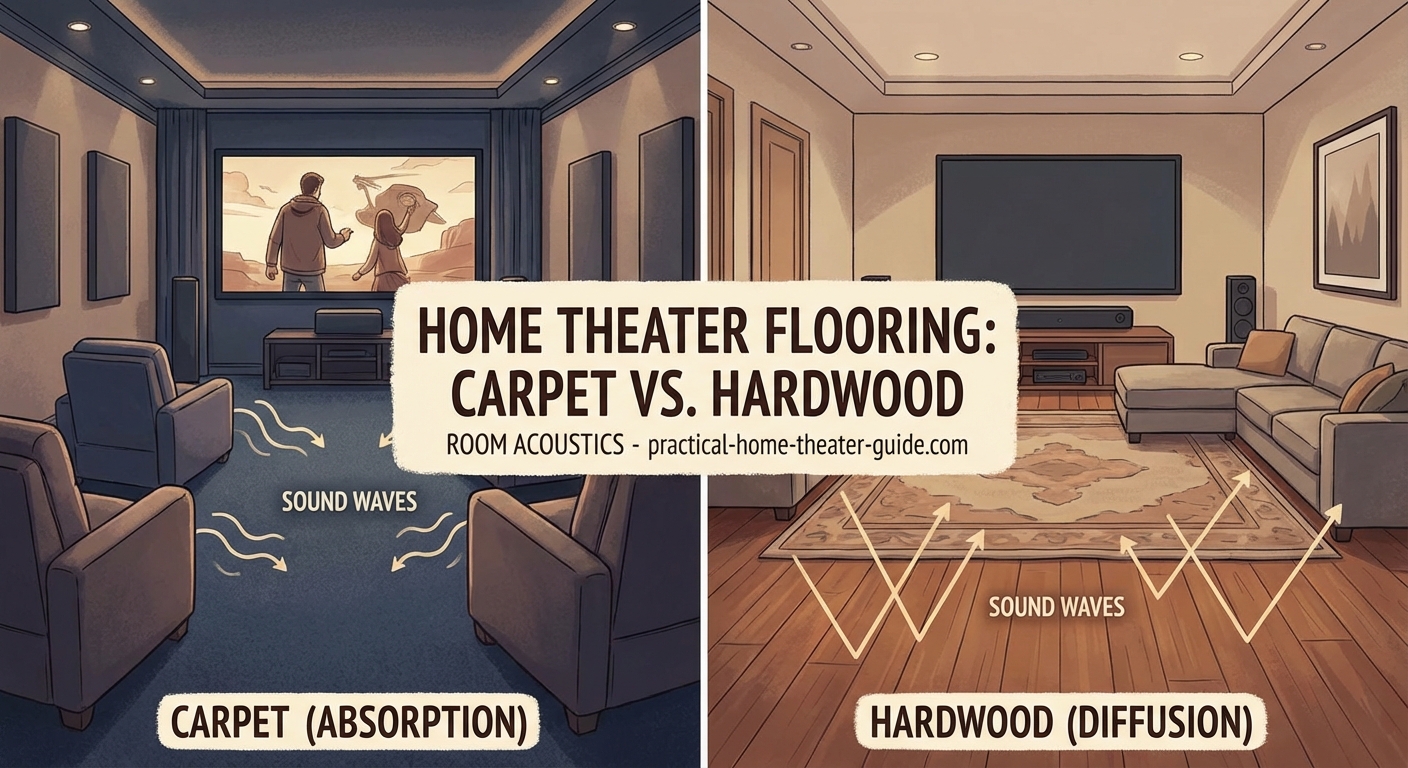
You can build a great home theater with hardwood floors. You just need to compensate for the reflections.
Start with a large area rug. Cover at least 60% of the floor between your seating and the screen. Thicker rugs with dense pile work better than thin decorative rugs.
Add acoustic panels to the walls. You’ll need more panels in a hardwood room than a carpeted one because the floor isn’t doing any absorption work. Plan for panels at the first reflection points on the side walls and at least two panels on the rear wall.
Install bass traps in the corners. This applies to both carpet and hardwood rooms, but it’s especially important with hard floors because you’re already fighting extra reflections.
Consider a second rug behind the seating area. This catches rear reflections and prevents them from bouncing back toward the screen.
The total cost adds up. A quality area rug runs $300 to $800. Acoustic panels cost $50 to $150 each, and you’ll need four to eight panels. Bass traps run $100 to $200 per corner.
Compare that to carpet, which solves most acoustic problems for $3 to $8 per square foot installed.
Practical considerations beyond acoustics
Comfort matters during long viewing sessions.
Carpet feels warmer underfoot. Hardwood stays cold, especially in basements. You’ll want slippers or thick socks if you choose hardwood.
Carpet also provides cushioning. If you sit on floor cushions for kids’ movie nights, carpet makes that more comfortable.
Hardwood shows every scratch. Move furniture and you risk gouging the finish. Drop the remote and you might dent the wood. Carpet hides minor damage better.
Installation costs vary by region, but carpet typically costs less. Basic carpet with padding runs $3 to $5 per square foot installed. Hardwood starts at $6 and goes up from there for quality materials.
Resale value tilts toward hardwood in most markets. Buyers see hardwood as an upgrade. But if you’re building a dedicated theater room, resale concerns shouldn’t drive your decision. Optimize for performance instead.
Comparing the options side by side
| Factor | Carpet | Hardwood |
|---|---|---|
| Sound absorption | Excellent for mid and high frequencies | Poor without rugs and panels |
| Echo control | Minimal echo naturally | Significant echo without treatment |
| Noise isolation | Good isolation to rooms below | Poor isolation without rugs |
| Maintenance | Requires vacuuming and deep cleaning | Simple sweeping and mopping |
| Spill cleanup | Difficult, can stain permanently | Easy wipe-up |
| Comfort | Warm and cushioned | Cold and hard |
| Initial cost | Lower | Higher |
| Acoustic treatment cost | Minimal additional treatment needed | Requires rugs, panels, and traps |
| Aesthetic flexibility | Theater-specific look | Works for multiple room purposes |
| Durability | Shows wear in high-traffic areas | Scratches and dents over time |
Hybrid approaches that work
You don’t have to choose all carpet or all hardwood.
Install hardwood around the perimeter and carpet in the main seating area. This gives you the aesthetic appeal of wood near the walls while maintaining acoustic control where it matters most.
Another option: hardwood throughout with multiple overlapping rugs. Use one large rug under the seating and a runner between the seats and screen. This creates absorption zones while leaving some hardwood visible.
Some builders install luxury vinyl plank that looks like hardwood but costs less and resists damage better. Then they add thick rugs for acoustic control. This splits the difference on cost and performance.
The hybrid approach works best in multi-purpose rooms where you want flexibility. For dedicated theaters, go all-in on carpet.
Installation tips for either choice
Getting the installation right affects both acoustics and longevity.
For carpet installations:
- Choose carpet with a dense, thick pile rather than thin berber styles
- Add quality 7/16-inch rebond padding underneath for maximum absorption
- Extend the carpet up the first few inches of the wall if possible to eliminate the gap where floor meets baseboard
- Select darker colors that hide stains and don’t show dirt as quickly
For hardwood installations:
- Leave expansion gaps around the perimeter to prevent buckling
- Apply several coats of durable finish to resist scratches from furniture
- Install felt pads on all furniture legs before moving anything into the room
- Plan your acoustic treatment before installation so you know where rugs will sit
Both options benefit from proper subfloor preparation. Level any uneven areas and fix squeaks before laying your finished floor.
Special cases and room configurations
Basement theaters face moisture concerns. Carpet can trap moisture against concrete subfloors and develop mold. Install a vapor barrier first, or consider carpet tiles that you can remove and dry if needed.
Rooms with tiered seating work better with carpet. The steps become safer with carpet’s non-slip surface. Hardwood steps need adhesive strips to prevent falls.
Small rooms under 150 square feet need maximum acoustic control. Carpet makes more sense here because you have less wall space for panels.
Large rooms over 300 square feet can handle hardwood better. You have more wall area for treatment, and the extra volume reduces how much each reflection affects the overall sound.
Rooms with in-floor subwoofers require hardwood or tile. Carpet muffles the tactile impact that makes floor-mounted subwoofers exciting.
Making your final decision
Start with your primary use case. Building a dedicated theater for serious movie watching? Carpet wins.
Planning a multi-purpose media room that doubles as a game room or exercise space? Hardwood with acoustic treatment makes more sense.
Consider your budget for the complete project. Carpet costs less upfront and needs minimal treatment. Hardwood costs more initially and requires additional investment in rugs and panels.
Think about maintenance effort. Carpet demands more cleaning but hides damage. Hardwood cleans easily but shows every scratch.
Factor in who uses the room. Families with young kids spill things. Carpet stains. Hardwood wipes clean but feels harder during falls.
Test your priorities:
- If sound quality ranks first, choose carpet
- If flexibility matters most, choose hardwood
- If budget is tight, choose carpet
- If you hate vacuuming, choose hardwood
- If the room sits above bedrooms, choose carpet for noise isolation
Setting up your theater floor for success
Your floor choice shapes how your home theater sounds and functions.
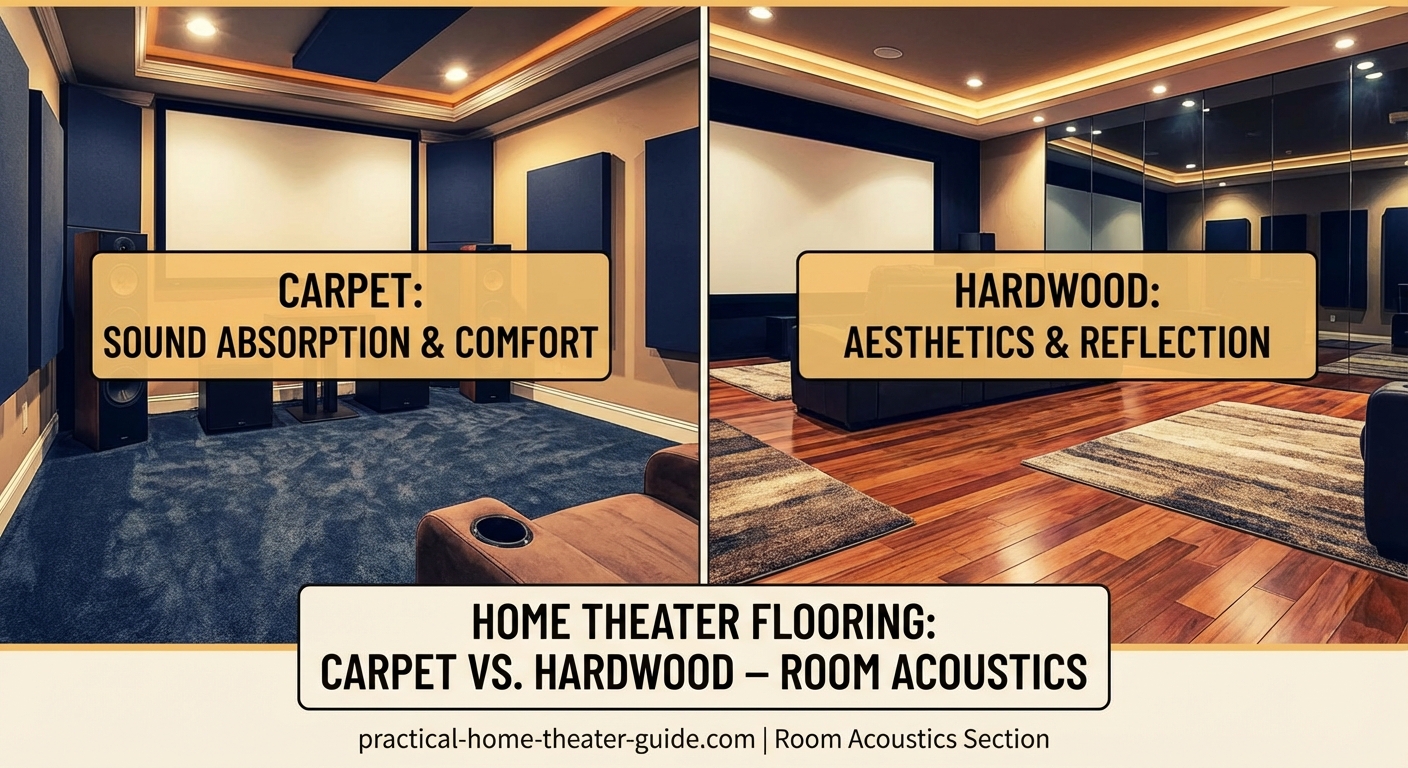
Carpet delivers better acoustics with less effort and lower cost. It absorbs reflections naturally and isolates noise to other rooms. The tradeoff: more maintenance and less flexibility for other uses.
Hardwood looks great and cleans easily but fights against good acoustics. You’ll spend more on the floor itself, then more again on rugs and panels to fix the sound. Choose this route if you need a multi-purpose space or strongly prefer the aesthetic.
Most dedicated home theaters perform better with carpet. The acoustic benefits outweigh the maintenance hassles. Save your budget for better speakers and room treatment instead of fighting the reflections that hardwood creates.
Pick the floor that matches how you’ll actually use the space. Then set up your seating, calibrate your system, and enjoy the theater you built.

Leave a Reply