
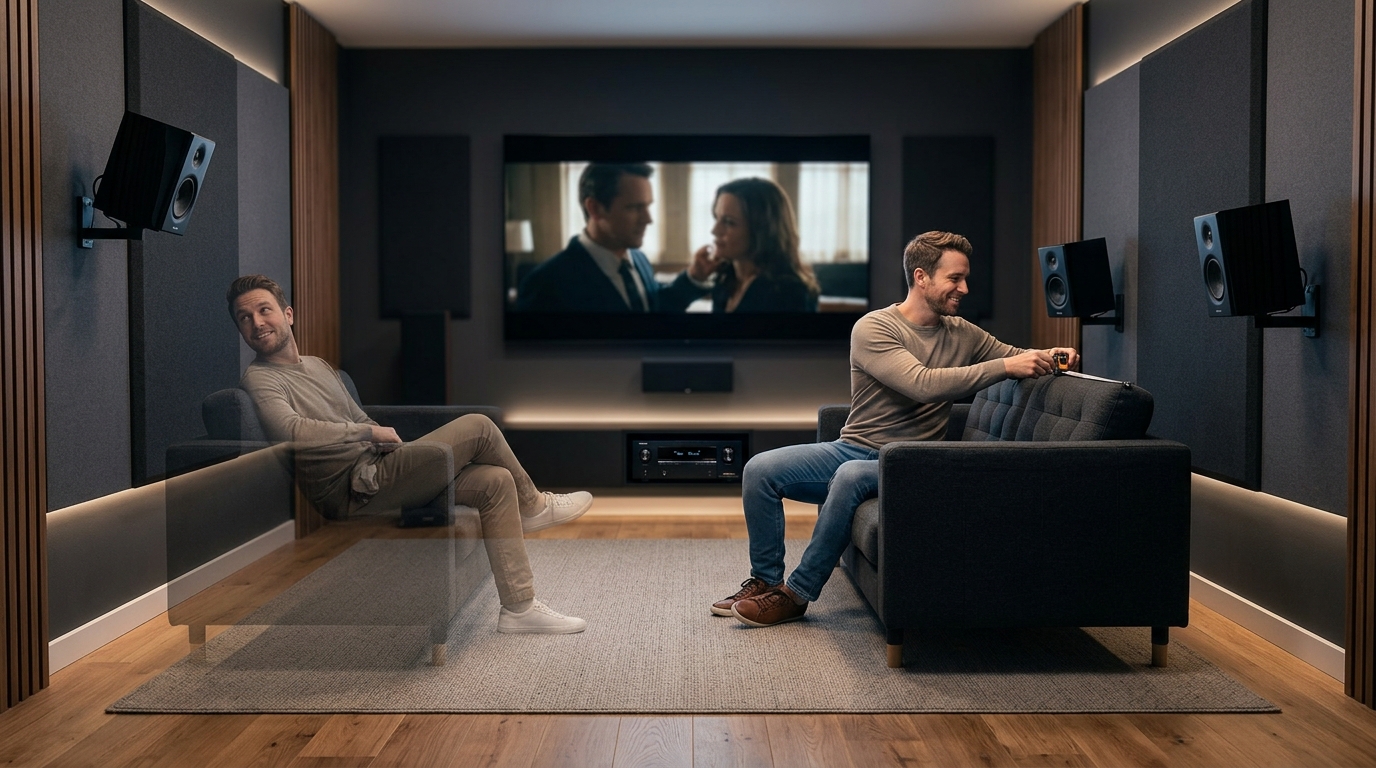
You spent good money on a 5.1 or 7.1 surround sound system, but explosions sound flat and ambient effects feel disconnected. The problem usually isn’t your speakers or receiver. It’s where you put them. Most people mount rear surrounds based on convenience, not acoustics, and it shows.
Proper rear surround speaker placement requires positioning speakers 110 to 120 degrees behind your main seating position, at ear level or slightly above when seated. Distance from the listening position matters more than wall placement. Avoid mounting speakers directly behind you or too high on the wall, as both create localization problems that ruin immersion and make sound effects feel artificial.
Understanding the Difference Between Side and Rear Surrounds
A 5.1 system uses side surrounds.
A 7.1 system adds rear surrounds.
This distinction matters because the two speaker types serve different purposes. Side surrounds handle most ambient effects and directional cues. Rear surrounds fill in the back soundstage and create a more complete bubble of sound around you.
If you’re setting up a 5.1 system, your “surround” speakers go to the sides, not behind you. The 5.1 vs 7.1 surround sound setup comparison explains when you actually need those extra rear channels.
Many people put 5.1 surrounds directly behind their couch because it feels intuitive. That’s wrong. Those speakers belong at 90 to 110 degrees from center, roughly beside or slightly behind your ears.
The Ideal Angle for Rear Surround Speaker Placement
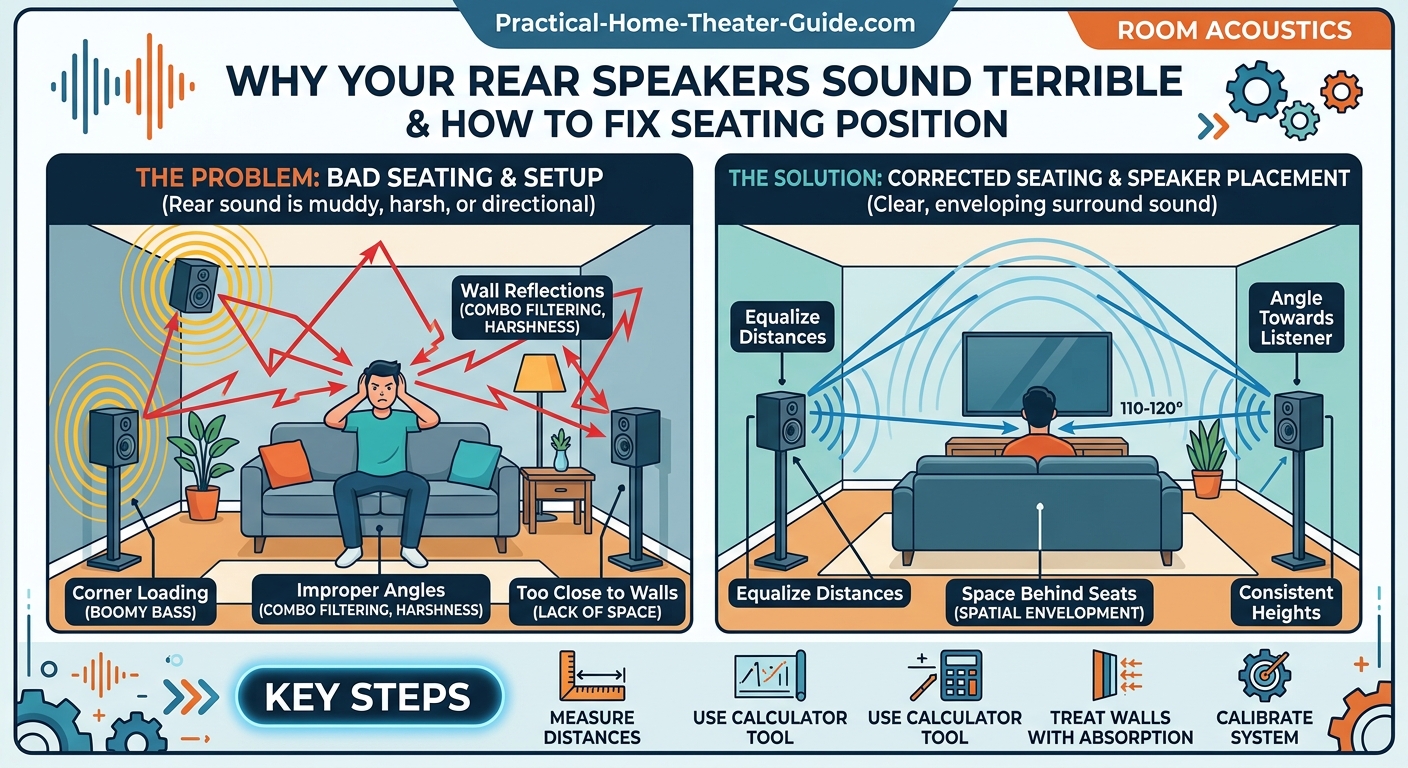
For a 7.1 system, rear surrounds should sit 135 to 150 degrees from your center channel.
Think of your seating position as the center of a clock face. Your TV is at 12 o’clock. Your rear surrounds should be around 4:30 and 7:30.
This angle creates proper envelopment without making effects sound like they’re coming from a specific point. When a helicopter flies overhead in a movie, you should feel it move through the space, not hear it jump from speaker to speaker.
Most rooms don’t allow perfect angles. That’s fine.
Anywhere between 110 and 150 degrees works if you can’t hit the sweet spot. Just keep both speakers symmetrical. If your left rear is at 120 degrees, put the right rear at 120 degrees too.
“The biggest mistake I see is people mounting rear surrounds directly on the back wall at 180 degrees. This creates a ‘hole’ in the soundfield and makes rear effects sound detached from the rest of the mix.” – Audio calibration specialist
Height Matters More Than You Think
Ear level when seated is the baseline.
Measure from the floor to your ears while sitting in your main viewing position. That’s your target height for rear surrounds.
If you need to mount speakers higher for practical reasons, don’t go more than 2 feet above ear level. Higher placement causes two problems:
- Sound appears to come from above rather than around you
- Reflections off the ceiling muddy the audio
Some people mount surrounds near the ceiling because it looks cleaner. This ruins the effect entirely. You’ll hear sound bouncing off surfaces instead of wrapping around your listening position.
Dipole or bipole speakers can handle slightly higher placement because they fire in multiple directions. But even these work best near ear level.
Distance From Your Seating Position
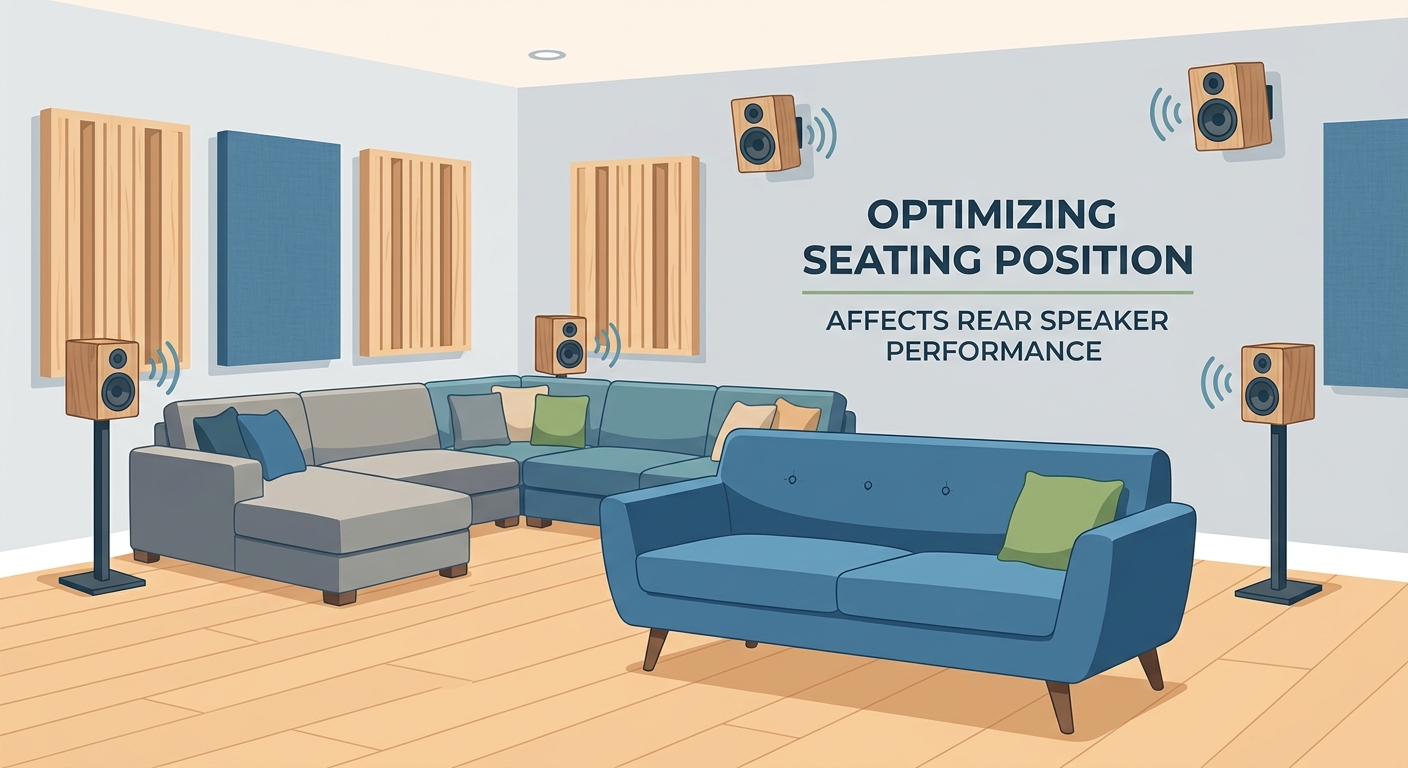
Rear surrounds should be roughly the same distance from your listening position as your side surrounds.
Measure the distance from your main seat to your side surrounds. Try to match that distance with your rear speakers.
This creates an even soundfield. When distances vary too much, some speakers sound louder or more present than others, even after calibration.
In a small room, you might only have 6 to 8 feet between your seat and the rear wall. That’s fine. Just maintain symmetry.
In a large room, don’t push rear surrounds all the way to the back wall just because you can. Keep them within 10 to 12 feet of the listening position if possible.
| Distance Range | Effect on Sound | Best Use Case |
|---|---|---|
| 6 to 8 feet | Intimate, immersive | Small to medium rooms |
| 8 to 10 feet | Balanced, spacious | Medium to large rooms |
| 10 to 12 feet | Diffuse, ambient | Large dedicated theaters |
| Over 12 feet | Disconnected, weak | Avoid unless room is huge |
Common Rear Surround Speaker Placement Mistakes
Putting speakers in corners seems convenient. It’s terrible for sound.
Corners create bass buildup and uneven frequency response. Your receiver’s calibration can’t fully fix this. The result is boomy, muddy surround effects that overpower dialogue.
Another mistake is mounting one speaker higher than the other because of a window or wall feature. Asymmetrical height creates a lopsided soundstage. You’ll constantly feel like sound is pulling to one side.
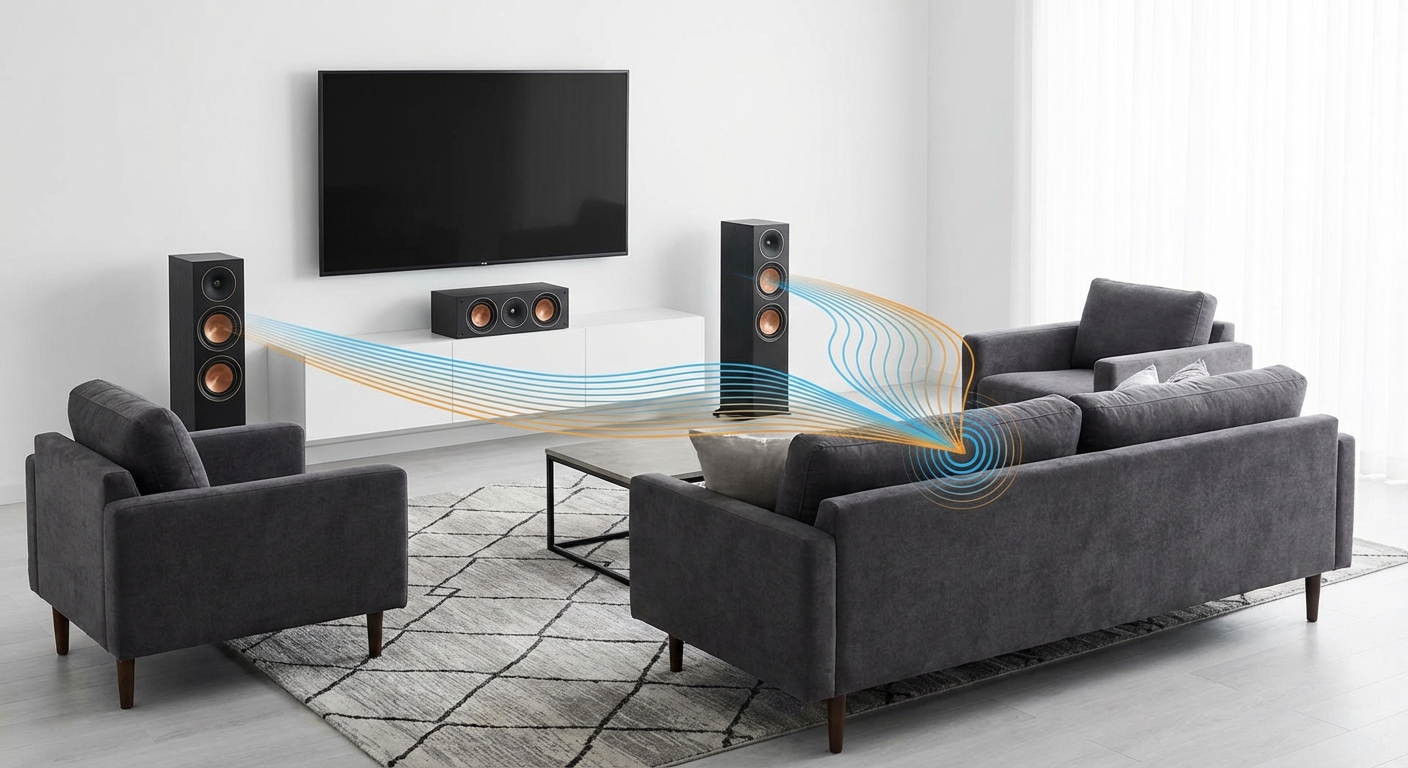
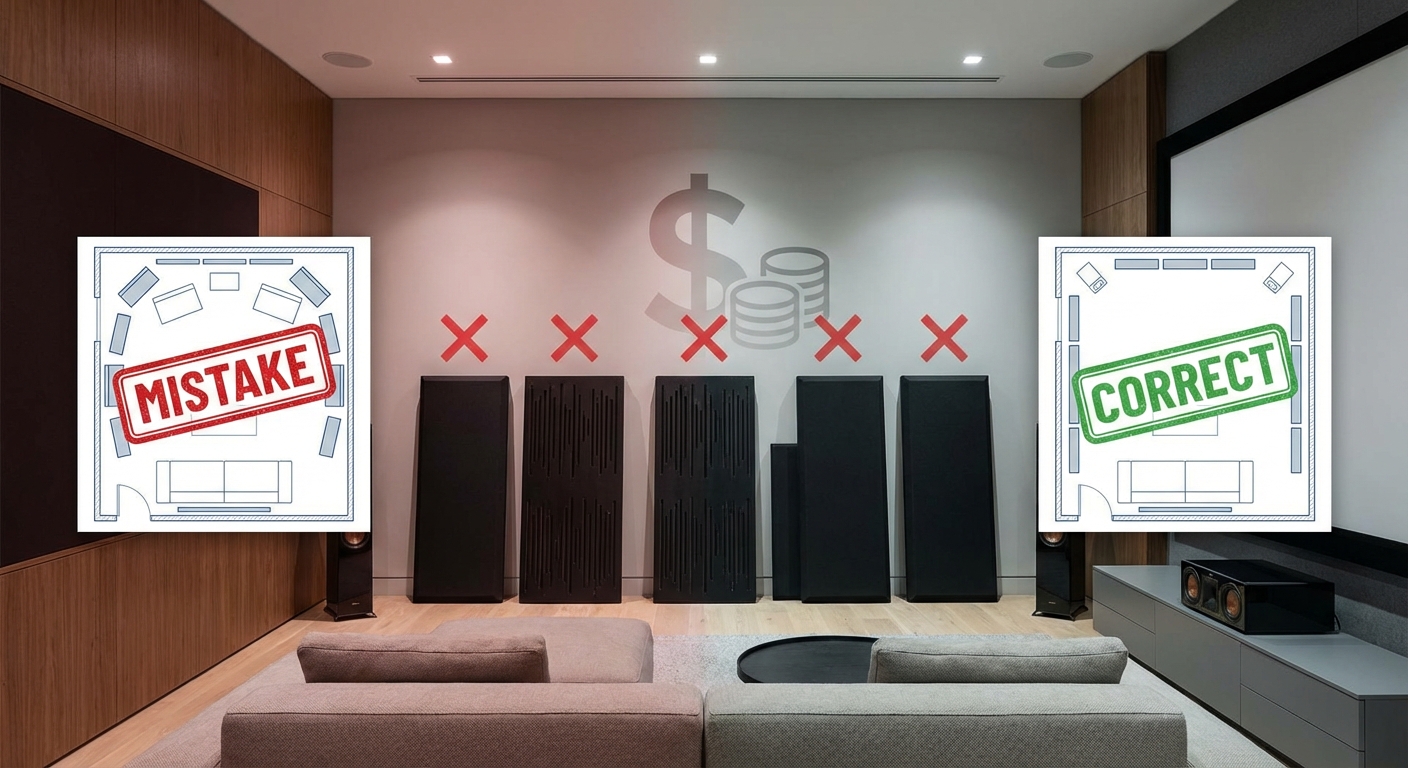
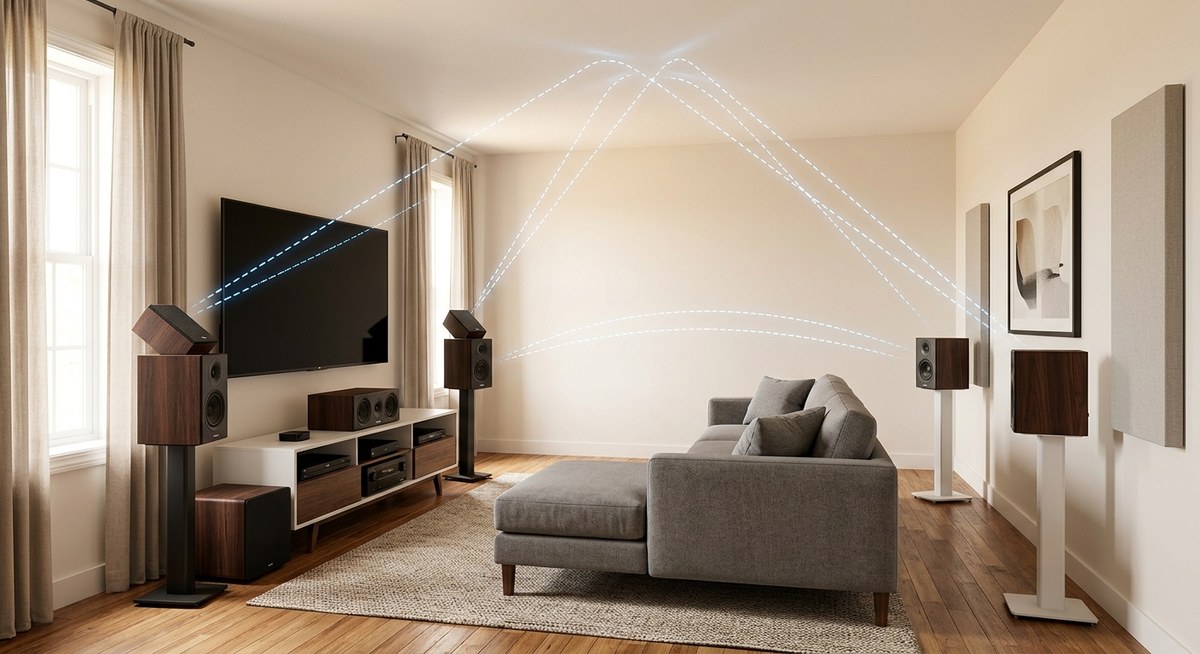
Pointing speakers directly at the listening position also causes problems. Rear surrounds should fire toward the side walls or slightly behind the seating area, not straight at your head. Direct firing makes you too aware of the speaker location.
Here are the most common placement errors:
- Mounting both speakers on the same wall behind you
- Placing speakers at different heights
- Positioning speakers more than 3 feet apart in height from each other
- Putting speakers in room corners
- Mounting speakers above 7 feet in a room with 8-foot ceilings
Adjusting for Real Room Constraints
Not every room allows textbook placement.
Maybe you have a doorway where a speaker should go. Or windows that prevent wall mounting. Or a spouse who refuses to see speakers.
Start with the angle. That’s your most important variable. If you can get close to 135 to 150 degrees, you can compromise on other factors.
Height is your second priority. Get as close to ear level as possible, even if it means using floor stands instead of wall mounts.
Distance is third. If one speaker has to be closer than the other, your receiver’s distance settings can compensate. This isn’t ideal, but it works.
For rooms with challenging layouts, wall-mounting your surround speakers without damaging your walls or sound quality offers practical mounting solutions that work around obstacles.
Speaker Type Affects Placement Flexibility
Monopole speakers fire in one direction.
Dipole speakers fire in two opposite directions.
Bipole speakers fire in two directions with overlapping coverage.
Monopole rear surrounds need precise angling. Point them so sound bounces off the side or rear wall before reaching your ears. This creates diffuse sound instead of direct localization.
Dipole and bipole speakers offer more placement flexibility. They create a diffuse soundfield naturally, so exact positioning matters less. You can mount these slightly higher or at less precise angles without ruining the effect.
Most bookshelf speakers used as surrounds are monopole. If you’re using these, pay extra attention to angling and positioning.
Testing and Fine-Tuning Your Placement
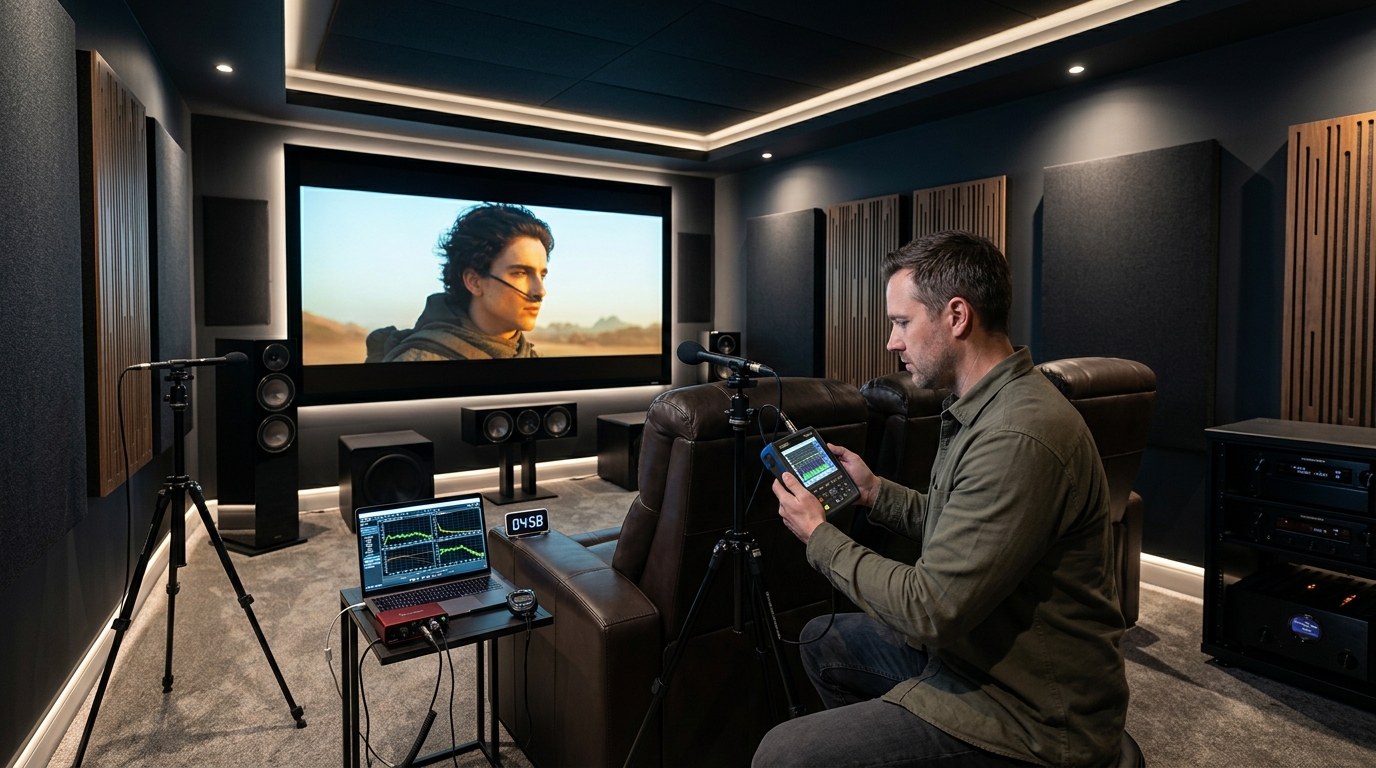
After mounting your rear surrounds, run a placement test before calibrating.
- Play a movie scene with obvious rear sound effects (a rainstorm works well)
- Sit in your main viewing position and close your eyes
- Listen for whether you can pinpoint exactly where each speaker is located
If you can easily identify the speaker location, something’s wrong. Rear surrounds should create ambient sound that seems to come from everywhere and nowhere.
Try these adjustments:
- Angle speakers more toward the side walls if sound feels too direct
- Lower speakers if effects seem to come from above
- Move speakers farther apart if the soundfield feels narrow
- Bring speakers closer if effects feel distant or weak
Once positioning feels right, run your receiver’s auto-calibration. Systems like Audyssey, Dirac, or YPAO will set levels and distances, but they can’t fix fundamentally bad speaker placement.
Dealing With Multiple Seating Positions
The sweet spot exists for one seat only.
That’s reality. You can’t optimize rear surround placement for a whole couch.
Choose your primary listening position, usually the center seat, and place speakers for that spot. Other seats will still get decent surround sound, just not perfect envelopment.
If you must accommodate multiple seats, aim for a compromise:
- Position rear surrounds to serve the middle of the seating area
- Keep speakers slightly farther back than optimal for the front row
- Accept that edge seats won’t get ideal surround effects
Some people try to solve this by adding more surround speakers. That rarely helps. More speakers in suboptimal positions sound worse than fewer speakers in the right spots.
Integration With Your Front Soundstage
Rear surrounds shouldn’t sound disconnected from your front speakers.
Timbre matching helps here. Using the same brand and series for all speakers creates a cohesive sound. When a sound effect pans from front to rear, you hear smooth movement instead of a jarring shift in character.
If you can’t match brands, at least match the speaker type. Don’t pair floor-standing fronts with tiny satellite rears. The size difference creates an obvious gap in the soundfield.
Your center channel speaker anchors dialogue and most on-screen effects. Rear surrounds should complement this, not compete with it.
When Rear Surrounds Actually Improve Your System
Not every setup benefits from rear surrounds.
In a small room (under 12 feet deep), the difference between 5.1 and 7.1 is minimal. You’re better off investing in better quality 5.1 speakers than adding mediocre rear channels.
Rear surrounds shine in these situations:
- Rooms larger than 15 feet deep
- Dedicated home theater spaces with multiple rows of seating
- Setups using Atmos or DTS:X height channels
- Systems where you’ve already maxed out your front stage quality
If you’re still building your system, get your front three speakers and subwoofer right first. Adding a quality subwoofer makes a bigger difference than rear surrounds in most rooms.
Acoustic Treatment and Rear Speaker Performance
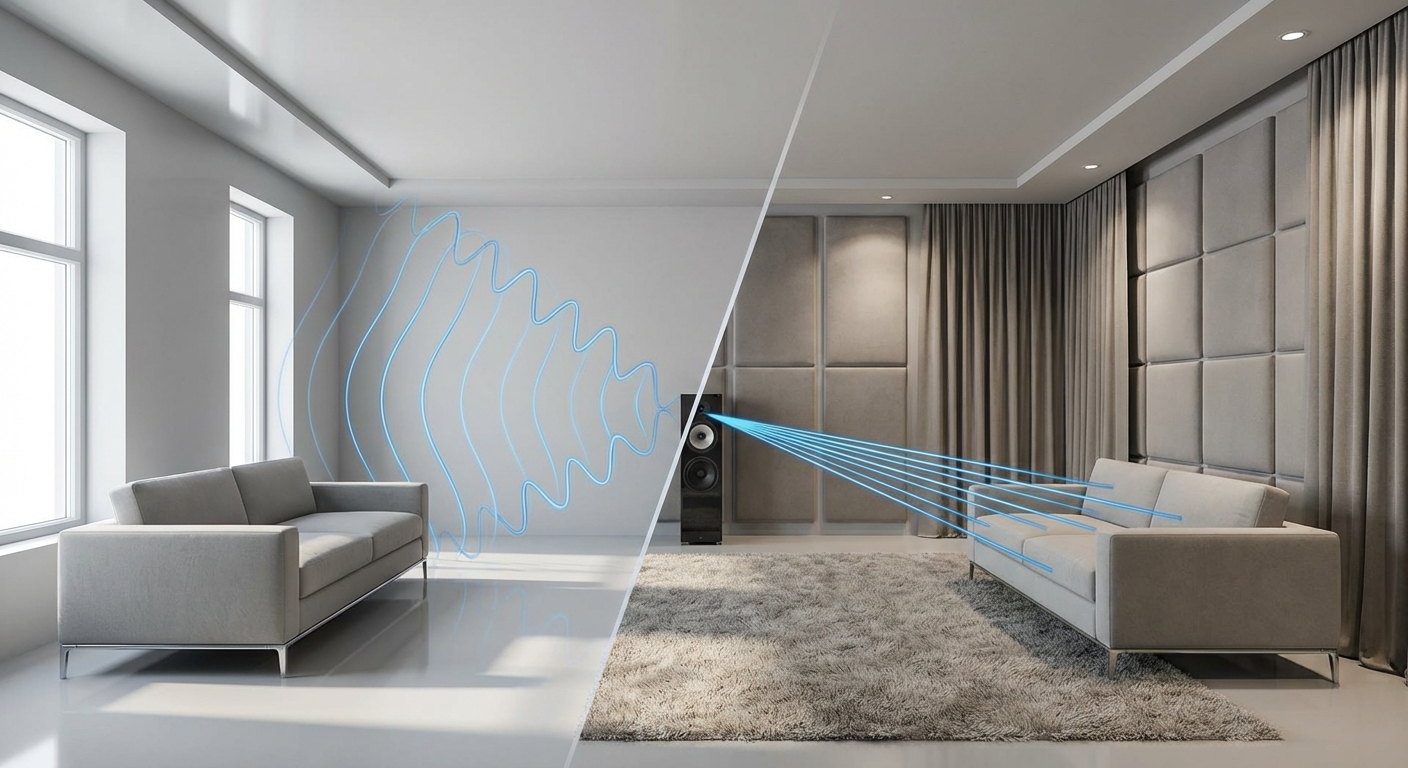
Bare walls behind your rear surrounds create harsh reflections.
You don’t need extensive acoustic treatment, but some absorption helps. A thick curtain, bookshelf, or fabric wall hanging behind each rear speaker tames reflections without deadening the room.
Avoid placing rear surrounds on a wall covered in hard, reflective surfaces like glass or bare drywall. The sound bounces back too quickly and creates a harsh, echoey quality.
Room acoustic problems affect surround speakers more than fronts because the sound travels farther before reaching your ears. Small improvements in room treatment make a noticeable difference.
Wireless vs Wired Rear Surrounds
Running speaker wire across a room is annoying.
Wireless surround systems solve this problem but introduce others. Most wireless surrounds still need power cables, so you’re not completely wire-free. And some systems introduce slight audio delay.
If you go wireless, verify the system supports your receiver and maintains synchronization. Delayed rear effects ruin immersion worse than no rear speakers at all.
Wired connections remain more reliable. If you’re planning the room from scratch, running speaker wire through walls during construction or renovation is worth the effort.
Calibration After Placement
Physical placement comes first. Calibration comes second.
Your receiver can adjust for small variations in distance and level, but it can’t fix speakers mounted in the wrong location. Get the angle and height right before you touch any settings.
When you run auto-calibration, check the results. Sometimes the system sets rear surrounds too quiet, making them barely audible. Bump the level up 2 to 3 dB above the calibrated setting if effects feel weak.
Distance settings should match your physical measurements within a foot or so. If the receiver calculates a distance that’s way off, something went wrong. Rerun calibration or check your speaker connections.
Making Rear Surrounds Work in Apartments
Renters face extra challenges.
Wall mounting often isn’t an option. Floor stands work, but they take up space and can be knocked over.
Tension-mounted poles that run from floor to ceiling let you position speakers at the right height without drilling holes. These work well for rear surrounds because the speakers don’t need to be directly against a wall.
Keep volume reasonable. Rear surrounds fire toward walls that might be shared with neighbors. Late-night movie watching requires more restraint than with front speakers that fire into the room.
Getting Your Rear Speakers to Disappear
The best rear surround placement makes you forget the speakers exist.
You should hear rain falling all around you, not rain coming from two boxes on your wall. You should feel a spaceship fly overhead, not hear speakers behind you making spaceship noises.
This takes experimentation. Move speakers in small increments. Test with familiar content. Trust your ears over measurements.
When you nail the placement, surround sound stops being a technical achievement and becomes pure immersion. That’s when your home theater finally feels complete.
Your rear surrounds have one job: create a believable sense of space and atmosphere. Everything about their placement should serve that goal. Ignore the urge to mount them where they look best or where installation is easiest. Put them where they sound right, even if it takes extra effort. The difference between adequate and excellent rear surround placement is the difference between hearing a movie and feeling like you’re inside it.

Leave a Reply