You settle into your favorite chair, press play on your home theater system, and the dialogue sounds like it’s bouncing around inside a cave. Every word repeats itself, blurring into the next. Music loses its punch. Action scenes turn into muddy noise. The problem isn’t your speakers or receiver. It’s the room itself fighting against good sound.
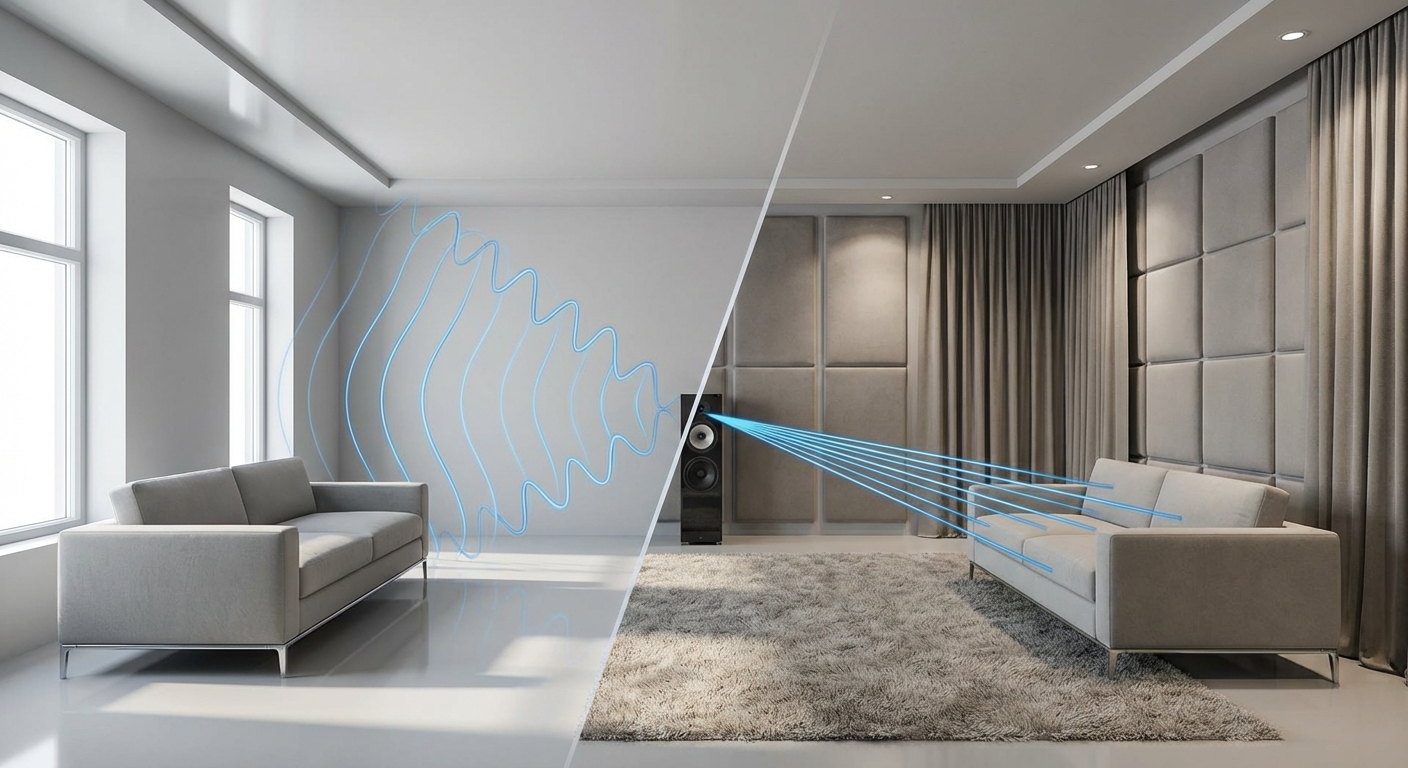
Echo happens when sound waves bounce off hard surfaces like walls, floors, and ceilings without anything to absorb them. You can reduce echo by adding soft materials throughout your room: thick rugs, heavy curtains, upholstered furniture, bookshelves, acoustic panels, and bass traps. Most solutions cost less than professional treatment and deliver noticeable improvements in speech clarity and overall sound quality.
Why Your Room Sounds Like a Cave
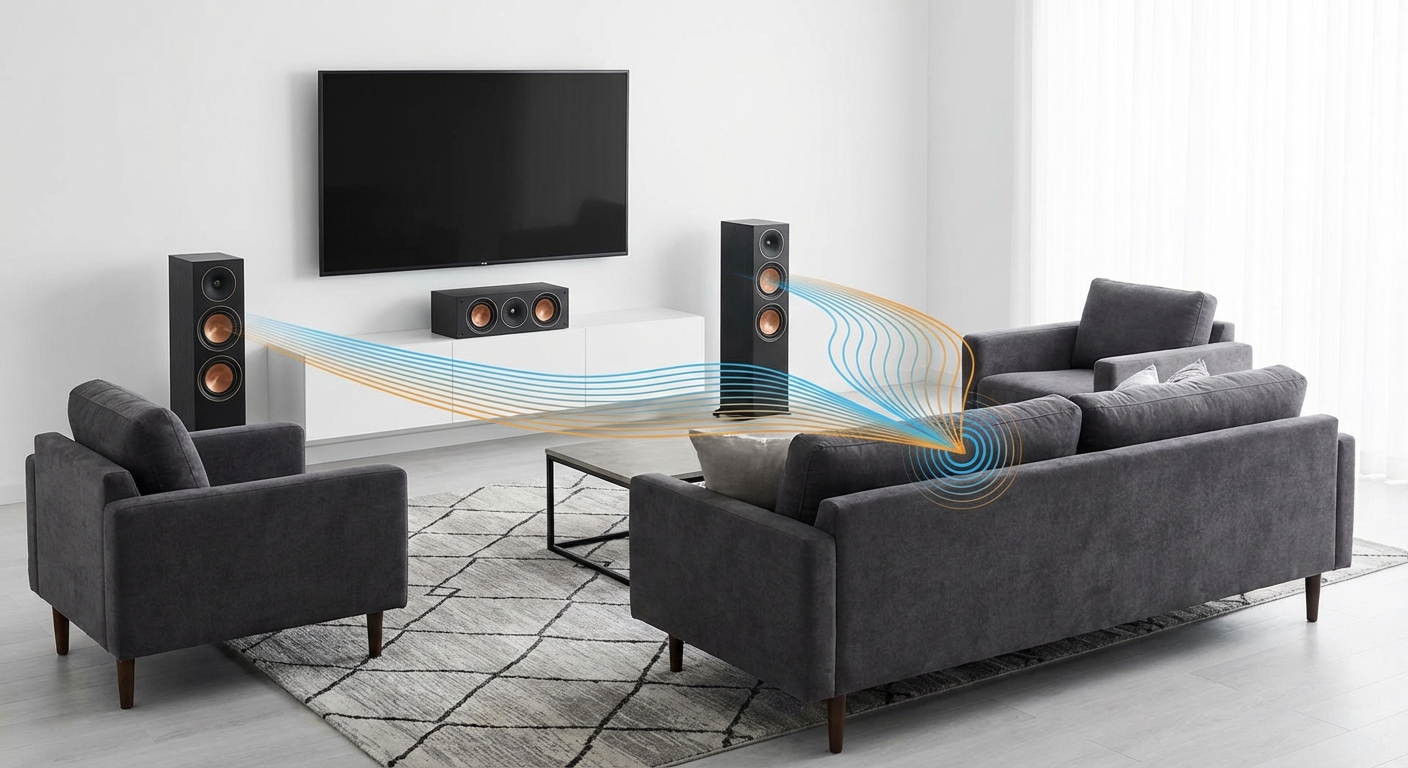
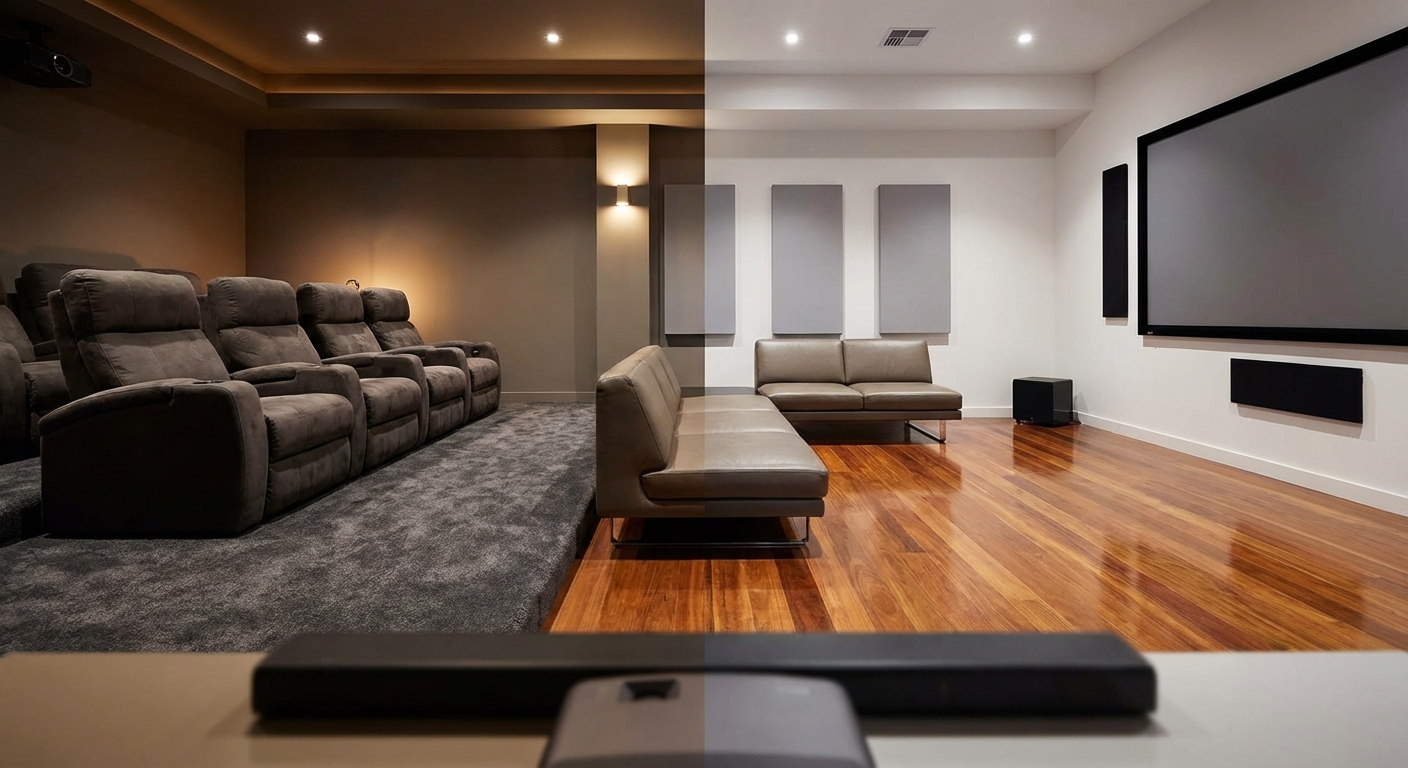
Hard surfaces reflect sound waves instead of absorbing them. When you have bare walls, hardwood floors, large windows, and minimal furniture, sound bounces around endlessly before it fades. Each reflection arrives at your ears slightly delayed from the original sound, creating that hollow, echoey quality that ruins dialogue and music.
The bigger the room, the longer those reflections travel. The emptier the space, the more surfaces they hit. A furnished living room with carpet and drapes sounds completely different from an empty one with the same dimensions.
Your ears can’t separate the original sound from all those reflections when they arrive too close together. Everything blurs into reverb. Consonants in speech get lost. Bass notes boom and muddy. Stereo imaging collapses because reflected sound overwhelms the direct sound from your speakers.
The Difference Between Echo and Reverb

People use these terms interchangeably, but they describe different problems.
Echo happens when a reflection arrives late enough that you hear it as a distinct repetition. Clap your hands in a large empty room and you might hear a clear “clap…clap” coming back at you. That’s echo.
Reverb is what happens when hundreds of reflections pile up so close together that they create a wash of sound. It’s not distinct repetitions. It’s a sustained tail that hangs in the air after the original sound stops. Small rooms typically create reverb rather than true echo.
Both problems have the same solution: absorb or scatter sound waves before they bounce back to your listening position.
Start With What You Already Own
Before buying acoustic panels or bass traps, look around your room. You probably own items that already help with echo reduction.
Upholstered furniture absorbs mid and high frequencies. A thick couch does more acoustic work than you’d think. Armchairs with fabric cushions help too. Leather reflects more sound than fabric, but it’s still better than bare walls.
Bookshelves loaded with books scatter sound in random directions instead of reflecting it straight back. The irregular surface breaks up reflections. Shelves also add mass and depth to walls, which helps with lower frequencies.
Heavy curtains or drapes absorb sound and block reflections from windows. Glass is one of the worst offenders for creating harsh reflections. Cover your windows with thick material and you’ll hear an immediate difference.
Area rugs and carpet pads absorb floor reflections. Hardwood and tile floors bounce sound straight up to the ceiling, where it reflects back down. A thick rug between your speakers and listening position makes dialogue clearer.
Five Steps to Reduce Echo Without Professional Help

-
Place a large area rug in front of your speakers. Make it thick. The padding underneath matters as much as the rug itself. This stops the first floor reflection, which is one of the most damaging to sound quality.
-
Hang heavy curtains on any walls with windows. Go for thermal or blackout curtains. They’re thick enough to absorb sound and they serve double duty by blocking light during daytime viewing.
-
Add soft furniture between your speakers and the side walls. A bookshelf, a cabinet, or even a tall plant in a large pot breaks up side wall reflections. Anything that stops sound from bouncing straight from the speaker to the wall and back to your ears.
-
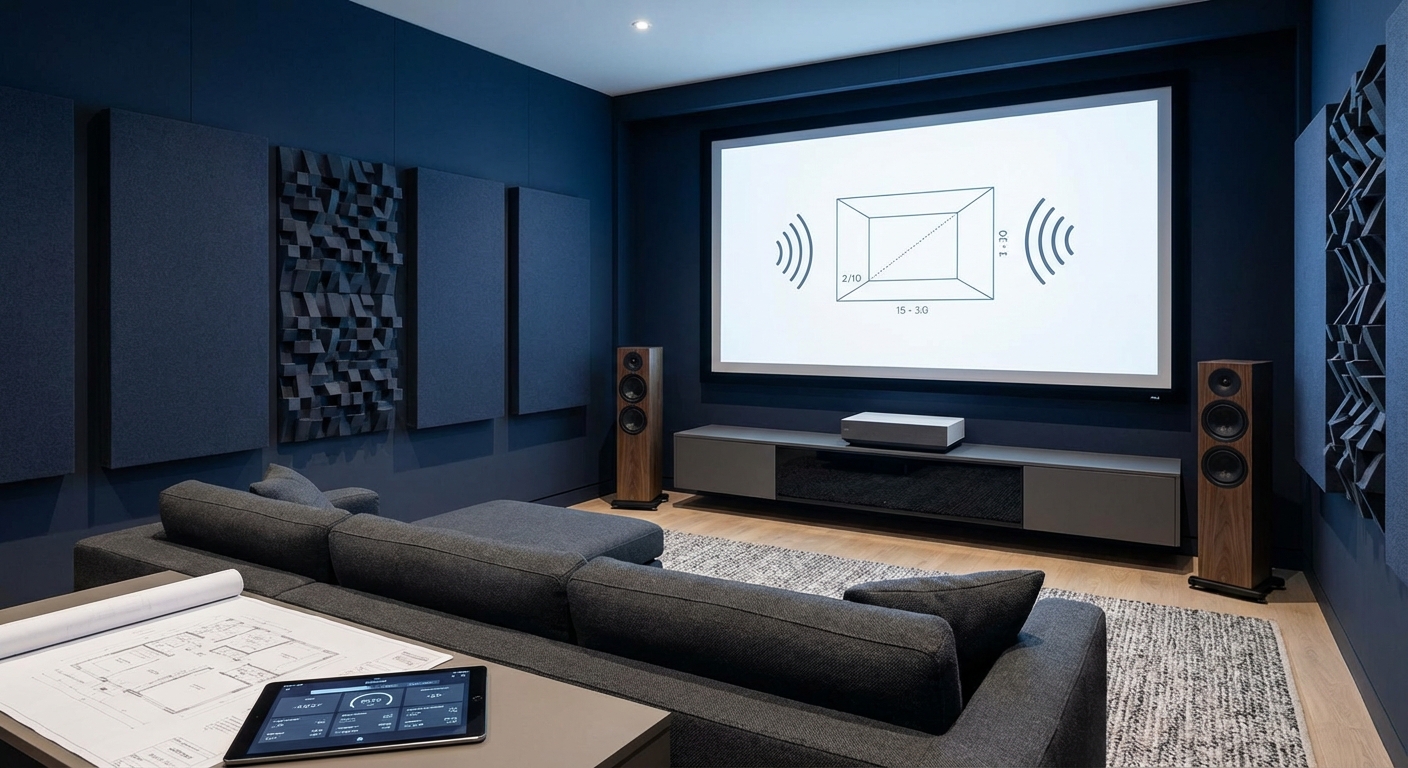
Put acoustic panels on the side walls at speaker height. You can buy ready made panels or make your own from rigid fiberglass insulation wrapped in fabric. Two panels on each side wall, positioned at the reflection points, make a huge difference.
-
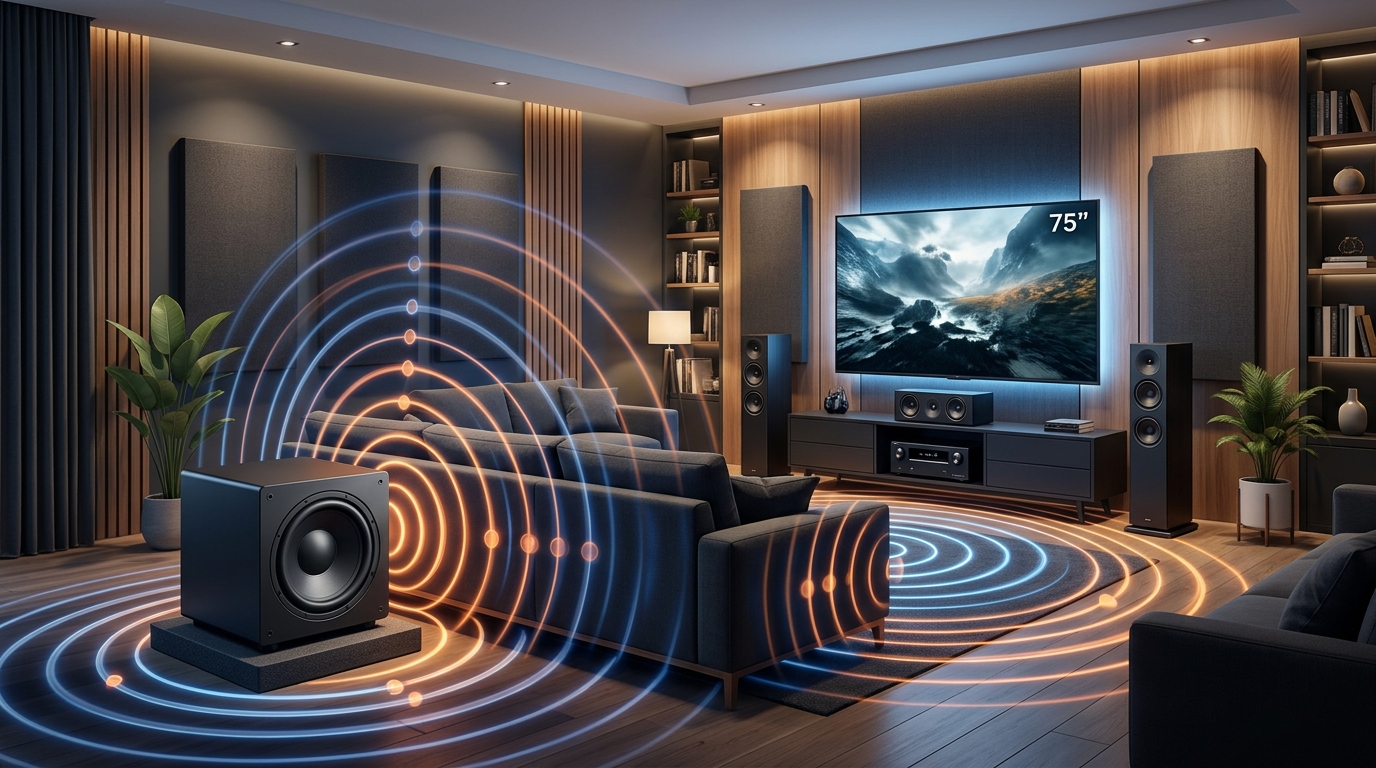
Add bass traps in the room corners. Low frequency sound builds up in corners and creates boomy, muddy bass. Corner bass traps absorb those low frequencies and tighten up your sound. You can buy commercial traps or build simple triangular frames filled with dense insulation.
Where to Place Acoustic Treatment
Not every wall needs treatment. Focus on the spots where reflections cause the most problems.
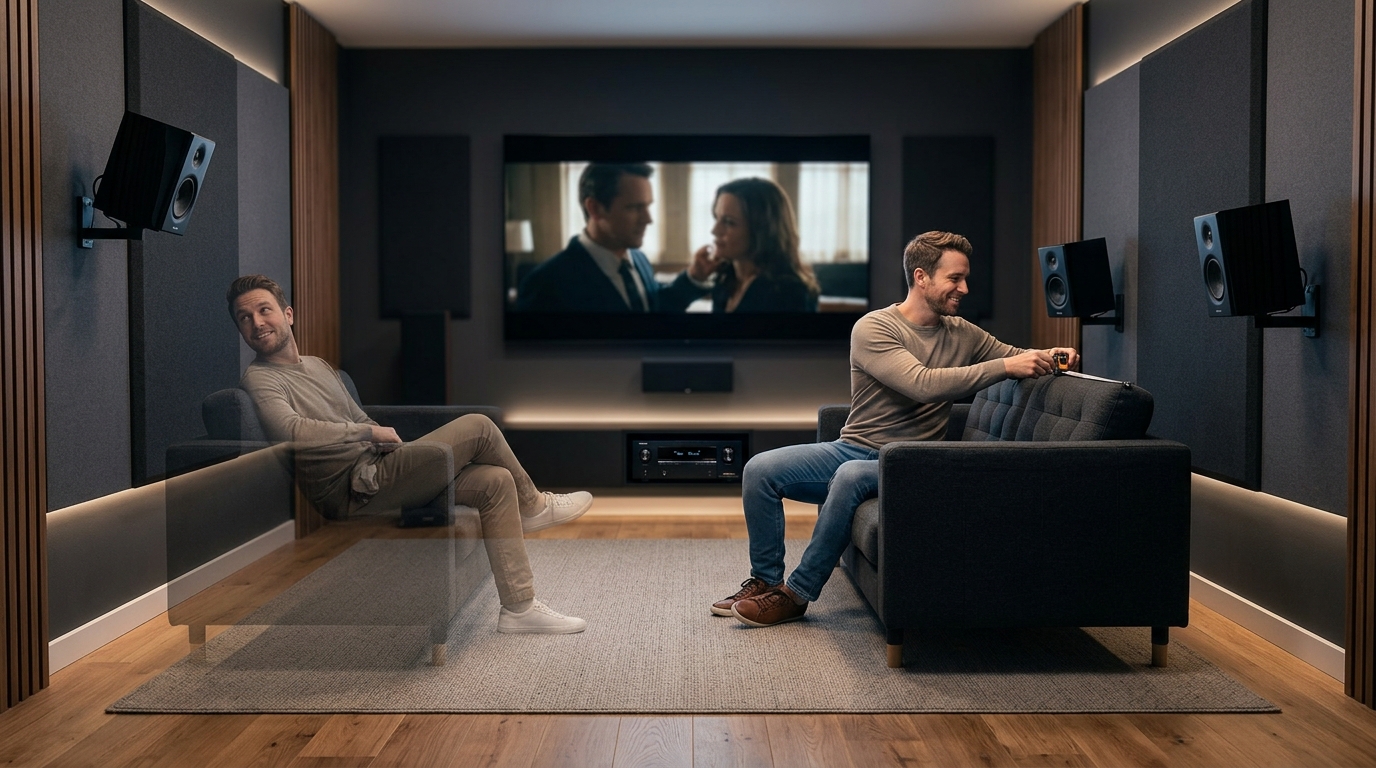
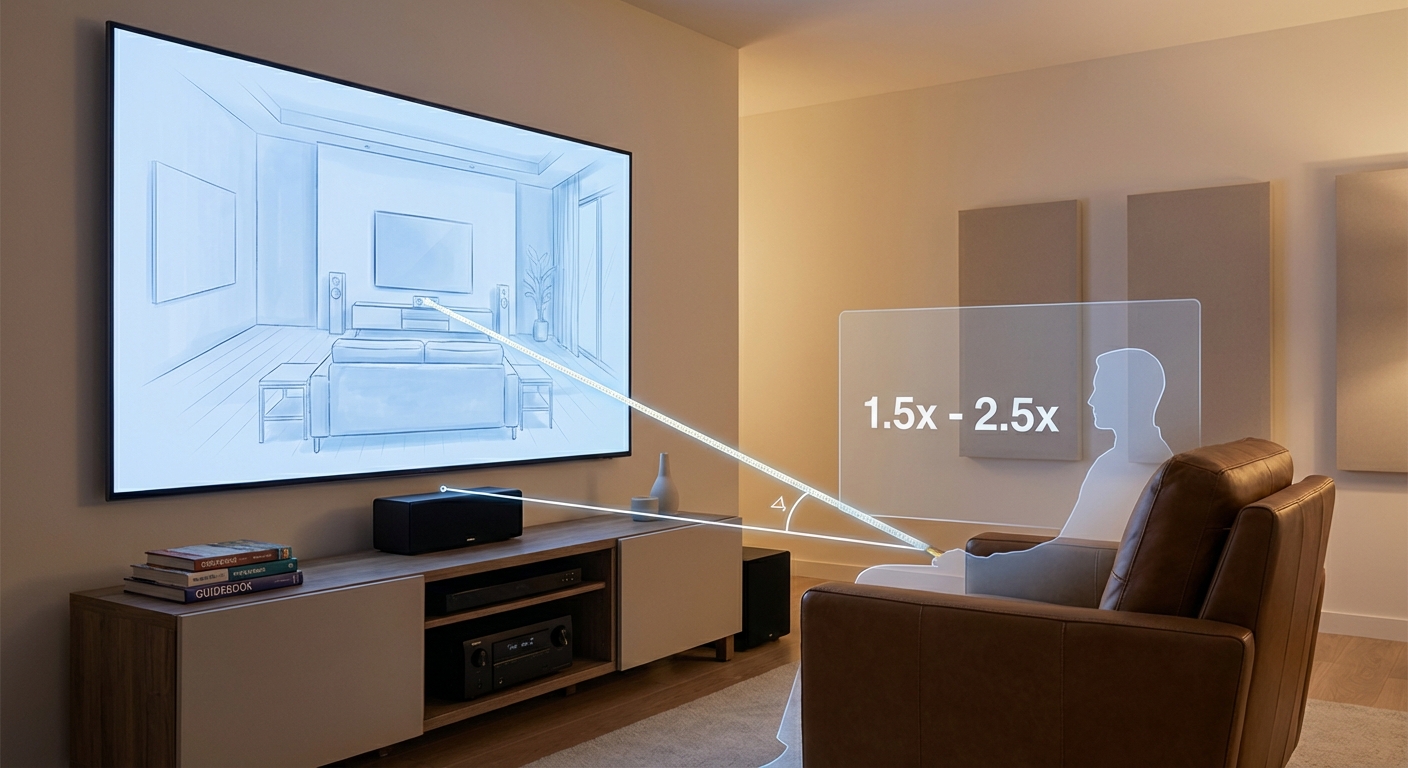
The side walls between your speakers and listening position need attention first. Sit in your main seat and have someone move a small mirror along the side wall. When you can see your speaker reflected in the mirror, mark that spot. That’s where sound reflects directly from the speaker to your ear. Put a panel there.
The wall behind your speakers benefits from absorption or diffusion. If the wall is close to the speakers, use absorption panels. If there’s several feet of space, consider a bookshelf or diffuser to scatter the sound.
The ceiling reflection point matters too, especially if you have a low ceiling. Use the mirror trick on the ceiling between your speakers and listening position. Hanging a cloud panel from the ceiling at that point clears up dialogue significantly.
The back wall behind your listening position needs treatment if it’s close. Sound from your speakers travels past you, hits that wall, and bounces back. This late reflection muddies the soundstage. A few panels or a thick tapestry helps.
Materials That Actually Work
Not all soft materials absorb sound equally. Thickness and density matter more than you might think.
- Acoustic foam panels work for high frequencies but do almost nothing for bass. They’re cheap and easy to mount, but they’re not a complete solution.
- Rigid fiberglass panels (2 to 4 inches thick) absorb a wide range of frequencies. They’re more effective than foam and not much more expensive if you build your own.
- Rockwool or mineral wool panels handle bass better than fiberglass. They’re denser and heavier.
- Moving blankets or thick quilts provide temporary absorption. They’re not pretty, but they work in a pinch.
- Bass traps need depth and density. A thin panel won’t touch low frequencies. Look for traps that are at least 4 inches thick, ideally placed across corners to maximize depth.
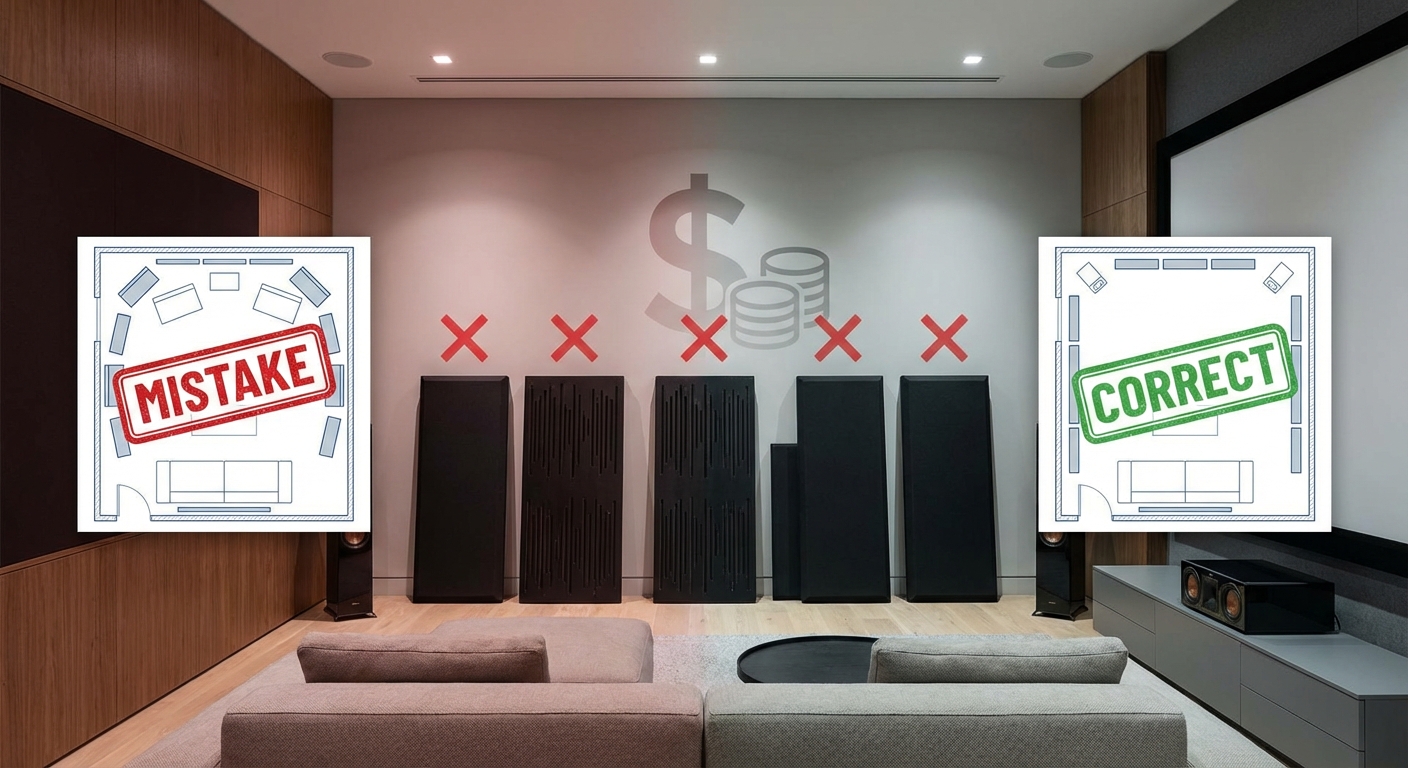
Common Mistakes That Waste Money
| Mistake | Why It Fails | Better Approach |
|---|---|---|
| Covering every wall with foam | Creates dead, lifeless sound; doesn’t address bass | Treat reflection points only; use varied materials |
| Using only thin materials | High frequencies get absorbed, bass remains boomy | Use 2 to 4 inch thick panels; add corner bass traps |
| Ignoring the ceiling | Ceiling reflections blur dialogue and imaging | Treat the ceiling reflection point between speakers and seat |
| Treating the wrong walls | Wastes materials on walls that don’t cause problems | Use mirror method to find actual reflection points |
| Buying expensive gear first | Acoustic problems ruin even the best speakers | Fix the room before upgrading equipment |
How Much Treatment Is Enough
You don’t want a completely dead room. Some reflections add spaciousness and liveliness to the sound. The goal is controlled reflections, not zero reflections.
Start with minimal treatment and add more gradually. Put up a rug and curtains. Listen for a few days. Add side wall panels. Listen again. Add bass traps. Keep going until dialogue sounds clear, music has punch, and the soundstage feels wide and defined.
Most home theater rooms need treatment on 20 to 30 percent of the wall surface. Living rooms that double as home theaters often need less because furniture and everyday items already provide absorption.
A good rule of thumb: if you can clap your hands and hear a sharp, ringing reflection, you need more absorption. If a handclap sounds dull and flat with no sense of space, you’ve added too much treatment.
DIY Acoustic Panels for Under $30 Each
You can build effective acoustic panels for a fraction of retail prices. Here’s what you need:
- Rigid fiberglass insulation (2 to 4 inches thick)
- Wooden frames made from 1×2 or 1×4 lumber
- Fabric to wrap the panels (breathable material like burlap or speaker cloth)
- Spray adhesive to attach fabric
- Hanging hardware
Cut the wood to frame size. Assemble frames with wood glue and screws. Cut insulation to fit snugly inside. Wrap the whole thing in fabric, stretching it tight and stapling it to the back. Mount on walls with French cleats or Z-clips.
Four panels built this way cost about the same as one commercial panel and work just as well.
Testing Your Progress
Your ears tell you most of what you need to know, but simple tests help confirm improvements.
Play dialogue heavy content at normal volume. Can you understand every word without turning on subtitles? If not, you need more mid and high frequency absorption.
Play bass heavy music or movie scenes. Does the bass sound tight and defined, or does it boom and overwhelm everything else? Boomy bass means you need corner bass traps.
Clap your hands at different spots in the room. A sharp, ringing echo means hard reflections are still bouncing around. A short, controlled decay means your treatment is working.
Walk around the room while playing music. Does the sound stay consistent or does it get boomy in some spots and thin in others? Uneven bass response points to room modes that need bass traps to control.
Beyond Absorption: Diffusion and Scattering
Absorbing every reflection creates a dead sound. Diffusion scatters reflections in different directions without completely absorbing them. This preserves a sense of space while preventing harsh echoes.
Bookshelves act as natural diffusers. The irregular surface of book spines scatters sound randomly. You can also buy or build dedicated diffuser panels with geometric patterns that scatter specific frequencies.
Place diffusers on the back wall behind your listening position or on the wall behind your speakers if there’s enough distance. Diffusion works best when there’s at least 3 feet between the diffuser and the listener.
Combining absorption and diffusion creates the most natural sound. Absorb the early reflections from side walls and ceiling. Diffuse the later reflections from the back wall.
Quick Wins That Cost Nothing
Rearrange furniture to break up large flat surfaces. Move a bookshelf to a side wall. Angle your couch away from being parallel to the wall.
Open closet doors if they’re in the room. The clothes inside absorb sound. A closet full of hanging clothes acts like a giant bass trap.
Add throw pillows and blankets to your couch. Every bit of soft material helps with high frequency reflections.
Stack books or magazines on tables and shelves. The more irregular surfaces you create, the less sound bounces around cleanly.
Hang artwork on bare walls. Canvas paintings with thick frames add depth and break up flat surfaces. Heavy tapestries or fabric wall hangings provide even more absorption.
When Professional Help Makes Sense
Most home theater rooms improve dramatically with DIY treatment. But some situations benefit from professional acoustic analysis.
If your room has severe bass problems that corner traps don’t fix, you might have strong room modes that need calculated treatment placement. An acoustician can measure the room and recommend specific solutions.
If you’re building a dedicated theater room from scratch, getting professional advice during the design phase saves money and delivers better results than trying to fix problems after construction.
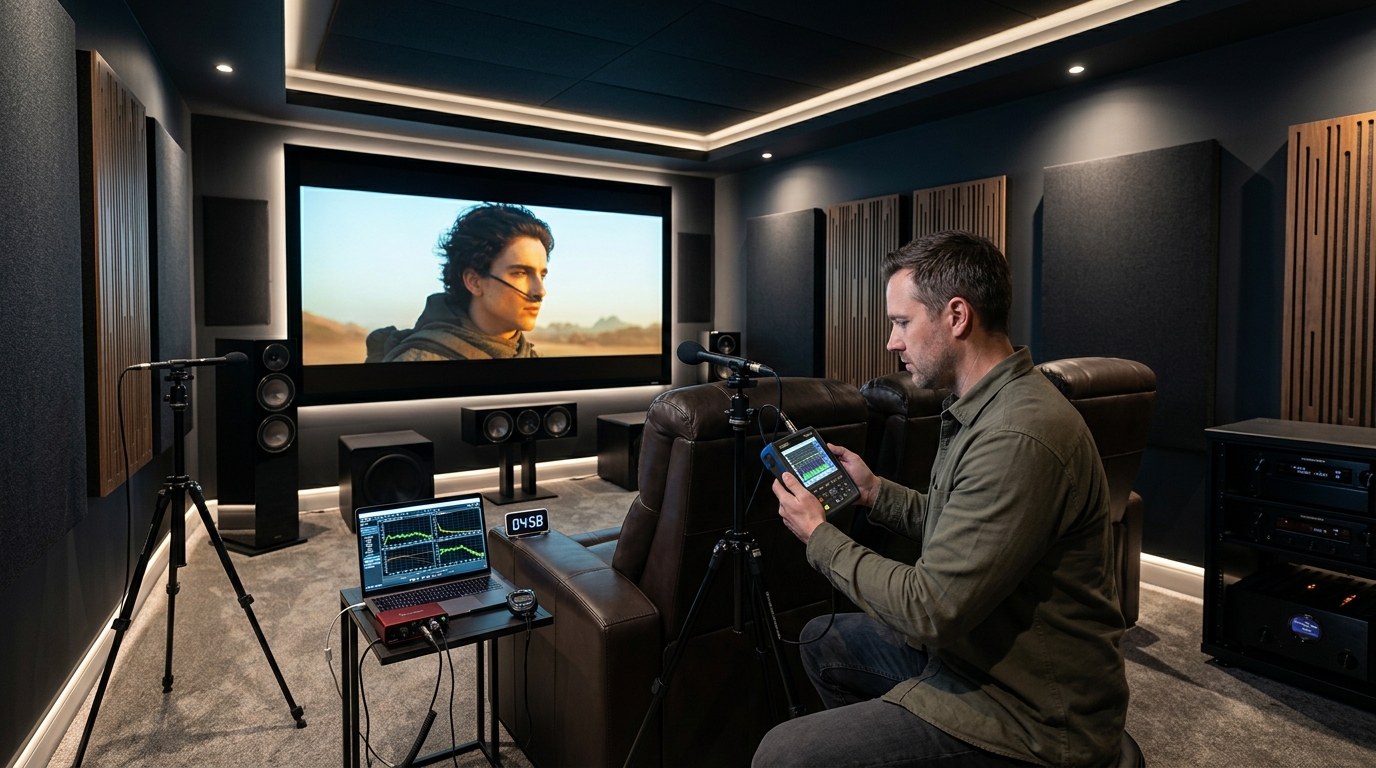
If you’ve added treatment but still struggle with specific problems, measurements from a calibrated microphone and room correction software can pinpoint issues your ears might miss.
Balancing Acoustics and Aesthetics
Acoustic treatment doesn’t have to look industrial. Fabric wrapped panels come in any color. You can print custom fabric with artwork or photos and wrap panels with it.
Acoustic panels double as wall art when covered with attractive fabric. Arrange them in patterns or group them like a gallery wall.
Bass traps fit behind furniture or in corners where they’re barely visible. You can build them into floor to ceiling columns that look like architectural elements.
Curtains and rugs are acoustic treatments that nobody questions. Choose styles that match your decor and they serve double duty.
Bookshelves, plants, and decorative objects all contribute to better acoustics while looking like normal room furnishings.
Your Room, Your Sound
Reducing echo doesn’t require a complete room renovation or thousands of dollars in commercial products. Start with soft furnishings you already own. Add a rug, hang some curtains, fill your bookshelves. Listen to the difference.
Then tackle the reflection points with a few acoustic panels. Build them yourself or buy them ready made. Add corner bass traps to control the low end. Test as you go and stop when the sound feels right to your ears.
Your room will never sound like a professional recording studio, and that’s fine. You’re not trying to create a clinical listening environment. You want clear dialogue, punchy bass, and an immersive soundstage that makes movies and music enjoyable. A few strategic improvements get you there without turning your living room into a science experiment.