You’re building your first home theater and staring at a long list of components. Receiver, speakers, cables, maybe a screen. Then someone mentions a subwoofer, and suddenly you’re wondering if you really need another box taking up floor space and draining your wallet.
A subwoofer handles frequencies below 80Hz that most speakers can’t reproduce properly. For movie soundtracks and modern music, you’ll miss explosions, rumbles, and bass notes without one. Budget systems benefit most because small speakers struggle with low frequencies. You can start without a subwoofer and add one later, but it’s the single most noticeable upgrade for home theater impact.
What a subwoofer actually does
Most tower and bookshelf speakers stop producing clean sound around 50Hz to 80Hz. That’s where a subwoofer takes over.
Bass frequencies below 80Hz carry the weight of movie soundtracks. Thunder, explosions, engine rumbles, and musical low notes all live in this range. Your main speakers physically can’t move enough air to create these sounds at the volume levels you need.
A dedicated subwoofer uses a larger driver, usually 10 to 12 inches, in a cabinet designed specifically for low frequency reproduction. It handles everything your other speakers can’t.
The crossover point matters here. Most receivers let you set where your speakers hand off to the subwoofer. If your bookshelf speakers only go down to 60Hz, you set the crossover at 80Hz. The subwoofer handles everything below that point.
Why most speakers need help with bass

Speaker size directly limits bass output. Physics doesn’t care about marketing claims.
A 5 inch driver in a bookshelf speaker simply cannot move the volume of air needed to produce 30Hz bass at reasonable volume levels. The cone would need to move several inches back and forth, which creates distortion and mechanical failure.
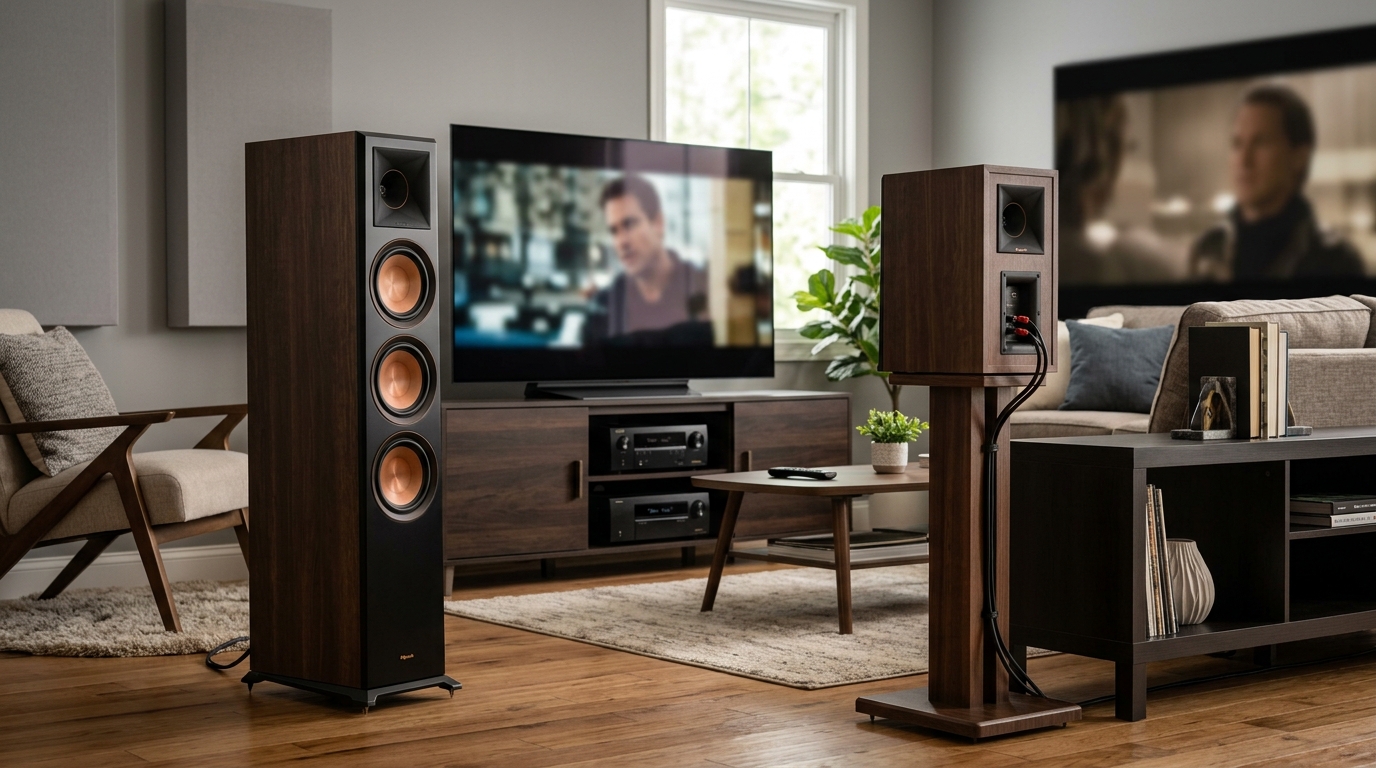
Larger tower speakers do better, but they still struggle below 40Hz. Even expensive floor standing models hand off to a subwoofer for the deepest frequencies.
Small satellite speakers in budget systems have almost no bass capability. They’re designed to work with a subwoofer from day one.
Here’s what different speaker types typically handle:
| Speaker Type | Usable Bass Extension | Needs Subwoofer? |
|---|---|---|
| Small satellites | 120Hz and up | Absolutely |
| Bookshelf speakers | 60Hz to 80Hz | Highly recommended |
| Tower speakers | 40Hz to 50Hz | Recommended |
| Large towers | 30Hz to 40Hz | Optional |
How movies use low frequency effects
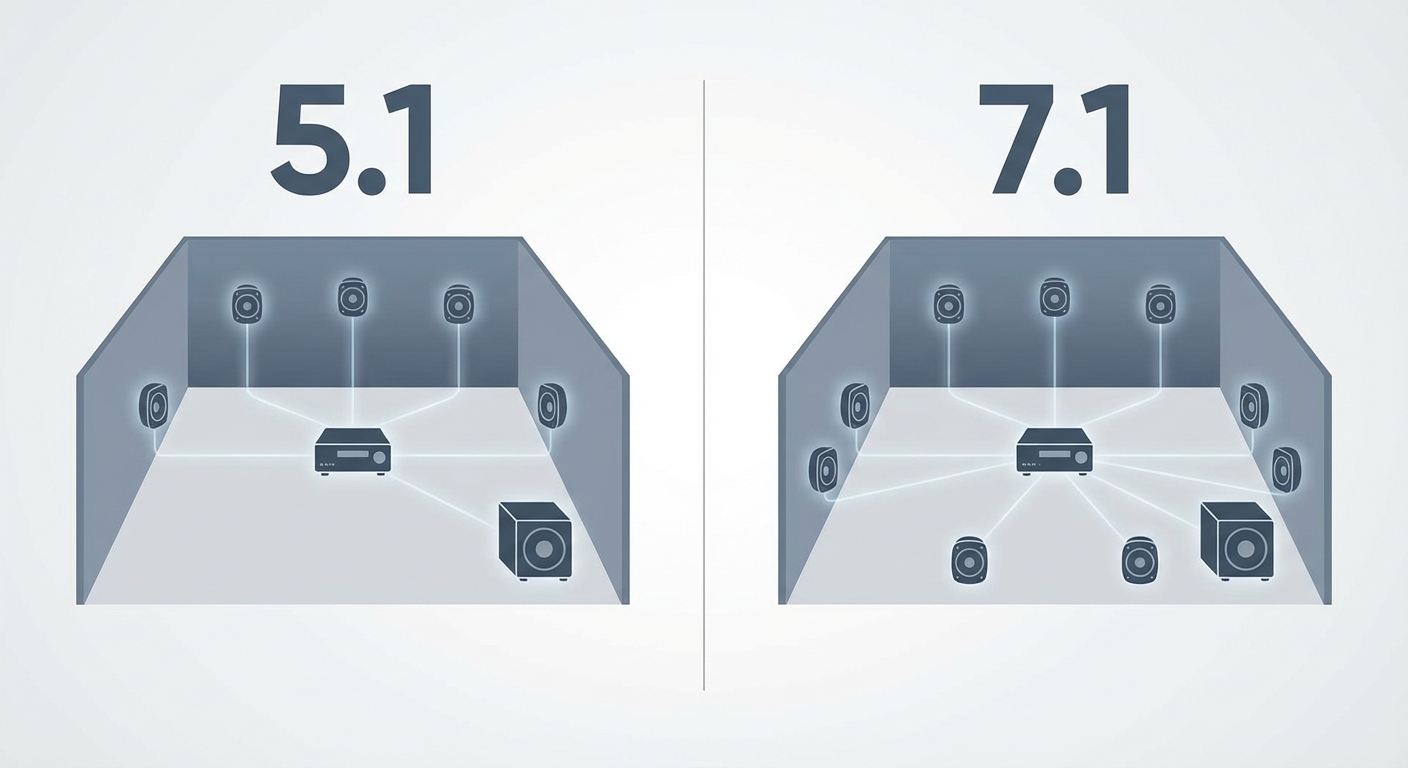
Modern movie soundtracks include a dedicated LFE channel. That’s the “.1” in 5.1 or 7.1 surround sound.
The LFE channel carries only low frequency information. Explosions, earthquakes, spaceship engines, dinosaur footsteps. Sound designers put these effects on a separate channel because they know you have a subwoofer to reproduce them.
Without a subwoofer, your receiver has to redirect this information to your main speakers. They’ll attempt to play it, but the result sounds thin and weak. You’re missing a huge part of the soundtrack.
Action movies suffer the most. A car chase without proper bass feels flat. Gunshots lose their impact. Explosions become sad little pops.
Even dialogue heavy films use bass. Background music, ambient room tone, and environmental sounds all extend into subwoofer territory.
Budget systems benefit most from subwoofers

If you’re spending $300 on a complete speaker package, those speakers have minimal bass output. Adding even a basic subwoofer transforms the experience more than any other upgrade.
A $200 subwoofer paired with $100 bookshelf speakers will outperform $300 bookshelf speakers alone. The subwoofer handles frequencies the small speakers can’t touch.
This creates an interesting budget strategy. You can buy smaller, less expensive main speakers and put more money into a good subwoofer. Small speakers actually benefit from this approach because they perform better when they’re not struggling to produce bass.
Start with the best subwoofer your budget allows, then fill in the rest of your system. Bass extension is expensive to engineer into speakers, but a dedicated subwoofer delivers it efficiently. You’ll get more impact per dollar.
When you might skip the subwoofer
Large tower speakers in small rooms can work without a subwoofer. If you have quality floor standing speakers that extend down to 35Hz, and your room is under 200 square feet, you might get acceptable bass.
Classical music listeners sometimes prefer systems without subwoofers. Acoustic recordings don’t demand the deep bass extension that movies require. A good pair of towers can handle orchestral music without help.
Apartment dwellers face a different calculation. Subwoofers transmit through walls and floors more readily than higher frequencies. If you have noise sensitive neighbors, you might choose to skip bass rather than deal with complaints.
Very small rooms, under 100 square feet, sometimes work better without subwoofers. The bass can overload the space and create boomy, uncontrolled sound.
Setting up without a subwoofer initially
You can build your system in stages. Start with good main speakers and add a subwoofer later.
Here’s how to set up a system without a subwoofer:
- Set all speakers to “Large” in your receiver settings
- Disable the subwoofer output completely
- Position your main speakers away from walls to reduce bass boominess
- Use your receiver’s tone controls sparingly to balance the sound
- Accept that you’re missing content below your speakers’ limits
This approach works for getting started. You’ll hear dialogue clearly and enjoy music. Movies will sound thin, but watchable.
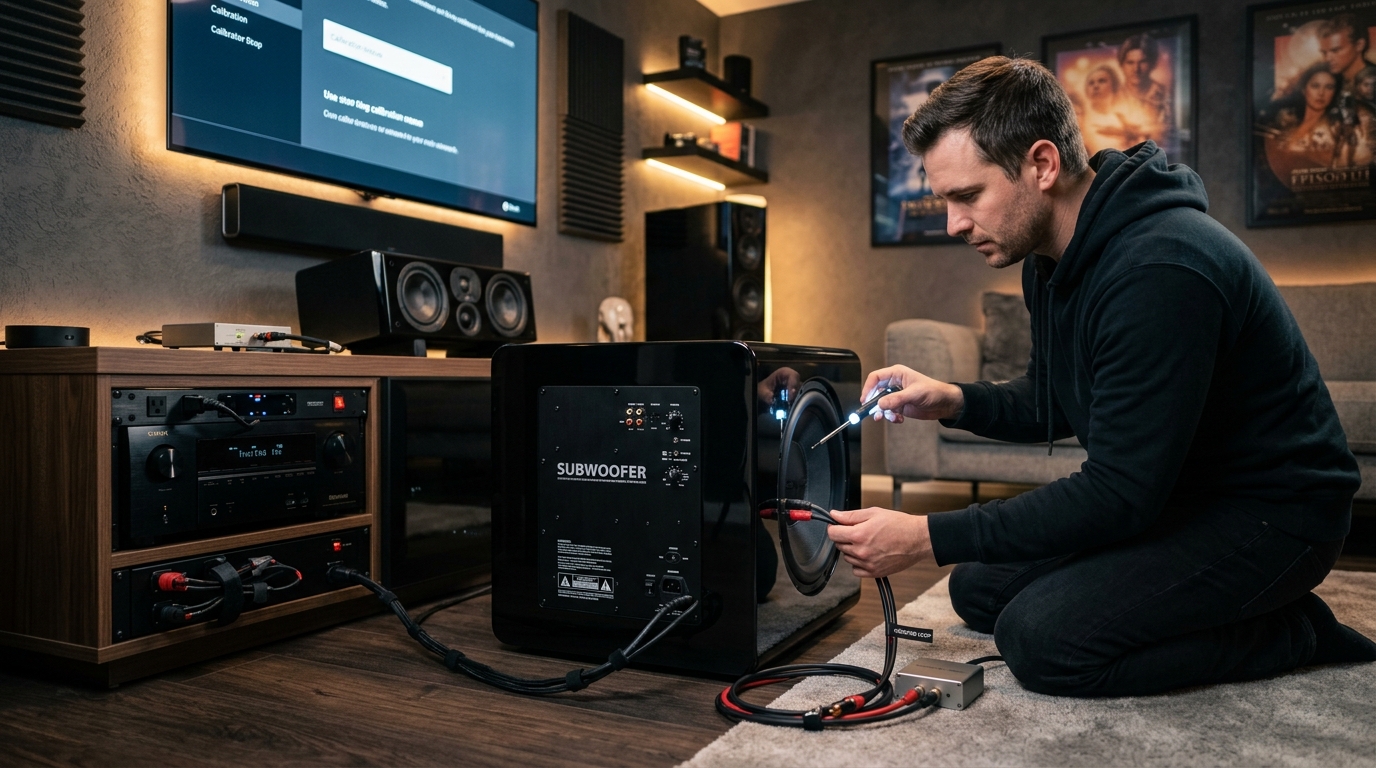
When you add a subwoofer later, you’ll need to reconfigure everything. Change your speakers to “Small,” set appropriate crossover points, and position the subwoofer for best response in your room.
What you lose without proper bass
Missing frequencies below 60Hz affects more than explosions. Here’s what disappears from your soundtrack:
- Thunder and weather effects
- Large vehicle engines and movement
- Building collapses and structural impacts
- Dinosaur and monster vocalizations
- Earthquake and disaster sounds
- Deep musical notes from organs, synthesizers, and bass guitars
- Ambient environmental rumble
- Physical impact sounds
These elements add realism and emotional impact. A scene set during a thunderstorm feels different when you hear and feel the thunder. An approaching spaceship has more presence with deep engine rumble.
Music loses foundation. Electronic music, hip hop, and modern pop all rely on deep bass. Rock music loses the chest thump of kick drums and bass guitars.
Even nature documentaries use low frequency sound. Whale calls, elephant vocalizations, and volcanic eruptions all extend below typical speaker range.
Subwoofer alternatives that don’t work well
Some people try bass shakers or tactile transducers attached to furniture. These vibrate your couch to simulate bass.
They create vibration, not sound. You feel something, but you don’t hear proper bass frequencies. The experience is disconnected and artificial.
Soundbars with built in subwoofers rarely perform well. The small drivers and limited cabinet volume can’t produce real deep bass. They add some thump around 60Hz to 80Hz, but nothing below that.
Ported speakers attempt to extend bass response using cabinet tuning. They work to a point, but physics still limits what a small driver can accomplish. You get a bit more bass, but not true subwoofer extension.
Software bass enhancement processes existing frequencies to create the illusion of deeper bass. Your brain fills in missing information. This works better than nothing, but it’s not the same as actually reproducing those frequencies.
Room size changes the equation
Larger rooms need more bass output. A subwoofer that works great in a 150 square foot bedroom will struggle in a 400 square foot living room.
Bass energy spreads throughout your space. Bigger volumes require more power to achieve the same impact. A single 10 inch subwoofer might be perfect for a small room but inadequate for a large space.
Multiple subwoofers solve this problem, but that’s beyond most beginner budgets. For now, understand that room size affects whether you can skip a subwoofer.
Small rooms actually make the subwoofer decision easier. Even a modest subwoofer will fill a bedroom or small den with satisfying bass. You don’t need expensive, high powered models.
Open floor plans present challenges. If your home theater opens into other spaces, bass energy spreads into those areas. You’ll need more output to maintain impact in the listening position.
Starting your system the right way
Most beginners should plan for a subwoofer from the beginning, even if they don’t buy it immediately.
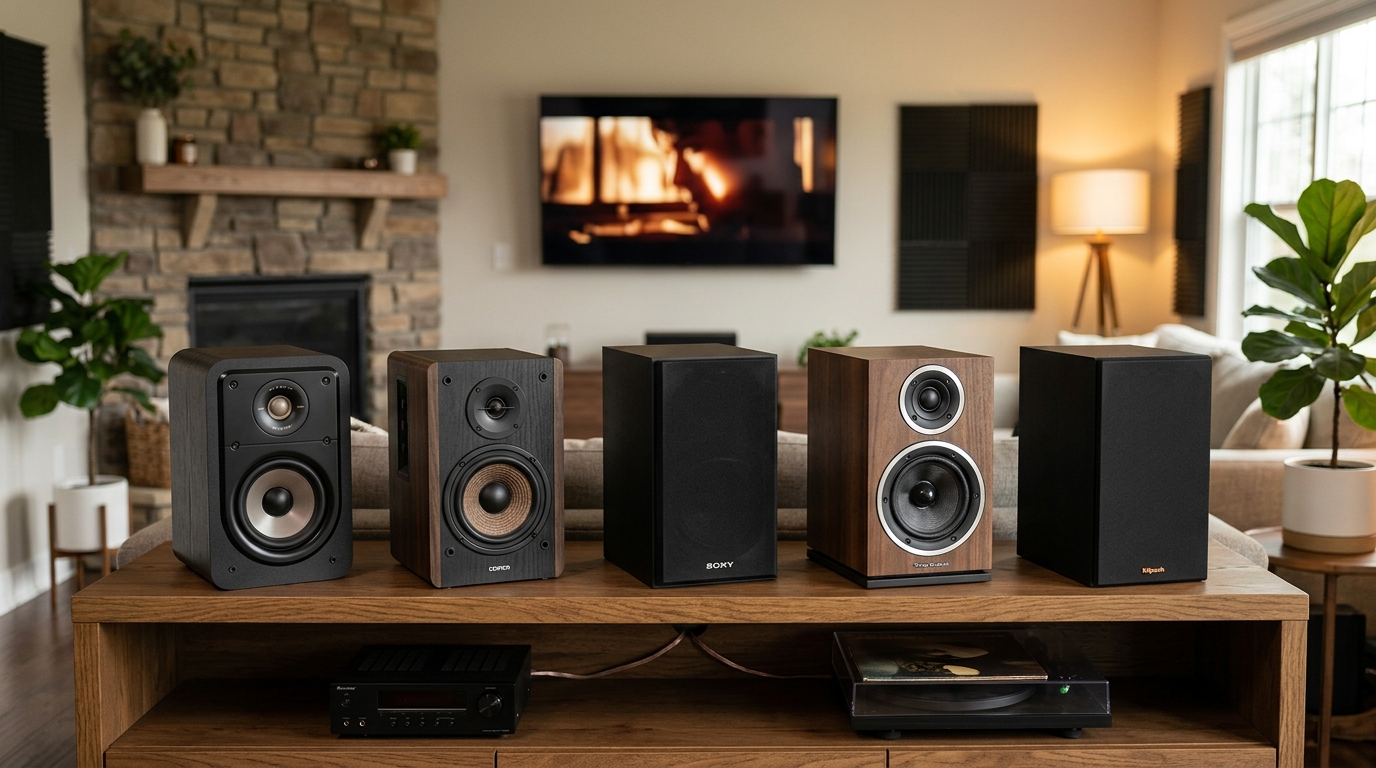
Choose smaller bookshelf speakers instead of stretching your budget for towers. Save the difference for a subwoofer purchase in a few months. The combination of good bookshelf speakers plus a subwoofer will outperform mediocre tower speakers alone.
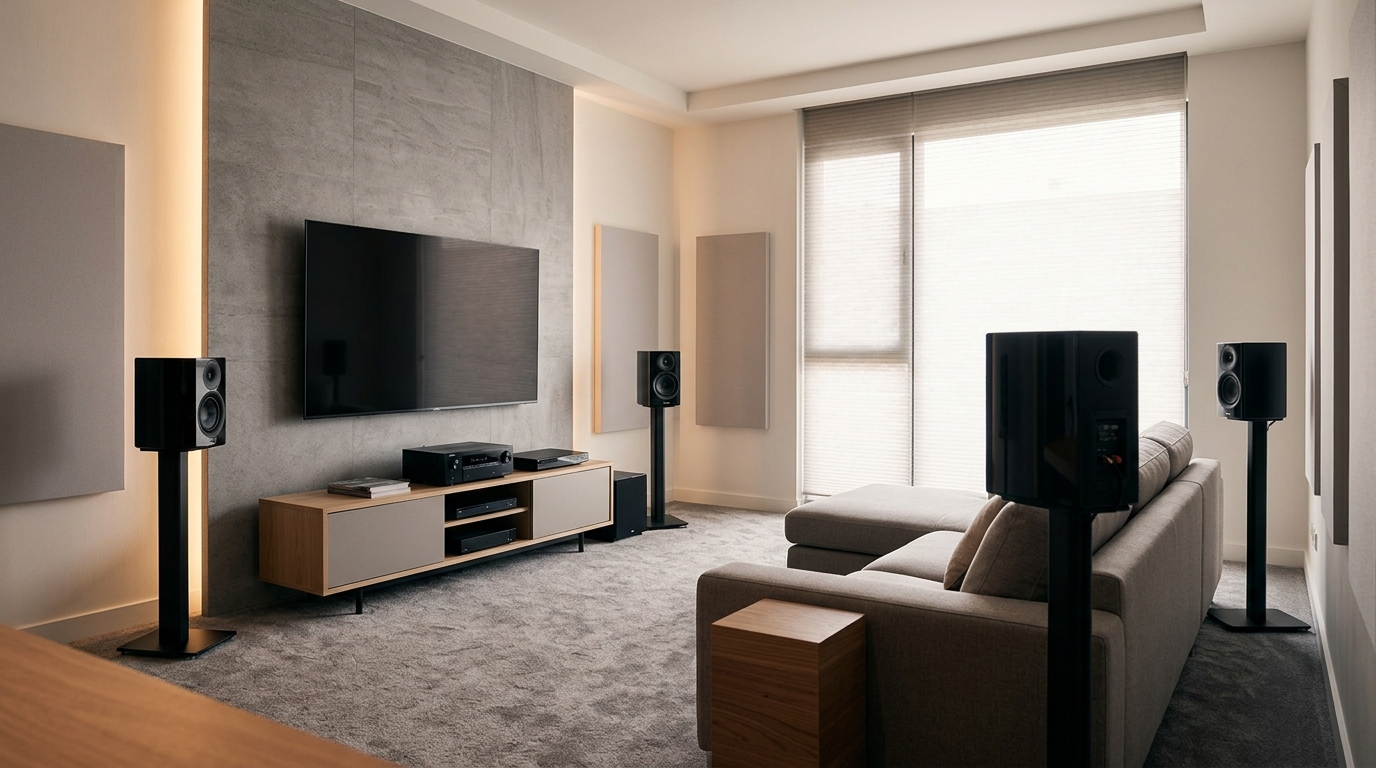
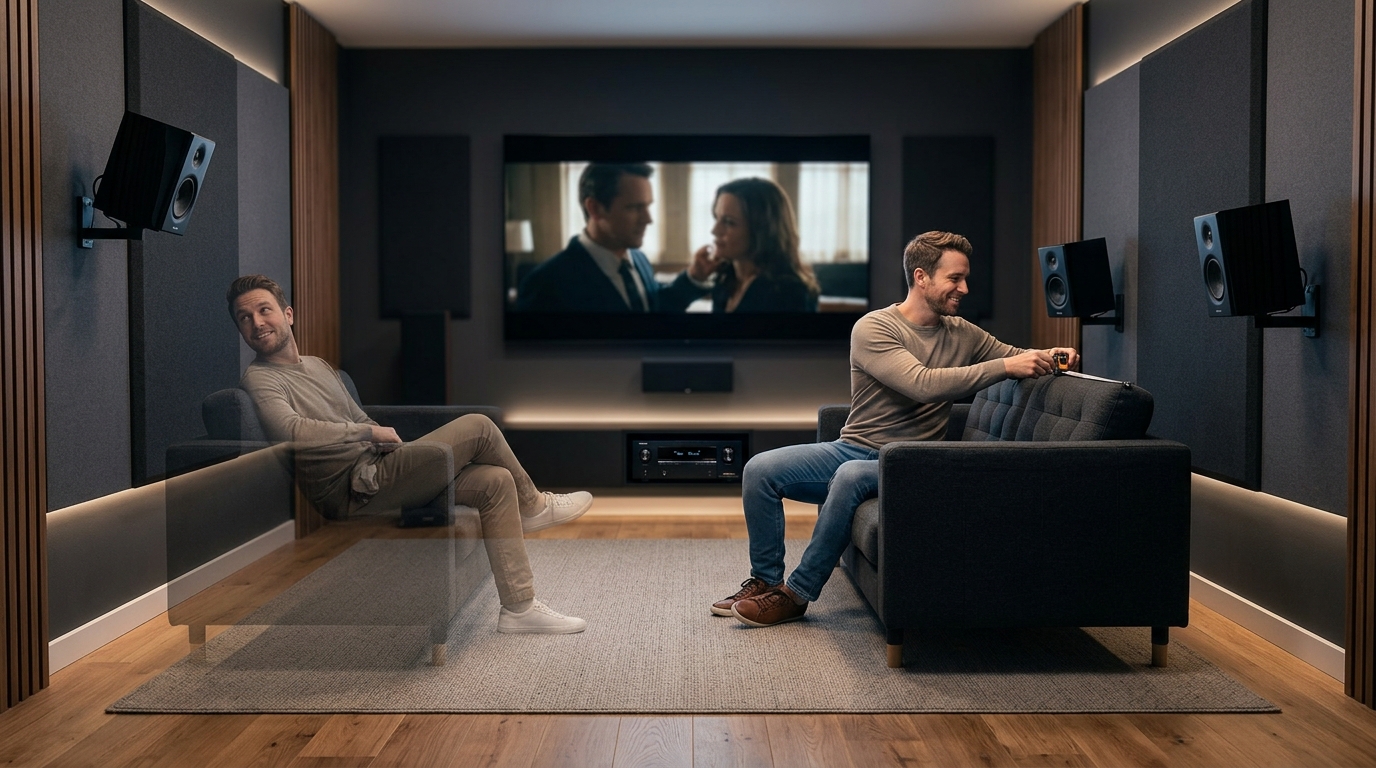
Position your main speakers first. Get them placed correctly for imaging and soundstage. Leave space for a subwoofer, typically in a front corner or along the front wall.
Run your system without the subwoofer for a while. Listen to movies and music. Notice what’s missing. This helps you appreciate the upgrade when you add bass later.
When you’re ready to add the subwoofer, expect to spend at least $200 for something worthwhile. Cheaper models often create more problems than they solve, with boomy, uncontrolled bass that makes everything worse.
Making the decision for your situation
Consider these factors:
- Room size and layout
- Primary content type (movies vs music)
- Speaker quality and size
- Budget constraints
- Living situation and noise concerns
- Future upgrade plans
For most home theater setups, especially those focused on movies and modern music, a subwoofer isn’t optional. It’s a core component that completes your system.
The good news is that you can start without one and add it later. Your receiver already has the output. Your speakers will work fine set to “Small.” The upgrade path is straightforward.
But if you’re buying everything at once, allocate budget for a subwoofer. Cut costs elsewhere if needed. Smaller speakers with a good subwoofer will deliver better results than larger speakers struggling to produce bass they can’t handle.
Getting the bass your system deserves
A subwoofer transforms home theater from background entertainment to immersive experience. You’ll feel explosions, hear musical foundation, and experience soundtracks the way directors intended.
Start with what your budget allows. Even a modest subwoofer beats no subwoofer for movie watching. As your system grows, you can upgrade to better models or add a second subwoofer for even bass response.
The difference is immediate and dramatic. The first time you watch an action movie with proper bass, you’ll understand why this component matters so much.