
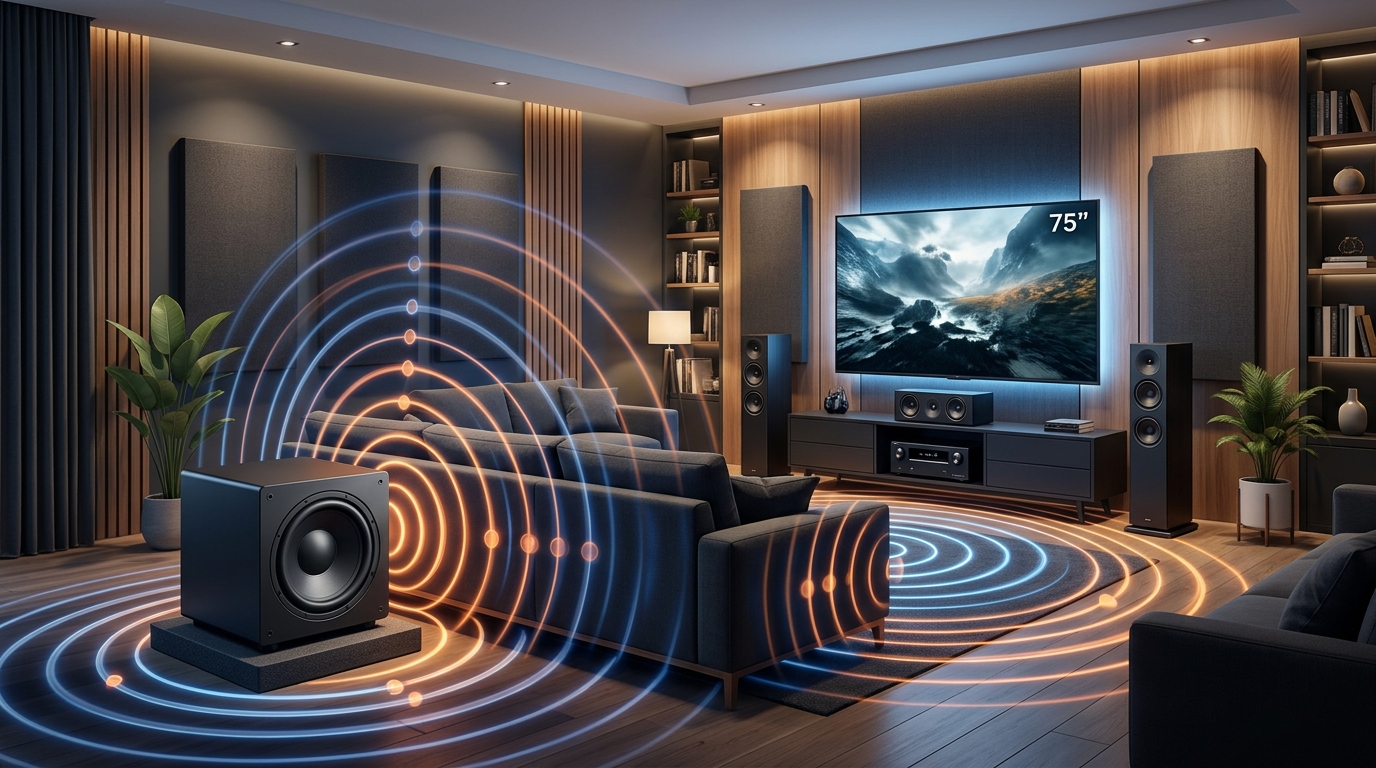
You just unboxed your new subwoofer, plugged it in, and hit play. The bass sounds muddy, weak, or boomy. Moving it a few feet to the left changes everything. Bass waves behave differently than other frequencies, bouncing off walls and creating peaks and nulls throughout your room. The right subwoofer placement can mean the difference between chest-thumping impact and disappointing rumble.
Subwoofer placement dramatically affects bass quality. Room corners amplify low frequencies but can create boomy sound. The subwoofer crawl method helps you find the smoothest bass response. Test multiple positions, avoid placing subs directly against walls, and use your receiver’s phase controls to eliminate cancellation. Small adjustments of just a few inches can transform your bass performance completely.
Understanding why location matters for bass frequencies
Bass waves measure several feet long. A 40 Hz tone creates a wave nearly 28 feet long.
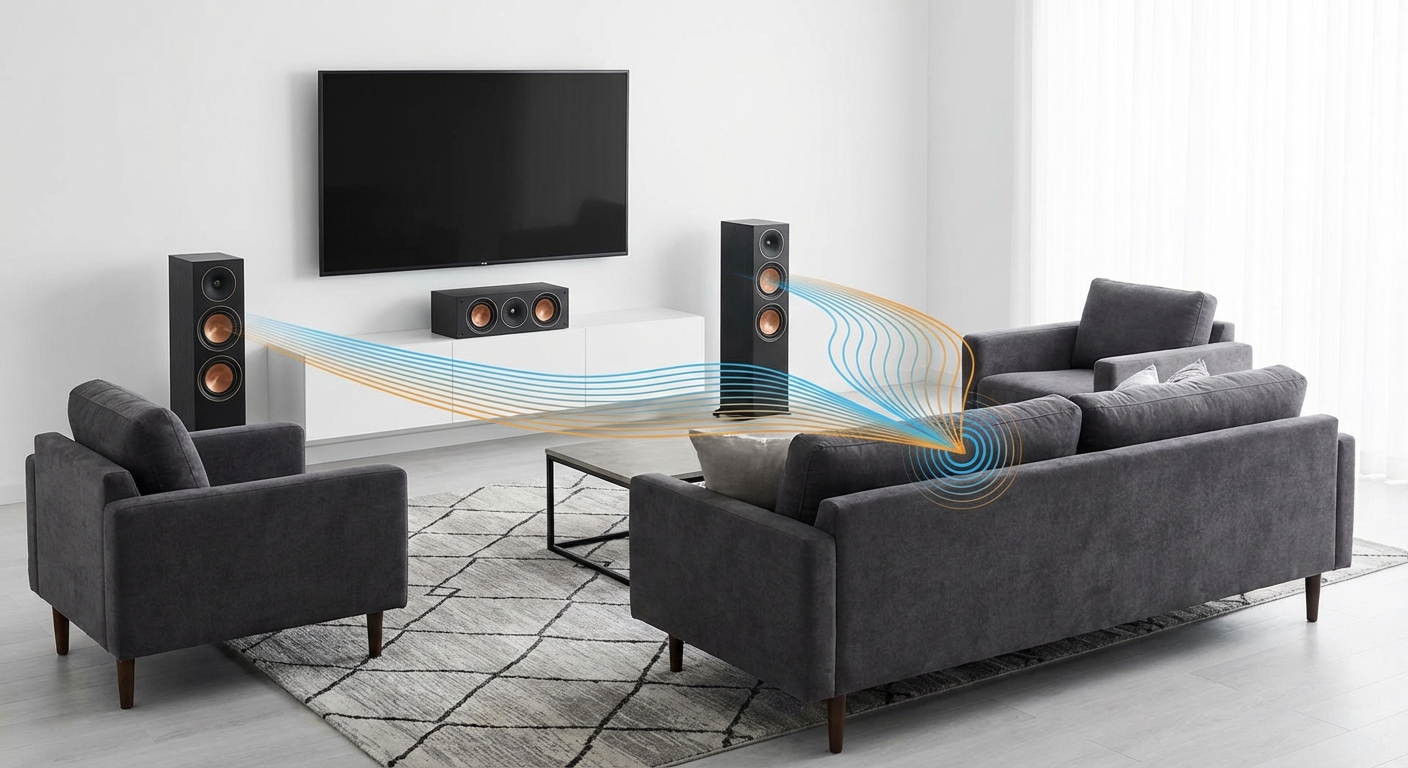
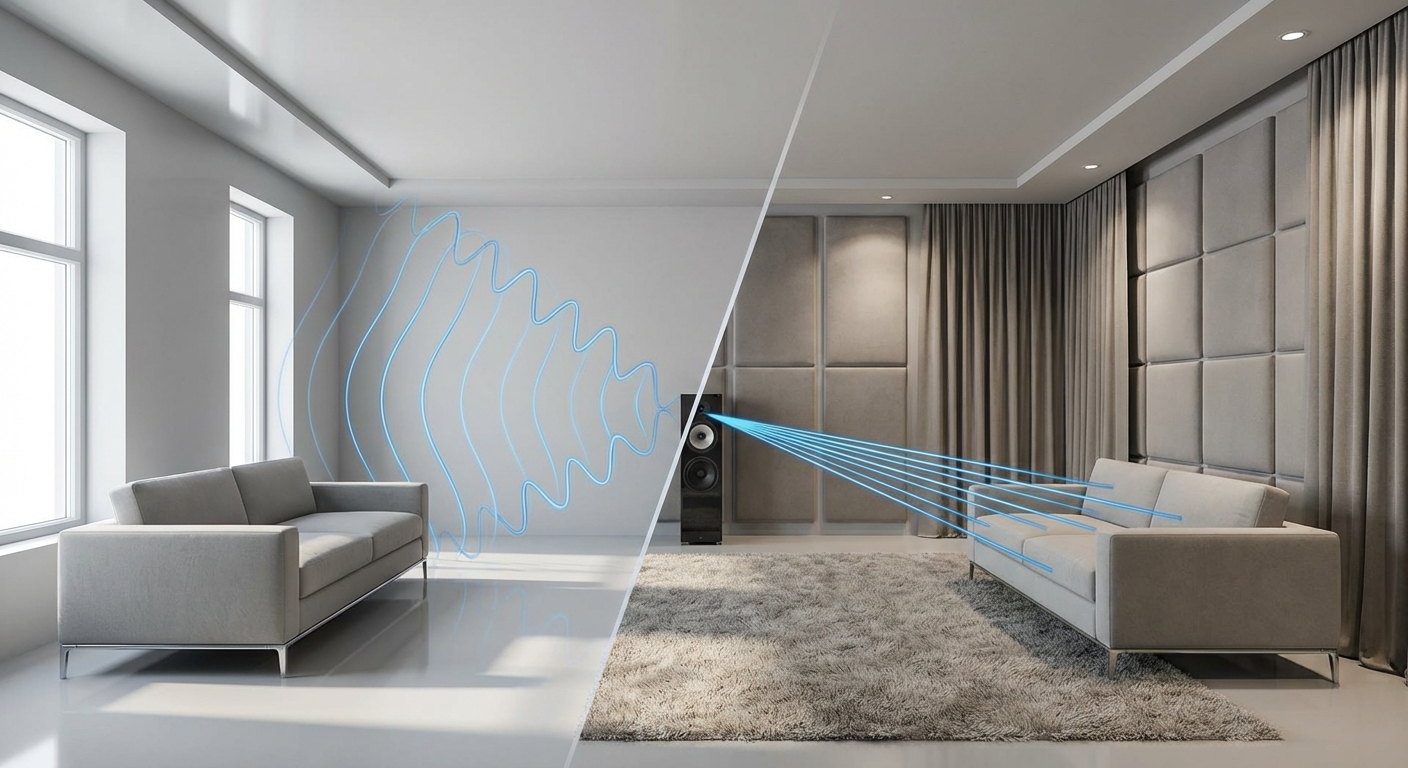
These massive waves interact with your room boundaries in complex ways. They reflect off walls, floors, and ceilings, creating standing waves where some spots get too much bass and others get almost none.
Your main speakers produce directional sound. You can tell where they’re positioned in the room.
Subwoofers work differently. Bass below 80 Hz becomes omnidirectional. Your brain can’t pinpoint the source.
This characteristic gives you flexibility. You can place a subwoofer almost anywhere and it won’t sound like bass is coming from that specific spot. But room acoustics still matter tremendously.
Boundary reinforcement occurs when a subwoofer sits near walls or corners. Each nearby surface adds approximately 3 dB of bass output. A corner location touching three boundaries can boost output by 9 dB or more.
That sounds great until you realize this boost isn’t even across all frequencies. Some bass notes get amplified while others get canceled out, creating an uneven response that makes certain movie explosions thunder while music bass lines disappear.
The subwoofer crawl method for finding the best spot
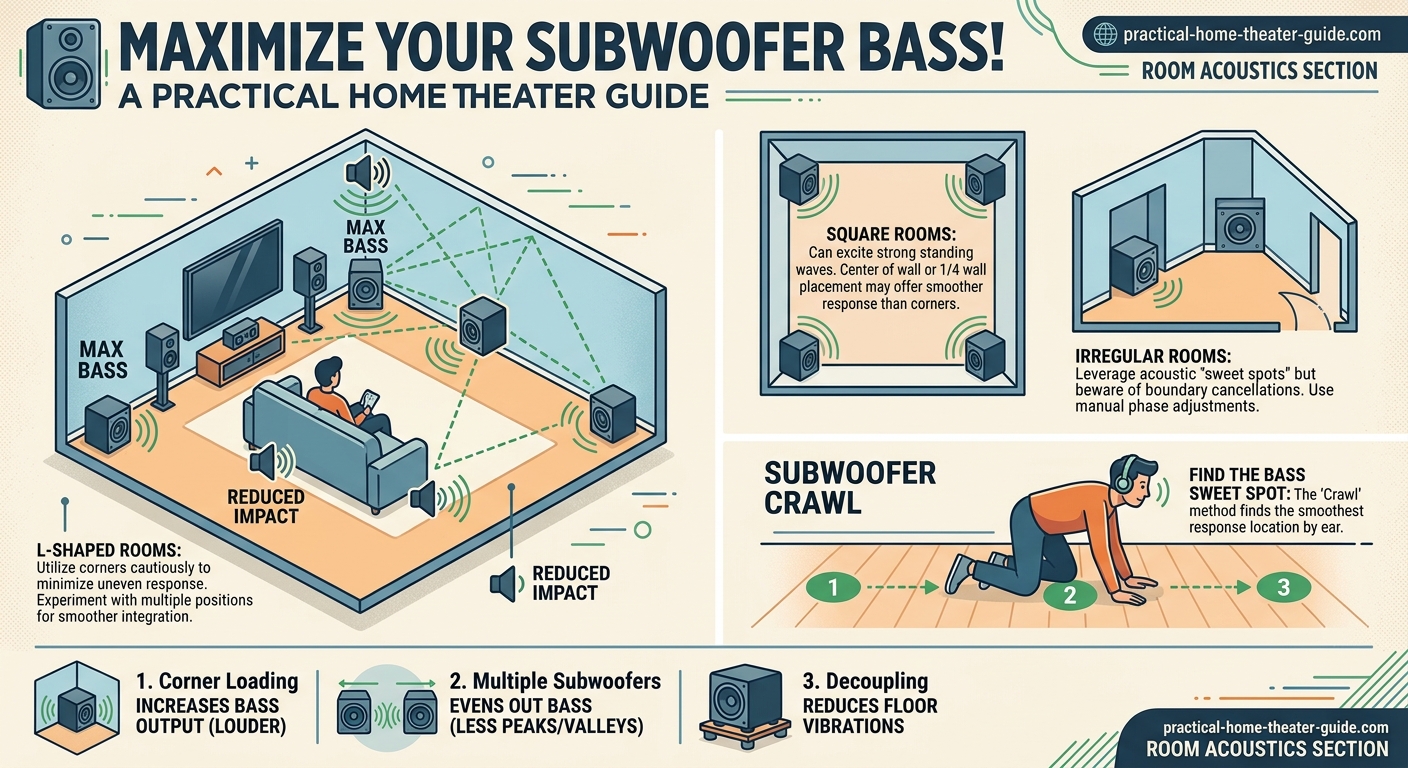
This technique sounds silly but delivers real results. Professional installers use it regularly.
- Place your subwoofer in your main listening position, right where you normally sit.
- Play a bass-heavy track with consistent low frequency content.
- Crawl around the room’s perimeter on your hands and knees, listening carefully to how the bass sounds at different locations.
- Mark spots where the bass sounds smooth, powerful, and even.
- Move the subwoofer to the best-sounding location you identified.
The physics works because your ears and the subwoofer swap positions. The acoustic path remains the same in both directions.
When you find a spot on the floor where bass sounds balanced and strong, placing the subwoofer there will deliver that same quality to your listening position.
This method reveals problem areas too. You’ll notice spots where bass completely disappears or sounds boomy and one-note. Avoid placing your subwoofer in these locations.
The crawl takes about 15 minutes. Test along walls, in corners, and at various distances from boundaries.
Take notes or use painter’s tape to mark promising locations. You might find several good options, giving you flexibility based on room layout and decor constraints.
Common placement positions and their characteristics
Different locations create distinct bass characteristics. Here’s what to expect from typical placements.
| Position | Bass Output | Sound Quality | Room Impact |
|---|---|---|---|
| Front corner | Very high | Often boomy | Maximum boundary gain |
| Front wall center | Moderate | Balanced | Good for smaller rooms |
| Side wall midpoint | Moderate | Can create nulls | Unpredictable response |
| Behind listening position | High | Localized feel | Works for nearfield setups |
| Room center | Low | Most accurate | Impractical for most rooms |
Corner placement maximizes output but often creates uneven frequency response. You’ll get powerful deep bass but might lose mid-bass punch between 60-100 Hz.
Front wall center positions work well in smaller rooms under 200 square feet. The subwoofer sits below or beside your screen, creating a cohesive soundstage with your center channel speaker.
Placing a subwoofer along the side wall at the midpoint often creates problematic nulls at the listening position. The symmetry causes cancellation patterns.
Behind your seating position can work if you sit close to the back wall. This nearfield placement reduces room interaction but can make bass feel disconnected from the action on screen.
Avoid placing subwoofers inside entertainment centers or cabinets. The enclosure rattles and creates resonances that muddy the sound.
Keep subwoofers at least a few inches from walls even when using boundary reinforcement. Direct contact with walls transmits vibrations into your home’s structure, annoying neighbors and family members in adjacent rooms.
Testing multiple positions for your specific room
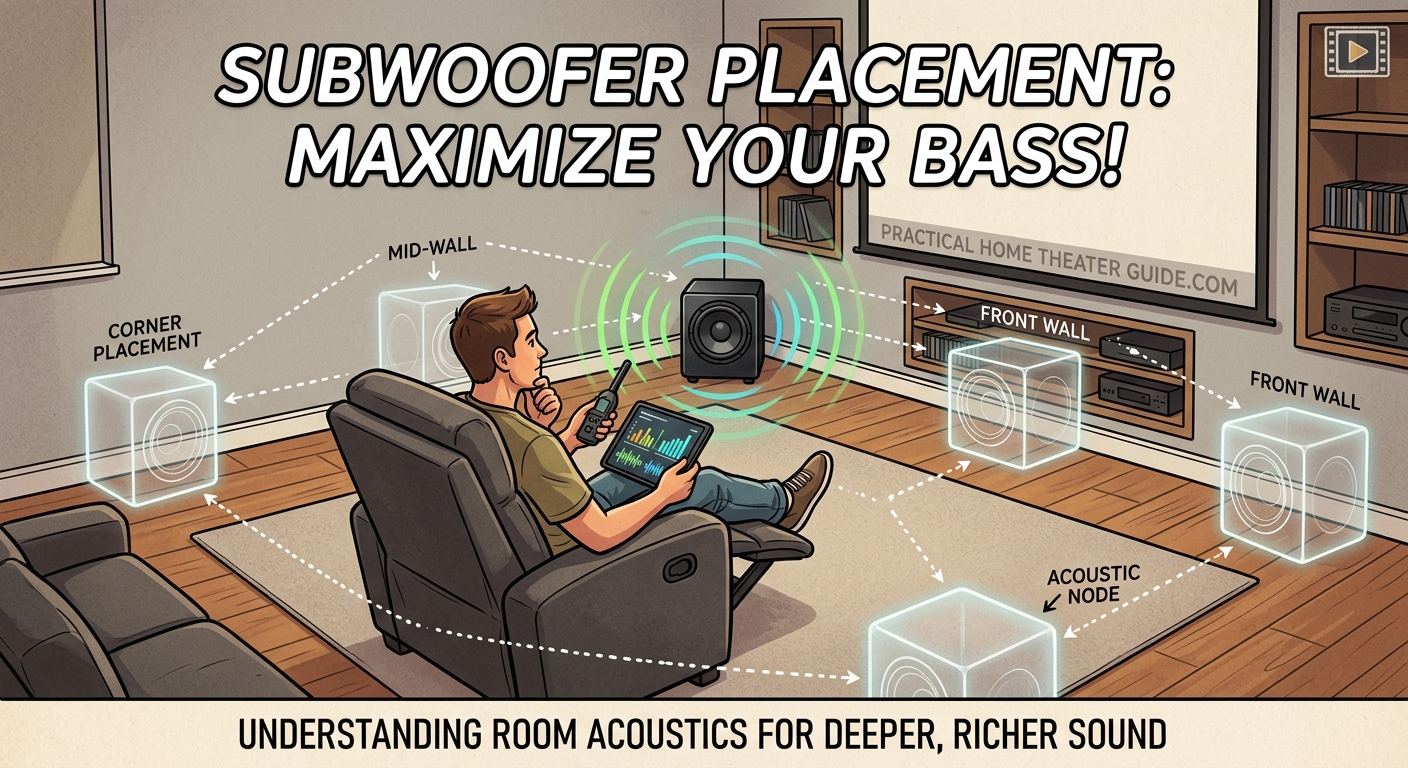
Every room responds differently to subwoofer placement. Your furniture, wall construction, and room dimensions create a unique acoustic signature.
Start with the subwoofer crawl to identify candidate locations. Then test each position systematically.
Use familiar content that includes deep bass, mid-bass punch, and musical bass lines. Movie soundtracks work well because they exercise the full bass range.
Play the same 30-second clip at each position. Listen for:
- Deep bass extension without boominess
- Clear mid-bass that doesn’t sound hollow
- Even response across different bass notes
- No rattles or vibrations from nearby objects
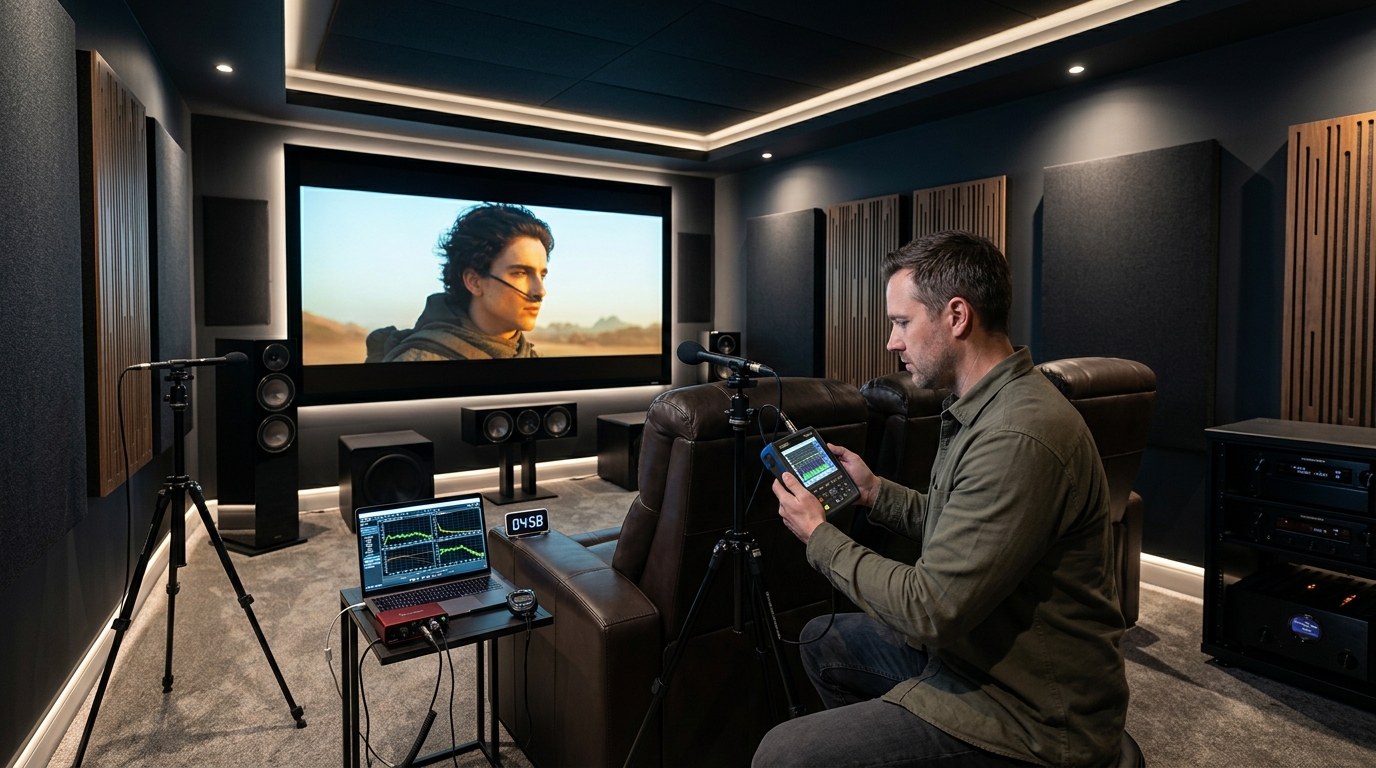
Take measurements if you have access to a sound meter app or room correction system. Visual feedback helps identify peaks and dips that your ears might miss.
The goal isn’t the loudest bass. You want smooth, even response that sounds natural across all content types.
“The best subwoofer position is the one that sounds good across the widest variety of content. If it makes action movies thunder but music sounds muddy, keep testing other locations.” – Audio calibration specialist
Room correction systems like Audyssey, Dirac, or YPAO can help compensate for placement issues, but starting with good physical positioning gives these systems less work to do.
Using the phase control to eliminate cancellation
Your receiver’s phase control adjusts the timing of bass waves. This setting becomes critical when dealing with room reflections.
When bass waves arrive at your listening position from multiple paths (direct from the subwoofer plus reflections from walls), they can arrive out of sync. Waves that are 180 degrees out of phase cancel each other, creating a null where bass disappears.
Most subwoofers include a phase switch with 0° and 180° settings. Some offer variable phase control from 0° to 180°.
Test both settings at each placement position. The difference can be dramatic.
Start with 0° phase. Play bass content and note the impact and clarity.
Switch to 180°. If the bass becomes fuller and more present, keep this setting. If it becomes thinner or disappears, return to 0°.
Variable phase controls let you fine-tune the timing in smaller increments. Adjust in 15-20 degree steps, listening carefully at each position.
Phase adjustments become more important when you add multiple subwoofers. Getting two subs to work together requires careful phase matching to prevent cancellation between the units themselves.
Distance settings in your receiver also affect phase. Make sure you measure and input the actual distance from your subwoofer to the listening position. Even a few feet of error can cause timing problems.
Dealing with room modes and standing waves
Room modes occur at specific frequencies determined by your room’s dimensions. These resonances create massive peaks and nulls that placement alone can’t fully solve.
Calculate your room’s primary modes using this formula: 1130 / (2 × dimension in feet).
For a 15-foot room length: 1130 / (2 × 15) = 37.7 Hz.
This frequency will create a standing wave with maximum pressure at the walls and minimum pressure at the room’s center.
Multiple modes stack up based on room length, width, and height. The interaction creates a complex pattern of bass reinforcement and cancellation throughout the space.
Subwoofer placement affects which modes get excited. Corner placement tends to excite all room modes simultaneously, creating the most uneven response.
Placing a subwoofer 20-25% of the way into the room along a wall often provides better modal response. This position avoids the worst pressure zones while maintaining reasonable output.
Room acoustic treatments help tame modal problems. Bass traps in corners absorb low frequency energy, reducing the severity of standing waves.
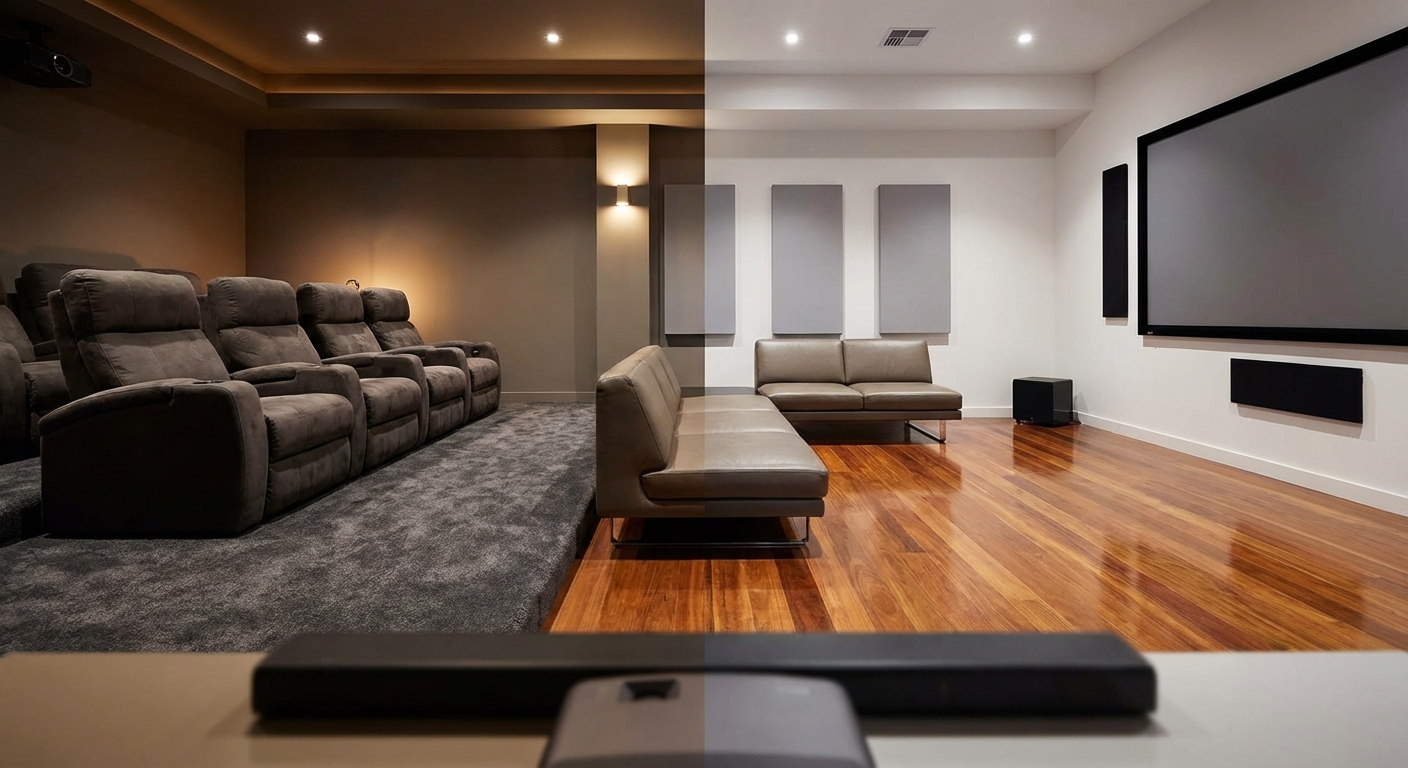
Furniture placement matters too. Large pieces break up standing waves and scatter reflections. An empty room with hard surfaces creates the worst modal problems.
Multiple subwoofers placed asymmetrically can smooth out room modes by exciting different modal patterns. The combined response averages out peaks and nulls better than a single sub can achieve.
Adjusting crossover and volume for integration
Proper crossover and level settings ensure your subwoofer blends seamlessly with your main speakers.
The crossover determines which frequencies go to the subwoofer versus your main speakers. Set it too high and you’ll localize the subwoofer’s position. Set it too low and you’ll create a gap in frequency response.
For bookshelf speakers or smaller towers, start with an 80 Hz crossover. This THX-standard setting works well for most home theater setups.
Larger tower speakers with good bass extension can use lower crossover points between 60-80 Hz. Check your speaker specifications for the -3 dB point and set the crossover 10-15 Hz above this frequency.
Volume level requires careful attention. Too loud creates boomy, overwhelming bass that dominates the soundtrack. Too quiet leaves you wanting more impact.
Use your receiver’s test tones to match the subwoofer level to your other speakers. The tones should sound equally loud across all channels.
Then watch actual content and make small adjustments. Movie soundtracks typically need slightly more subwoofer output than the test tones suggest. Music often sounds better with less.
Many receivers offer separate level settings for movies and music. Use these to optimize for different content types without constant manual adjustment.
Your AV receiver’s setup process includes automatic calibration that sets initial crossover and level values. Use these as starting points, then fine-tune by ear.
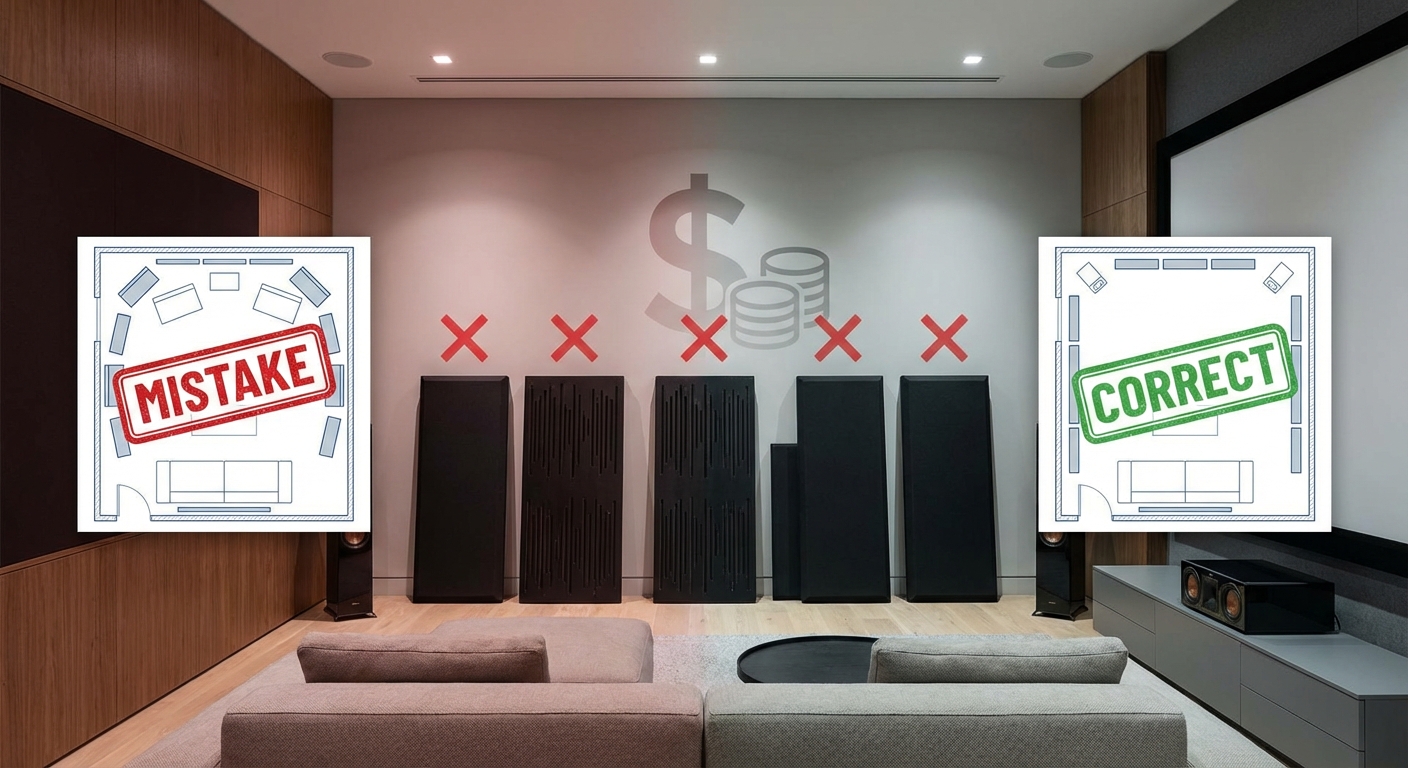
Avoiding common subwoofer placement mistakes
Several placement errors consistently create problems. Avoid these to get better bass faster.
Placing the subwoofer equidistant from two parallel walls creates strong standing waves. The symmetry reinforces modal problems instead of breaking them up.
Hiding a subwoofer behind a couch or inside furniture blocks output and creates rattles. The obstruction absorbs bass energy and introduces resonances.
Positioning a subwoofer directly in a room corner maximizes output but often creates the boomiest, most uneven response. Try pulling it 6-12 inches out from the corner walls.
Placing multiple subwoofers in identical positions relative to room boundaries creates redundant modal excitation. Asymmetric placement works better for smoothing response.
Forgetting to adjust phase when changing positions. Every location has an optimal phase setting. Test both 0° and 180° at each spot.
Setting the subwoofer’s volume knob to maximum and controlling level from the receiver. This approach reduces your dynamic range and can introduce distortion. Set the subwoofer’s volume to 50% and adjust receiver levels for proper gain staging.
Ignoring room acoustic problems that placement alone can’t fix. Hard parallel walls and bare floors amplify bass problems. Add some treatment for better results.
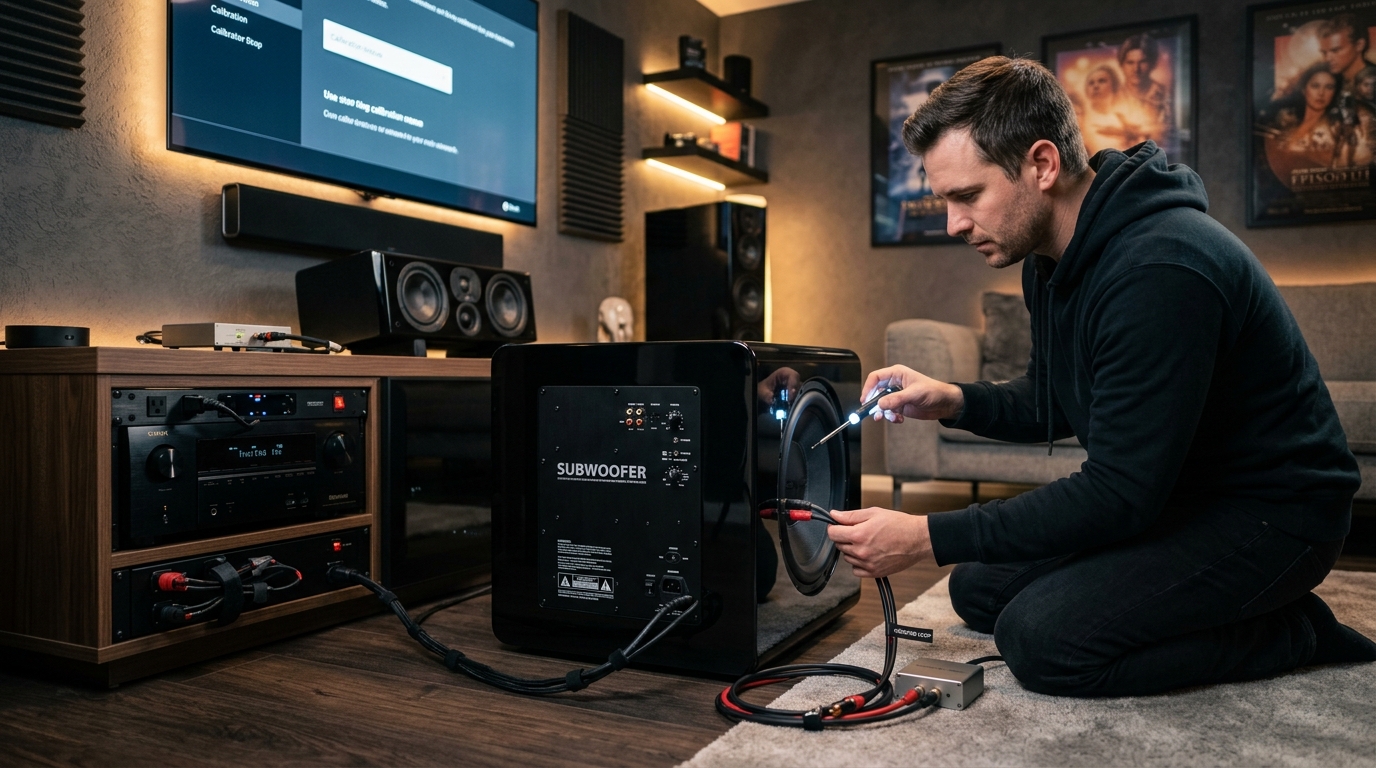
Using speaker wire instead of a subwoofer cable for LFE connections. Subwoofers need a dedicated RCA cable from the receiver’s subwoofer output, not speaker-level connections (unless your receiver lacks a sub output).
Making small adjustments for big improvements
Once you’ve found a good general location, fine-tuning can deliver surprising improvements.
Move the subwoofer in small increments, just 2-3 inches at a time. Bass wavelengths are long, but room interactions can change dramatically with minor position shifts.
Angle the subwoofer slightly instead of pointing it directly at the listening position. A 15-20 degree angle can change how the driver couples with nearby walls.
Raise the subwoofer off the floor using a platform or stands. This technique works especially well on suspended wood floors that resonate with bass frequencies. A 4-6 inch lift can tighten bass response significantly.
Try rotating the subwoofer 90 degrees. If it’s a ported design, changing the port’s orientation relative to walls affects how bass reinforcement works.
Add or remove coupling between the subwoofer and floor. Rubber feet isolate vibrations, while spikes couple the sub to the floor. Test both approaches to hear which sounds better in your room.
Check nearby objects for rattles. Picture frames, loose cabinet doors, and decorative items often vibrate at specific frequencies. Securing or removing these items eliminates annoying buzzes.
Measure the exact distance from your subwoofer to the listening position and input this into your receiver. Even a one-foot error can shift phase relationships and affect integration.
When two subwoofers work better than one
Multiple subwoofers smooth room modes more effectively than any single placement can achieve.
Two subs placed asymmetrically excite different modal patterns. The combined response averages out peaks and nulls, creating more even bass throughout a larger listening area.
The best dual subwoofer placements avoid symmetry. Don’t put both subs in front corners or along the same wall at equal distances from the center.
Try one sub at the front left corner and another along the right side wall. Or place one at the front and another at the back of the room.
Level matching becomes more important with multiple subs. Use test tones to ensure both units output the same level at the listening position.
Phase relationships between subs require attention. Adjust each subwoofer’s phase control to maximize output rather than creating cancellation.
The extra cost and complexity pay off in larger rooms or spaces with difficult acoustics. Smaller rooms under 150 square feet often do fine with a single well-placed subwoofer.
Your surround sound configuration might already include provisions for dual subs. Many receivers offer two subwoofer outputs specifically for this purpose.
Getting the most from your bass setup
Subwoofer placement isn’t a set-it-and-forget-it task. Room changes affect bass response.
Moving furniture, adding or removing acoustic treatments, or even seasonal changes in humidity alter how your room responds to bass frequencies.
Revisit your placement every few months. Run the subwoofer crawl again if you’ve made significant room changes.
Keep notes about what worked and what didn’t. Document your crossover settings, phase adjustments, and volume levels for different content types.
Consider investing in basic measurement tools. Free apps like REW (Room EQ Wizard) provide detailed frequency response graphs that reveal problems your ears might miss.
But don’t let measurements override your ears. The goal is bass that sounds good across all your favorite content, not a perfectly flat measurement that sounds sterile.
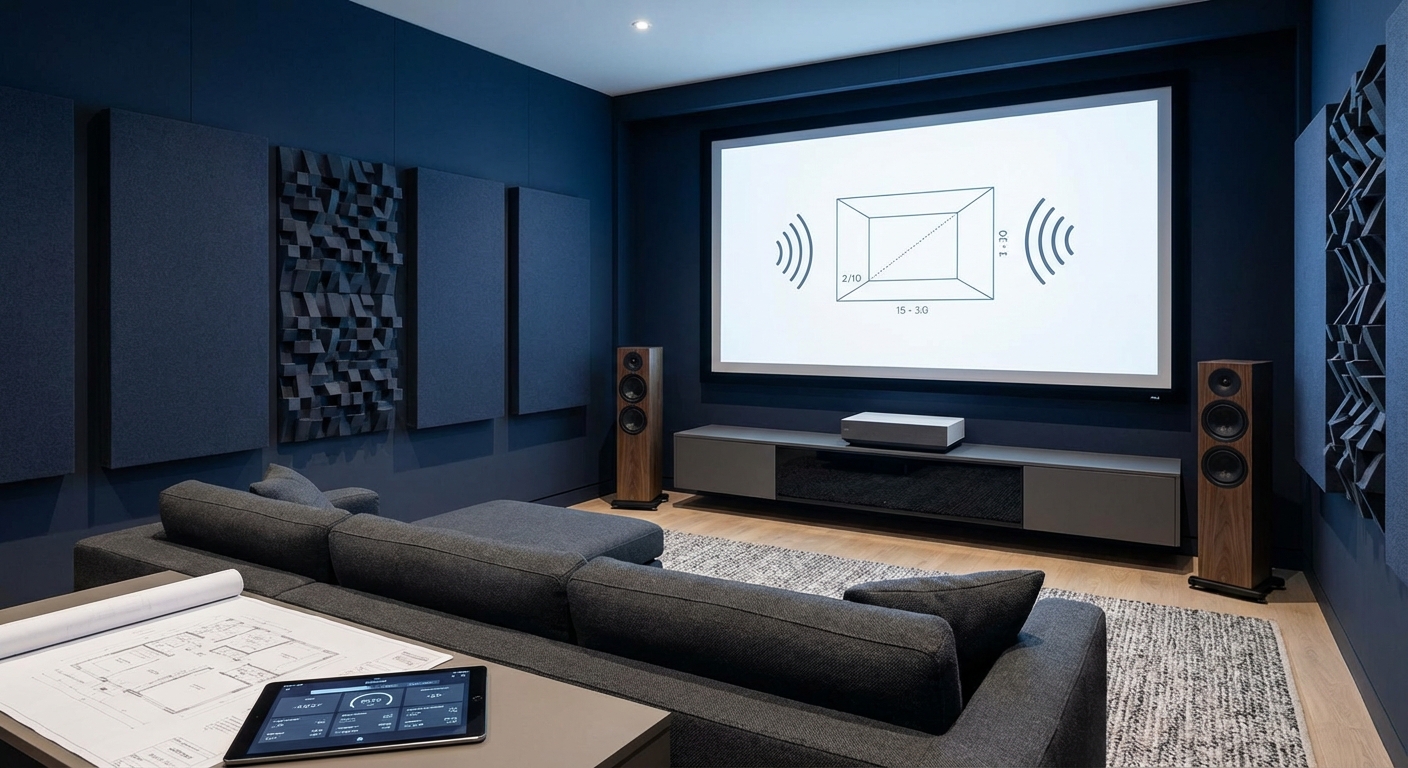
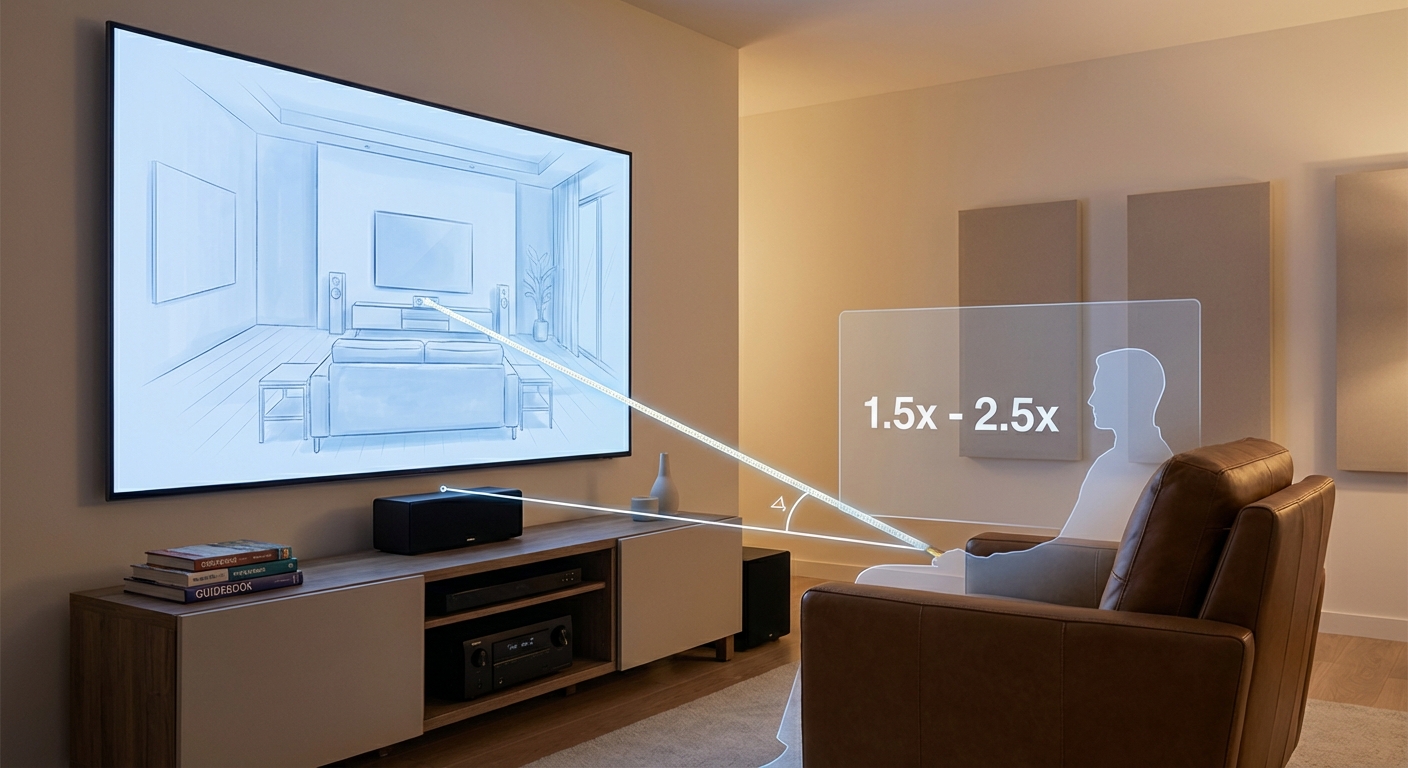
Your room’s bass response connects to other setup decisions. The distance between your seating and screen affects how bass integrates with the visual experience. Furniture arrangement changes acoustic reflections that impact bass quality.
Take time to experiment. The difference between adequate bass and truly impressive low frequency performance often comes down to careful placement and patient testing. Your room has at least one spot where your subwoofer will sound dramatically better than where you first placed it. Finding that spot transforms your home theater experience.

Leave a Reply