
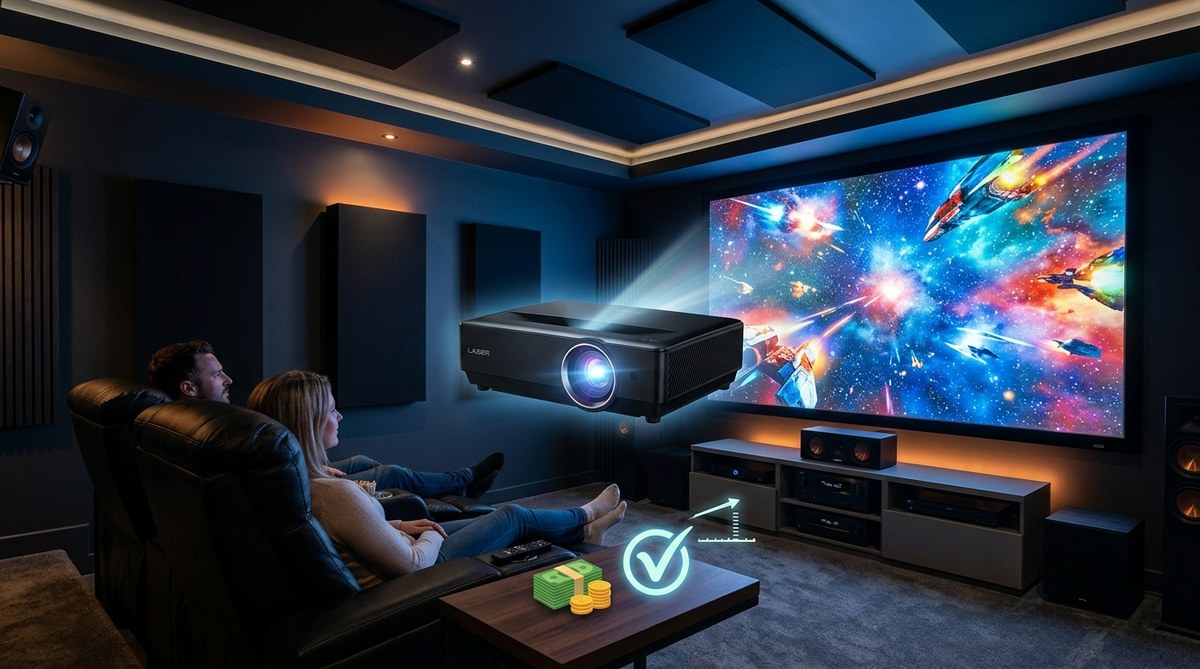
You are standing in the aisle of your local electronics store, staring at two projectors that look nearly identical but have a $1,000 price gap. The salesperson is telling you laser is the future, but your wallet is whispering “lamp is fine.” It is a tough call. I have been there myself, and after testing dozens of projectors over the years, I can tell you there is no universal answer. Your room, your viewing habits, and your budget all matter. This guide will break down exactly when laser projectors are worth the premium and when sticking with a lamp will save you money without sacrificing picture quality.
Laser projectors offer longer life, consistent brightness, and better color out of the box, but they cost more upfront. Lamp projectors are cheaper initially and still produce excellent images, especially in light-controlled rooms. For dedicated home theaters with heavy daily use, a laser pays off in fewer bulb changes and lower long-term hassle. For casual movie nights, a lamp projector is a smart value.
What Makes a Lamp Projector Tick?
Traditional lamp projectors use a high-pressure mercury vapor bulb. It is the same technology that has been around for decades. These bulbs produce a bright white light that is then split into red, green, and blue by a color wheel or prism.
Pros of lamp projectors:
– Lower upfront cost. You can get a solid 1080p or even entry-level 4K lamp projector for $400 to $800.
– Proven technology. Replacement bulbs are widely available.
– Good contrast in dark rooms. Lamp projectors often have deep black levels when paired with a proper screen.
– Many models offer interchangeable lenses for custom throw distances.
Cons of lamp projectors:
– Bulbs degrade over time. After about 3,000 to 5,000 hours, the image becomes noticeably dimmer and yellower.
– You have to replace the bulb every few years. A replacement can cost $100 to $300.
– Warm-up and cool-down periods. Most lamps take 30 to 90 seconds to reach full brightness and need a fan to cool before turning off again.
– Bulbs can shatter or explode if they are close to the end of life (rare but possible).
What Makes a Laser Projector Different?
Laser projectors use one or more laser diodes to generate light. Instead of a single bulb that wears out, they rely on arrays of solid-state lasers. This changes everything about longevity and brightness stability.
Pros of laser projectors:
– Rated life of 20,000 to 30,000 hours or more. That is 10 to 15 years of typical use without a bulb change.
– Brightness stays consistent over its lifetime. No gradual dimming.
– Instant on/off. No warm-up or cool-down. You turn it on and it is at full brightness immediately.
– Better color gamut. Laser light sources can cover a higher percentage of the Rec.709 and DCI-P3 color spaces, which means richer reds and greens.
– Quieter fans because they generate less heat than lamps.
Cons of laser projectors:
– Higher purchase price. A quality 4K laser projector starts around $1,500 and goes up to $5,000 or more.
– Laser modules are not user-replaceable. When the laser dies, you likely replace the whole projector.
– Some budget laser models can have visible speckle or “laser speckle” noise, though this is less common in 2026 models.
– Repair costs if something goes wrong can be high.
Laser vs Lamp: Side-by-Side Comparison
Here is a table that puts the two technologies head to head. Use this to see where your priorities line up.
| Feature | Lamp Projector | Laser Projector |
|---|---|---|
| Upfront Cost | $400 – $1,200 | $1,200 – $5,000+ |
| Typical Lifespan | 3,000 – 6,000 hours per bulb | 20,000 – 30,000 hours |
| Replacement Cost | $100 – $300 per bulb | Not applicable (sealed module) |
| Brightness Consistency | Fades 20-30% over bulb life | Stable within 5% over life |
| Color Accuracy | Good, but degrades with age | Excellent, stable over time |
| Warm-up Time | 30 – 90 seconds | Instant |
| Cool-down Required | Yes (1-2 minutes) | No |
| Noise Level | Moderate fan noise | Usually quieter |
| Best Use Case | Occasional movie nights, light-controlled rooms | Daily use, high ambient light, critical viewing |
When Does the Laser Premium Actually Pay Off?
A lot of buyers worry about that sticker price. But you have to think about total cost of ownership, not just the first dollar. Here are three scenarios where laser wins on value.
-
Heavy daily use. If you watch movies or game on your projector for 4 to 6 hours every day, a lamp projector will need a new bulb every 1.5 to 2 years. That replacement cost adds up. After 5 years, you might have spent as much on bulbs as you saved on the initial purchase. A laser projector with a 20,000-hour rating will run for a decade without a single bulb change.
-
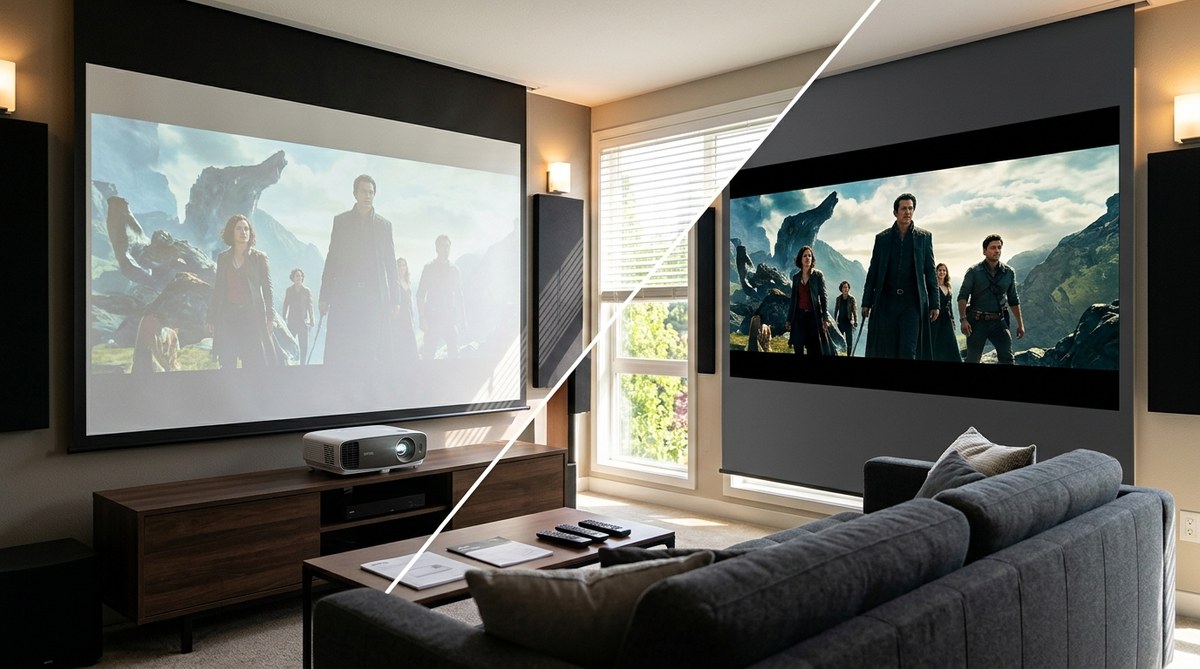
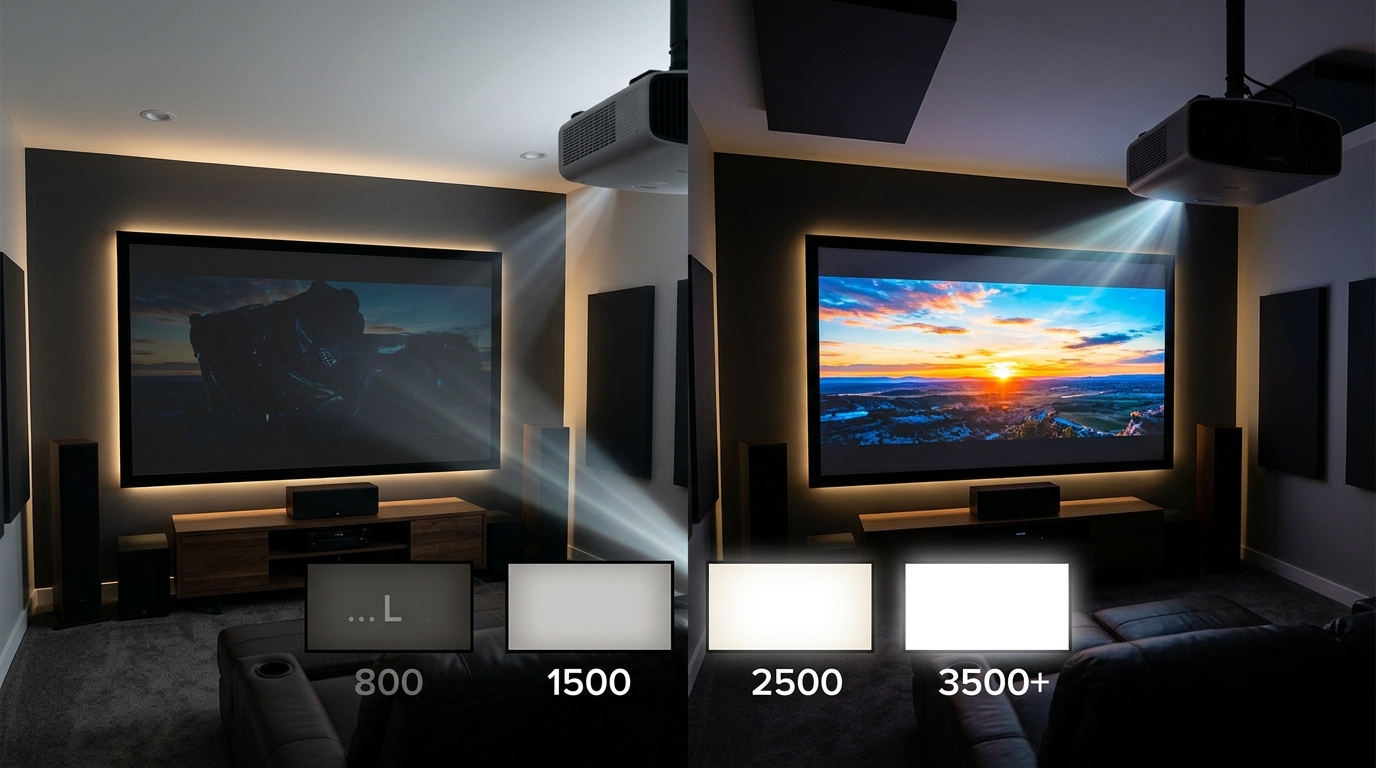
Bright room or flexible lighting. Laser projectors can achieve higher brightness (2,500 to 3,000 lumens or more) without the heat and noise of a lamp. If you have windows or want to watch sports with the lights on, a laser will give you a watchable image where a lamp would look washed out. Pair it with an ambient light rejecting screen, and you have a daytime TV replacement.
-
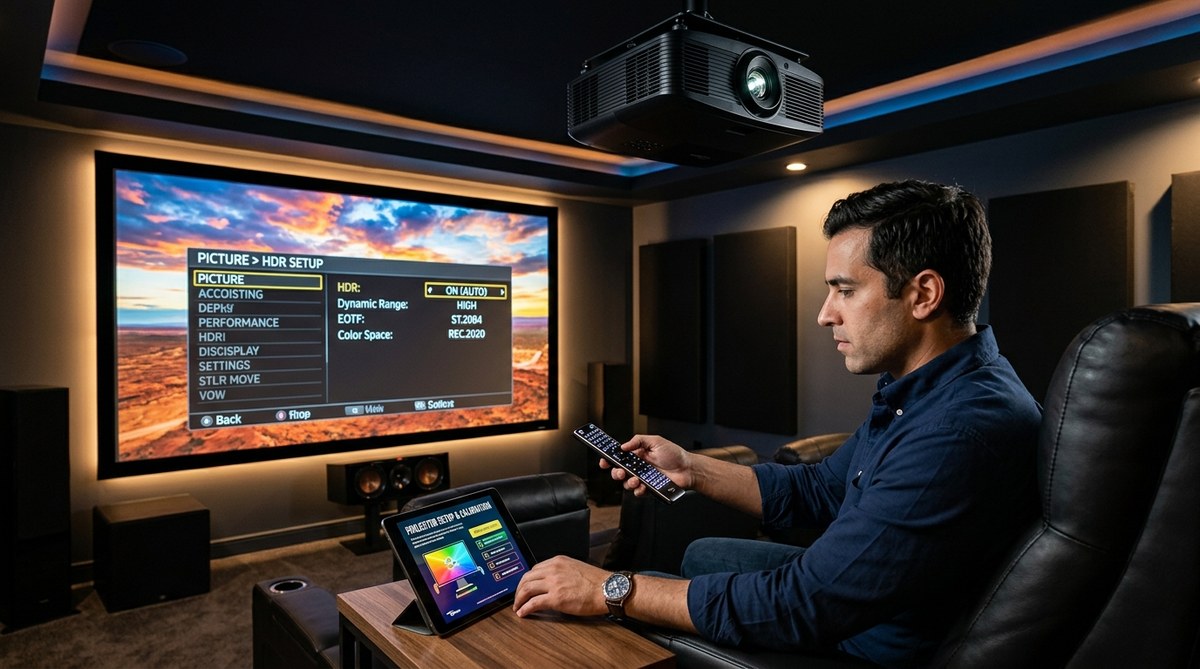
Professional calibration or color-critical work. Because laser light stays stable, calibration settings remain accurate for years. With lamps, you have to recalibrate every time the bulb ages or gets replaced. If you care about reference-level color for home theater or even light photo editing, laser removes that headache.
On the flip side, if you only use your projector a few hours a week and you have a dedicated dark room, a good lamp projector will still look stunning. You might replace the bulb once every 5 years. That is not a big deal.
“I have owned both types. My old lamp projector looked great in the dark. But after I switched to laser, I noticed that I never had to lower the curtains during a weekend afternoon game. The consistent brightness and zero warm-up made it feel more like a luxury experience.” — A home theater enthusiast on the AVS Forum, 2025
The Hidden Cost of Lamp Replacement You Might Miss
It is not just about the price of a bulb. There is a hidden hassle: downtime. When a lamp projector bulb dies, you have to order a new one, wait for shipping, and then install it. During that week, your home theater screen is dark. If you host Super Bowl watch parties or family movie nights regularly, even one week of downtime can be a pain. Laser projectors simply do not have that problem. They either work or they do not, and when they finally fade, you have years of notice to plan a replacement projector.
Also, lamp projectors require periodic cleaning of the air filters and sometimes the optical path to keep dust from dimming the image. Lasers still need filter cleaning, but because they run cooler, dust buildup is slower. If you are not the type to maintain gear, laser is more forgiving.
How to Decide: A Simple Checklist You Can Use
Before you choose, run through this list. It will point you to the right technology.
- Do you watch more than 10 hours of projector content per week? Yes = lean laser | No = lean lamp
- Is your room light controlled (blackout shades, no windows)? Yes = lamp works great | No = consider laser
- Is your budget flexible above $1,200? Yes = laser is realistic | No = lamp is best
- Do you want to avoid any maintenance like bulb changes? Yes = laser | No = lamp is fine
- Do you own a specially painted or ambient light rejecting screen? Yes = both work, but laser gives more flexibility | No = either can be calibrated
- Do you play video games (especially competitive) with your projector? Yes = laser’s instant on and lower input lag on newer models can help | No = lamp is fine
After answering, you should have a strong preference. If you are still on the fence, try to see both in person at a local store with a demo room. Bring a Blu-ray you know well and watch the same scene on both.
Putting It All Together: Your Next Step
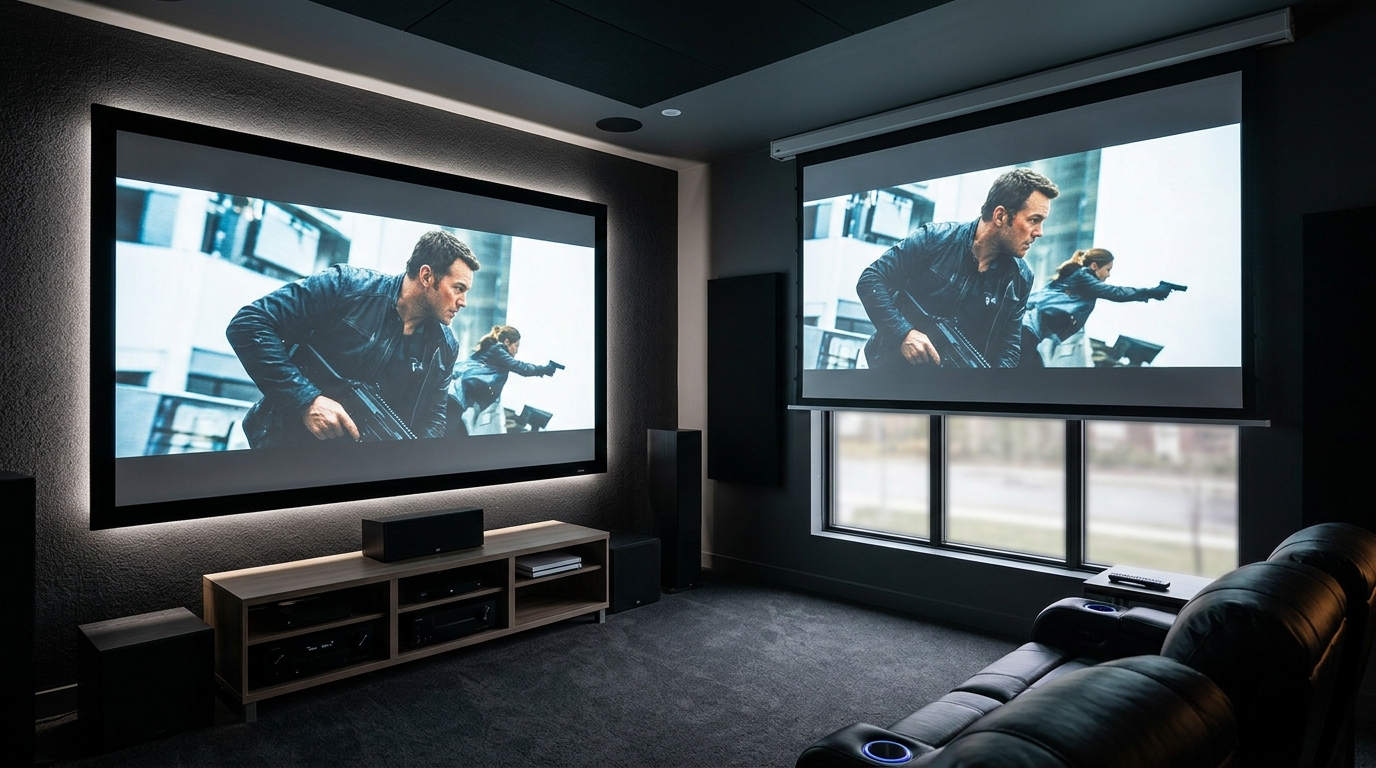
I have helped many readers set up their first home theater, and I always say the same thing: spend your money where you will notice it most. If the laser premium feels painful now, but you plan to keep the projector for a decade, go laser. If you are trying to build a system on a tight budget and you have a dark room, buy a good lamp projector and invest the savings into a better screen or speaker setup.
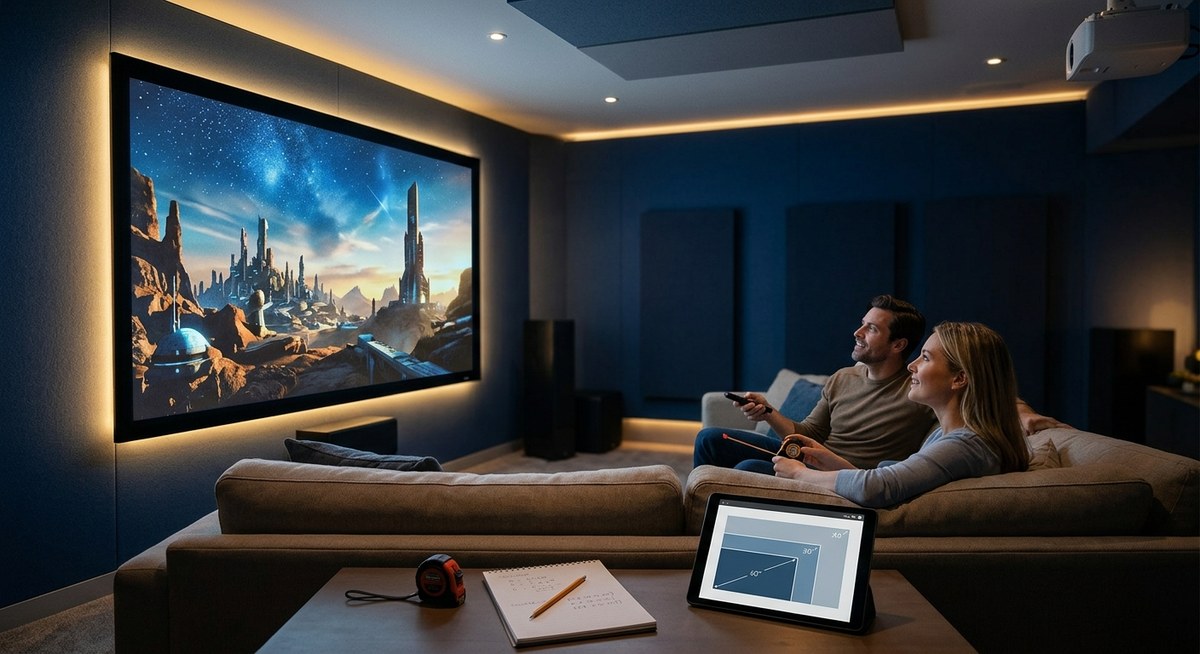
For practical setup tips, check out our guide on how to calculate projector throw distance for your room size. That will help you decide which specific model fits your space. Also, avoid classic pitfalls by reading about 5 common projector setup mistakes that ruin your picture quality. Small errors like keystone correction can make even the best projector look bad.
The Choice Is Clearer Now
Laser and lamp projectors are both solid choices in 2026. The answer to “laser projector vs lamp projector worth it” depends entirely on your lifestyle. If you value zero maintenance, instant start, and consistent brightness for years, laser is worth every extra dollar. If you are a casual viewer with a dedicated dark room, you will get fantastic images from a lamp projector at half the price. No wrong answer, just the right fit for you. Go see both in action, trust your eyes, and enjoy the big screen.

Leave a Reply