
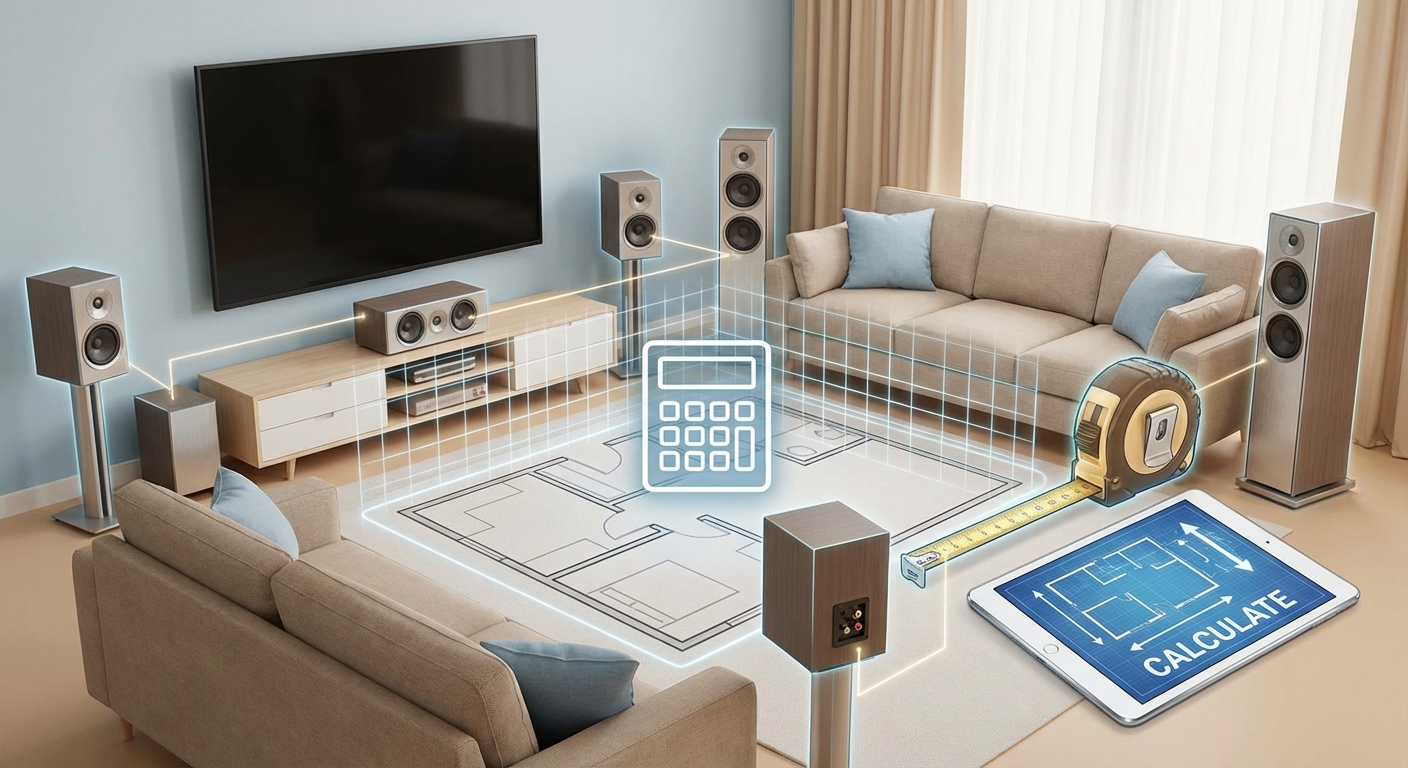
You bought new speakers, set them up, and turned them on. The sound feels wrong. Too boomy in the corners, too thin in the center, or just plain muddy. The problem isn’t the speakers themselves. It’s the mismatch between their output and your room’s size.
Speaker size depends on room volume, ceiling height, and how you use the space. Small rooms under 1,500 cubic feet work best with 4 to 5.25 inch drivers. Medium rooms between 1,500 and 3,500 cubic feet need 6.5 inch drivers. Large rooms over 3,500 cubic feet require 8 inch or larger drivers. Matching driver size to room volume prevents distortion and ensures balanced sound across all frequencies.
Understanding the relationship between room size and speaker output
Speaker drivers move air to create sound. Larger drivers move more air with each movement. Smaller drivers move less air but can do it faster.
Your room acts like a container for that moving air. A small room fills up faster. A large room needs more air movement to achieve the same sound pressure level.
This creates a simple rule. Bigger rooms need bigger drivers. Smaller rooms work better with smaller drivers.
But size isn’t the only factor. Room shape, ceiling height, and furnishings all affect how sound waves behave. A 12×12 foot room with 8 foot ceilings sounds different from a 12×12 room with 12 foot ceilings, even though the floor area is identical.
The key measurement is room volume, not just floor space.
Calculating your room volume in three steps
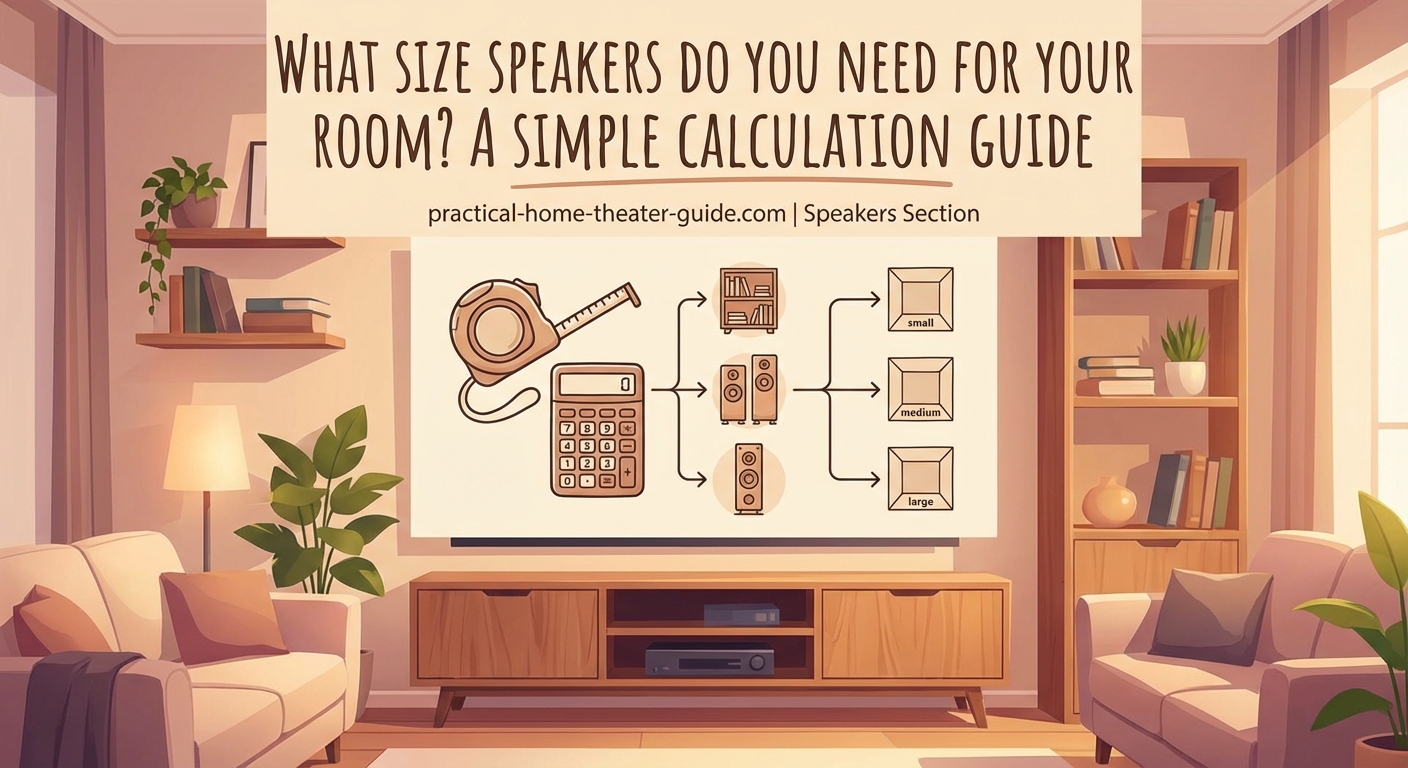
You need three measurements to determine what size speakers for my room will work best.
- Measure the length of your room in feet from wall to wall at the widest point.
- Measure the width of your room in feet from wall to wall at the widest point.
- Measure the ceiling height in feet from floor to ceiling.
Multiply all three numbers together. The result is your room volume in cubic feet.
For example, a room that measures 15 feet long, 12 feet wide, and 8 feet tall has a volume of 1,440 cubic feet (15 × 12 × 8 = 1,440).
If your room has an irregular shape, break it into rectangles. Calculate the volume of each section separately, then add them together.
For rooms with vaulted or angled ceilings, measure the average ceiling height. Find the highest point and the lowest point, add them together, then divide by two.
Matching driver size to room volume
Once you know your room volume, you can select the appropriate driver size. The table below shows recommended ranges based on real-world performance.
| Room Volume (cubic feet) | Recommended Driver Size | Typical Room Examples |
|---|---|---|
| Under 1,000 | 3 to 4 inches | Small bedroom, office, closet |
| 1,000 to 1,500 | 4 to 5.25 inches | Medium bedroom, den, small living room |
| 1,500 to 2,500 | 5.25 to 6.5 inches | Large bedroom, standard living room |
| 2,500 to 3,500 | 6.5 to 8 inches | Open living room, basement, garage |
| Over 3,500 | 8 inches or larger | Great room, combined spaces, auditorium |
These ranges account for typical home listening levels. If you listen at very high volumes or host parties regularly, move up one driver size category.
If you prefer background music at low volumes, you can stay at the lower end of each range.
Why ceiling height matters more than you think
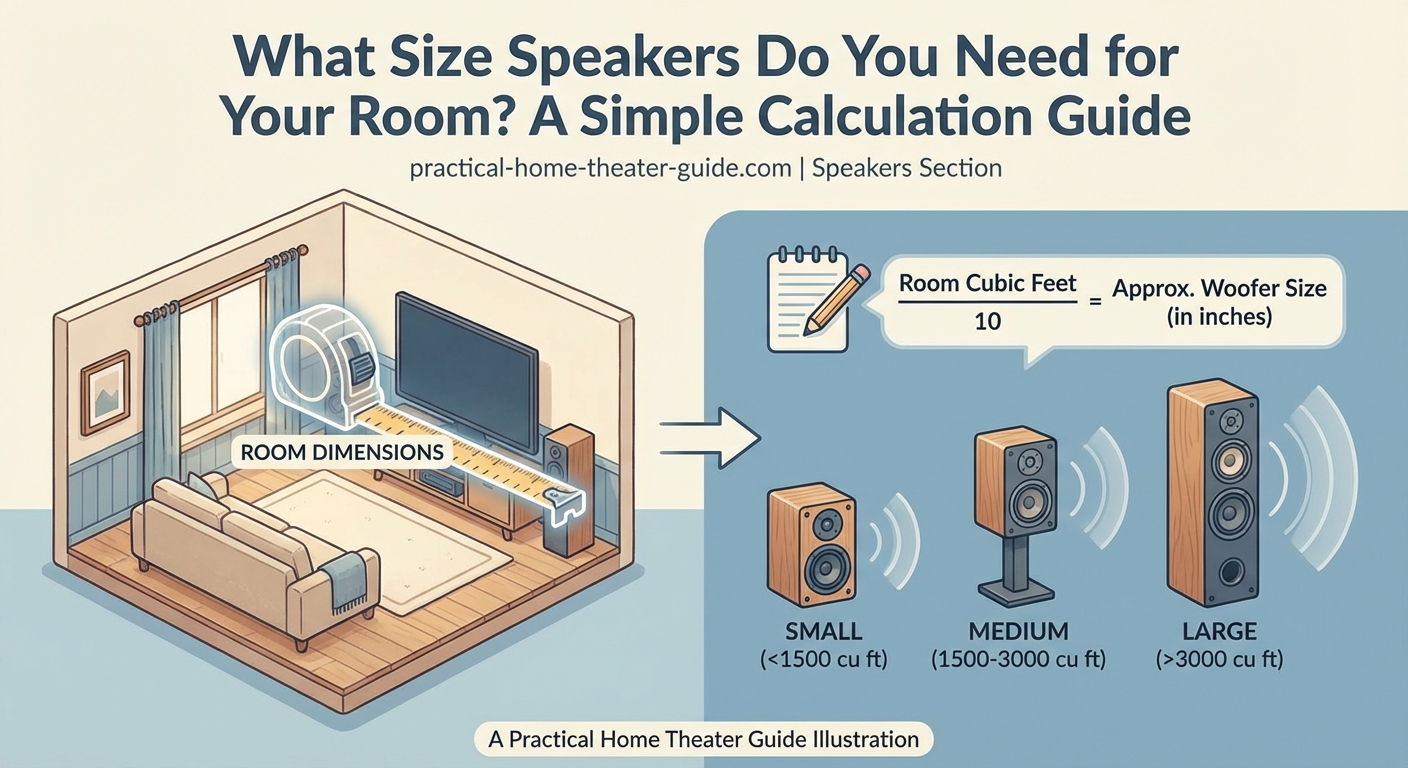
Two rooms with identical floor space but different ceiling heights need different speaker sizes. Sound pressure decreases as volume increases.
A room measuring 12×12 feet with 8 foot ceilings has a volume of 1,152 cubic feet. The same floor area with 10 foot ceilings has a volume of 1,440 cubic feet. That’s a 25% increase in volume.
The taller room needs more air movement to achieve the same sound pressure level. This means you need either larger drivers or more power.
Rooms with ceilings above 10 feet benefit from moving up one driver size category, even if the floor space suggests a smaller size would work.
Vaulted ceilings create additional challenges. The angled surfaces reflect sound differently than flat ceilings. They also add volume without adding usable floor space. Use the average ceiling height method described earlier to get a workable number.
Room materials and furnishings affect speaker choice
Hard surfaces reflect sound. Soft surfaces absorb it. A room filled with furniture, curtains, and carpet needs less speaker output than an empty room with hardwood floors and bare walls.
If your room has mostly hard surfaces, consider these adjustments:
- Add one driver size category for rooms with hardwood or tile floors
- Add another half category for rooms with bare walls and minimal furniture
- Reduce by one half category for heavily furnished rooms with thick carpet and curtains
An empty 2,000 cubic foot room with hardwood floors might need 8 inch drivers. The same room filled with a couch, chairs, bookshelf, and area rug might work fine with 6.5 inch drivers.
Just like how to stop echo and reverb ruining your home theater sound requires addressing room treatments, speaker sizing works better when you account for acoustic damping from furnishings.
Power handling and sensitivity work together with driver size
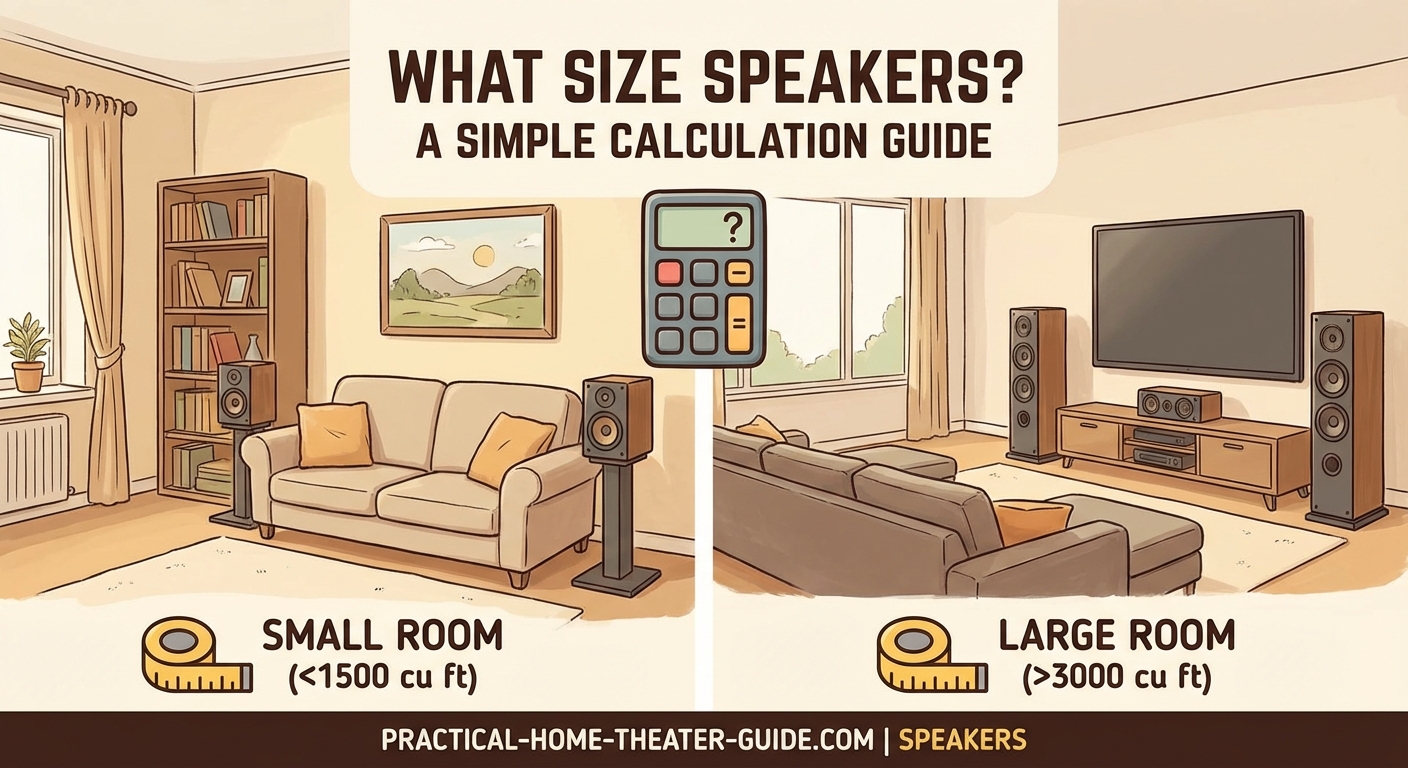
Driver size tells you how much air the speaker can move. Power handling tells you how much electrical energy it can convert to sound. Sensitivity tells you how efficiently it does the conversion.
A speaker with high sensitivity (90 dB or higher) produces more sound with less power. A speaker with low sensitivity (below 87 dB) needs more power to reach the same volume.
This creates an important relationship. You can compensate for a smaller driver by using higher power and higher sensitivity. You can also use a larger driver with lower power if the sensitivity is high.
Here’s a practical example. A 5.25 inch driver rated at 89 dB sensitivity and 100 watts can fill the same room as a 6.5 inch driver rated at 86 dB sensitivity and 75 watts.
Check the speaker specifications for both sensitivity rating and power handling. Match them to your room size using this guideline:
- Small rooms (under 1,500 cubic feet): 20 to 50 watts per channel with 87+ dB sensitivity
- Medium rooms (1,500 to 2,500 cubic feet): 50 to 100 watts per channel with 88+ dB sensitivity
- Large rooms (2,500 to 3,500 cubic feet): 100 to 150 watts per channel with 89+ dB sensitivity
- Very large rooms (over 3,500 cubic feet): 150+ watts per channel with 90+ dB sensitivity
Frequency response and bass performance in different room sizes
Small rooms exaggerate bass frequencies. Large rooms absorb them. This affects what size speakers for my room you should choose based on how you want the system to sound.
A 6.5 inch driver in a small bedroom will produce overwhelming bass. The same driver in a large living room might sound thin and lacking in low end.
Speaker manufacturers design drivers with this in mind. Smaller drivers typically roll off bass frequencies earlier. Larger drivers extend deeper into the low end.
Look at the frequency response specification. It shows the range of frequencies the speaker can reproduce. A typical bookshelf speaker might show 55 Hz to 20 kHz. A floor standing speaker might show 35 Hz to 20 kHz.
Match the low frequency extension to your room size:
- Small rooms: 60 to 80 Hz is sufficient for most content
- Medium rooms: 45 to 60 Hz provides balanced bass
- Large rooms: 35 to 45 Hz prevents thin sound
- Very large rooms: Below 35 Hz or add a subwoofer
If you want deep bass in a small room, use smaller main speakers and add a subwoofer. This gives you control over bass levels without overwhelming the space.
Common mistakes when sizing speakers for rooms
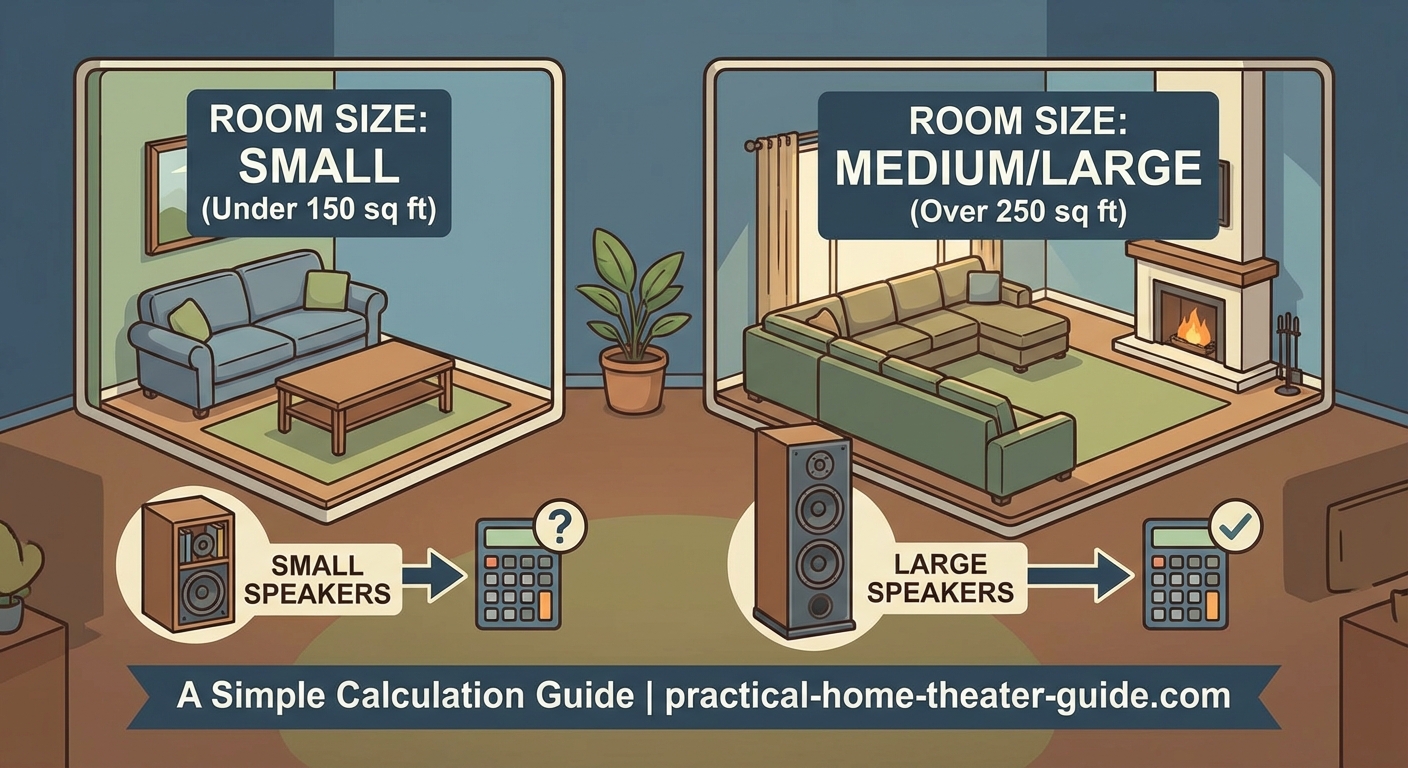
Many people make the same errors when selecting speakers. The table below shows the most common mistakes and how to avoid them.
| Mistake | Why It Happens | How to Fix It |
|---|---|---|
| Choosing by floor space alone | Ignoring ceiling height | Calculate full room volume |
| Oversizing for small rooms | Assuming bigger is always better | Match driver size to volume |
| Undersizing for open floor plans | Not accounting for connected spaces | Add volumes of connected areas |
| Ignoring room acoustics | Focusing only on specifications | Account for hard surfaces and furnishings |
| Buying based on price | Assuming expensive means appropriate | Match specs to room requirements |
The biggest mistake is buying speakers before measuring your room. You can’t know what size you need until you know your room volume.
The second biggest mistake is assuming you need massive speakers for good sound. A properly sized 5.25 inch driver outperforms an oversized 8 inch driver in a small room.
Testing speaker size in your actual space
Numbers give you a starting point. Your ears make the final decision. If possible, test speakers in your actual room before buying.
Many retailers offer return policies. Buy speakers at the recommended size for your room volume. Set them up and listen for several days.
Pay attention to these indicators:
- Bass sounds boomy or overwhelming: speakers too large for the room
- Sound feels thin or lacking body: speakers too small for the room
- Dialogue sounds muddy or unclear: poor match between driver size and room acoustics
- You need to turn the volume very high to fill the room: underpowered or undersized speakers
- Distortion occurs at moderate volumes: speakers working too hard for the space
If you notice any of these issues, try moving up or down one driver size category.
Room placement also affects perceived size match. Speakers too close to walls produce more bass. Speakers in open space produce less. Adjust placement before changing speaker size.
“The right speaker size makes your amplifier’s job easier and your room sound better. Undersized speakers work too hard and distort. Oversized speakers overload the room and muddy the sound. When the match is right, you hear clarity at all volume levels.” – Audio engineer with 20 years of home installation experience
Adjusting for multi-purpose rooms and open floor plans
Modern homes often combine living room, dining room, and kitchen into one open space. This creates sizing challenges.
Calculate the total volume of all connected spaces. If your living room opens to a dining area and kitchen with no doors, treat it as one large room.
A 15×12 living room (1,440 cubic feet) connected to a 10×10 dining area (800 cubic feet) creates a combined space of 2,240 cubic feet. You need speakers sized for the total volume, not just the living room portion.
Partial walls and wide openings count as connected spaces. Doorways narrower than 4 feet act as acoustic barriers. You can treat rooms separated by standard doorways as separate spaces.
For combined spaces over 3,000 cubic feet, consider multiple speaker pairs instead of larger drivers. Two pairs of 6.5 inch speakers provide better coverage than one pair of 10 inch speakers in a long, open room.
Similar to how to choose the right tv size for your room distance, speaker placement in open plans requires thinking about the entire viewing and listening area, not just one section.
Special considerations for home theater setups
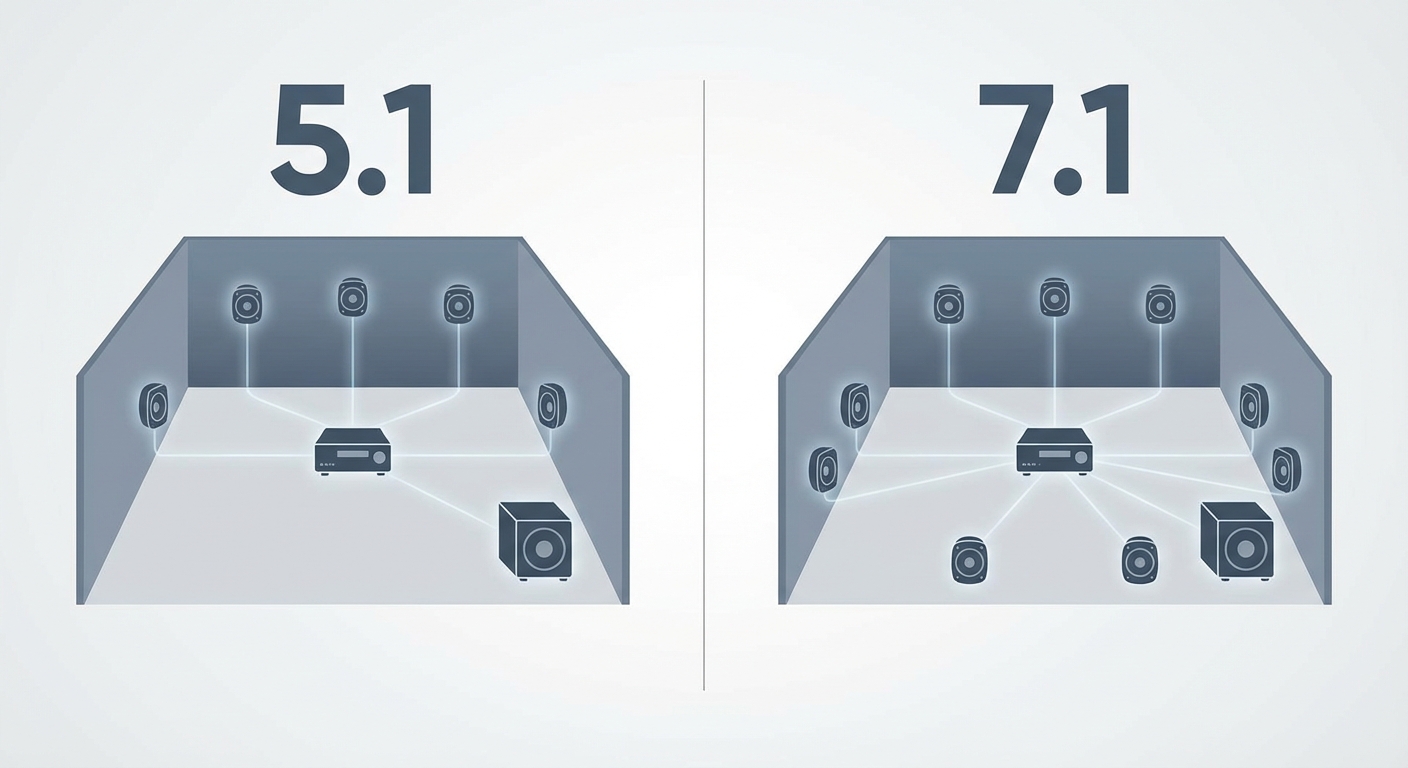
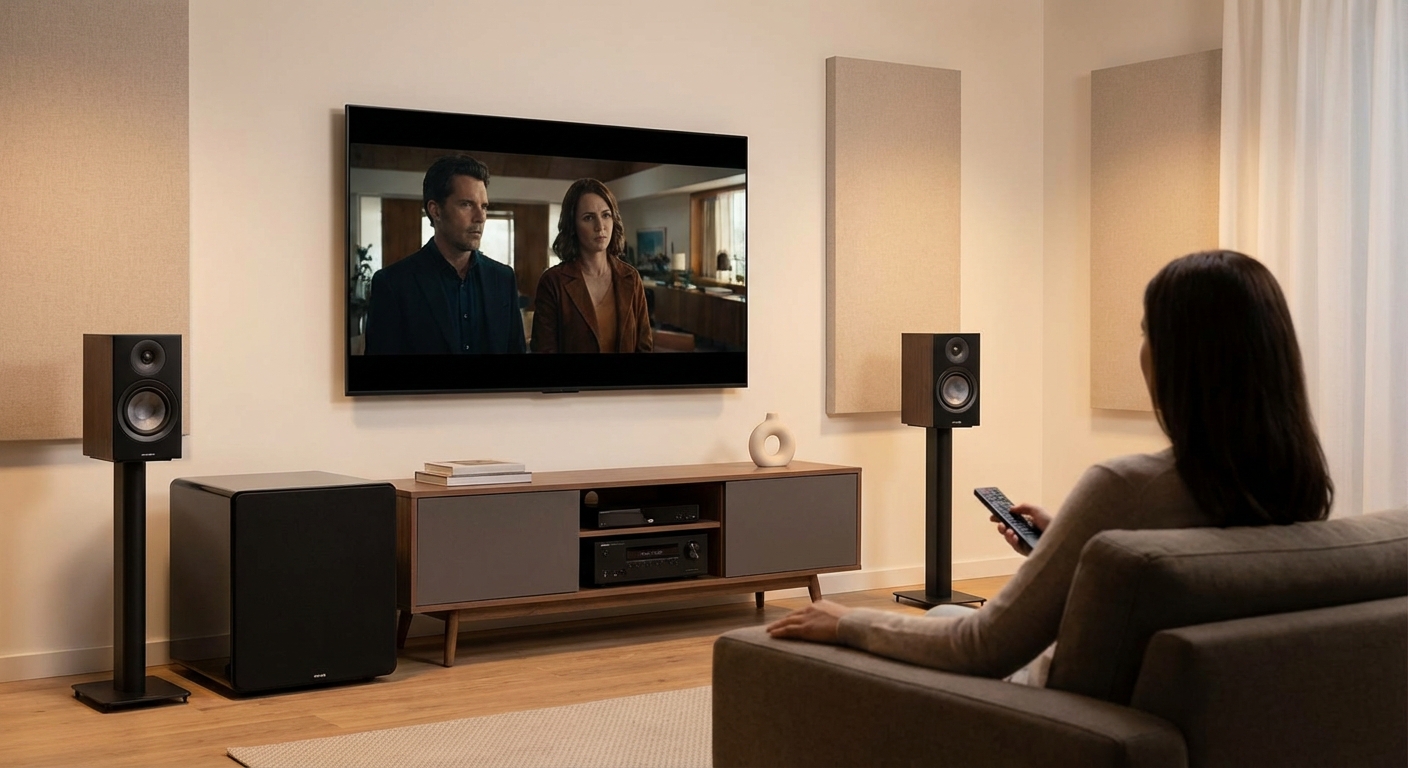
Home theater systems add complexity. You need to size multiple speakers for the same room.
Front left and right speakers should match the room volume using the guidelines above. Center channel speakers can be one size category smaller because they handle primarily dialogue. Surround speakers can be two size categories smaller because they handle ambient effects.
For a 2,500 cubic foot room, you might use:
- Front left and right: 6.5 inch drivers
- Center channel: 5.25 inch drivers
- Surround left and right: 4 inch drivers
- Subwoofer: 10 to 12 inch driver
The subwoofer handles all frequencies below 80 Hz. This lets you use smaller main speakers than you would for a stereo music system in the same room.
Subwoofer size follows different rules. Room volume still matters, but sealed versus ported design and placement options create more variables. A dedicated subwoofer guide covers those details.
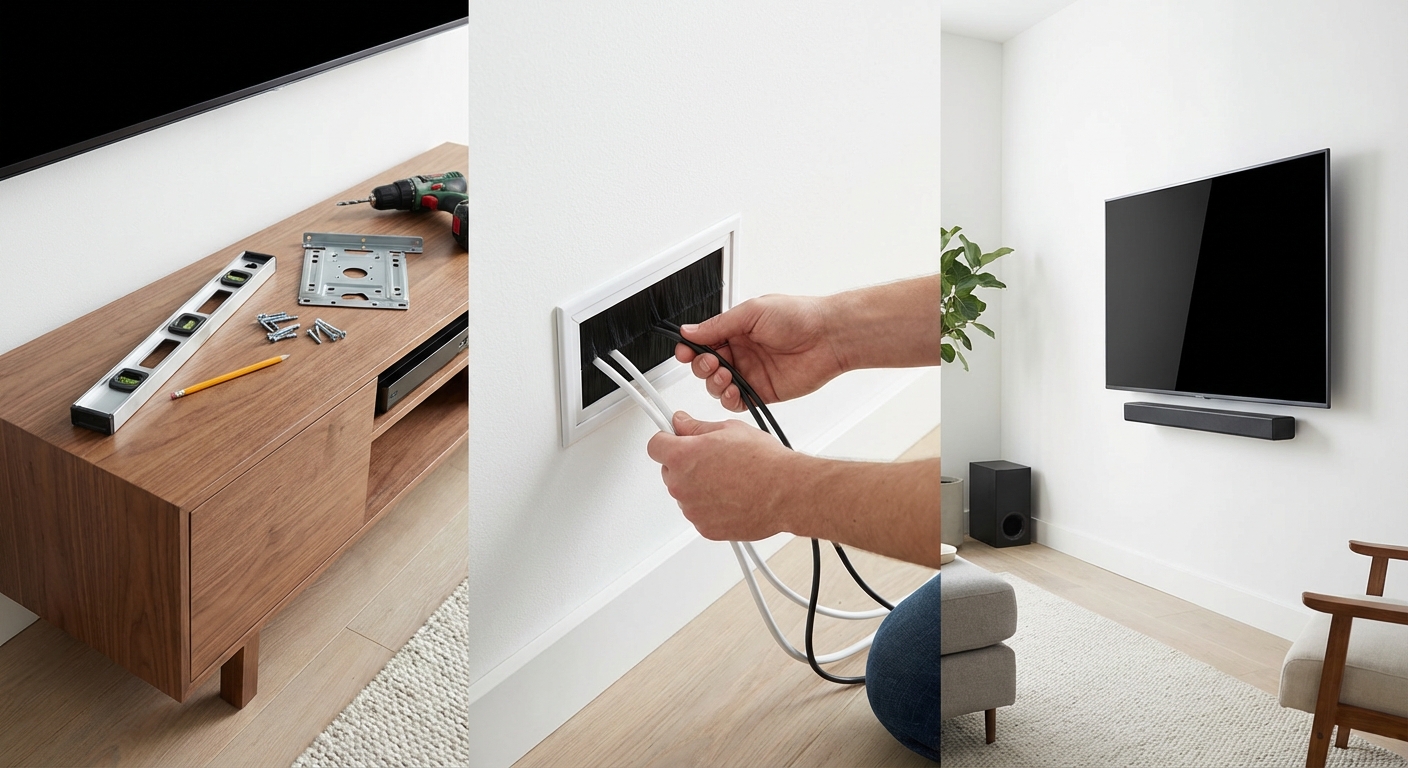
If you’re setting up a complete home theater, how to run speaker wire through walls without damaging your home helps you install everything cleanly once you’ve selected the right sizes.
When to choose bookshelf versus floor standing speakers
Driver size and speaker cabinet type are related but not identical. Bookshelf speakers typically use 4 to 6.5 inch drivers. Floor standing speakers typically use 6.5 to 10 inch drivers.
The cabinet size affects bass response independently of driver size. Larger cabinets extend bass deeper even with the same driver size.
Choose bookshelf speakers when:
- Your room is under 2,000 cubic feet
- You plan to add a subwoofer
- You need flexible placement options
- You have limited floor space
Choose floor standing speakers when:
- Your room exceeds 2,000 cubic feet
- You want full-range sound without a subwoofer
- You have space for larger cabinets
- You listen at high volumes regularly
A floor standing speaker with dual 6.5 inch drivers moves more air than a bookshelf speaker with a single 6.5 inch driver. The total driver area matters as much as individual driver size.
For the same driver size, floor standing speakers produce deeper bass and higher maximum volume. They also cost more and take up more space.
Upgrading speakers as your room changes
Your room might change over time. You might add furniture, remove carpet, finish a basement, or knock down a wall.
Each change affects the relationship between speaker size and room acoustics. Adding thick curtains and a large area rug to a previously bare room is like reducing the room volume by 10 to 15%. Your current speakers might suddenly sound better because the room absorbs more energy.
Removing furniture or switching to hardwood floors has the opposite effect. The room becomes more reflective. Your speakers might start to sound harsh or boomy.
Before buying new speakers, try acoustic treatments first. Adding absorption can make oversized speakers work in a room. Adding diffusion can help undersized speakers fill a space more evenly.
If you’re planning room renovations, measure and calculate speaker needs after the changes are complete. Don’t buy speakers for a room that will look different in three months.
Getting the best sound from properly sized speakers
Choosing the right size is half the battle. Placement and setup complete the picture.
Position speakers at least 2 feet from walls to reduce bass buildup. Angle them toward your listening position. Place them at ear height when you’re seated.
The distance between speakers should roughly equal the distance from each speaker to your listening position. This creates an equilateral triangle for optimal stereo imaging.
Run calibration if your receiver or amplifier offers it. This adjusts output levels to match your room’s specific acoustics.
Give your speakers adequate power. An underpowered amplifier forces speakers to work harder, increasing distortion. Match amplifier wattage to speaker recommendations.
Break in new speakers for 20 to 40 hours of listening time. Drivers loosen up slightly during this period, improving sound quality.
Making the right choice for your space
Matching speaker size to room volume isn’t complicated. Measure your room, calculate the volume, and choose drivers that fit the recommended range.
Start with the guidelines in this article. Adjust for your room’s specific characteristics. Test in your actual space before committing.
The right size speakers work effortlessly. They fill your room at moderate volume levels. They produce clear sound across all frequencies. They don’t strain or distort during peaks.
Measure your room today. Calculate the volume. Compare it to your current speakers or use it to guide your next purchase. Your ears will thank you.

Leave a Reply