
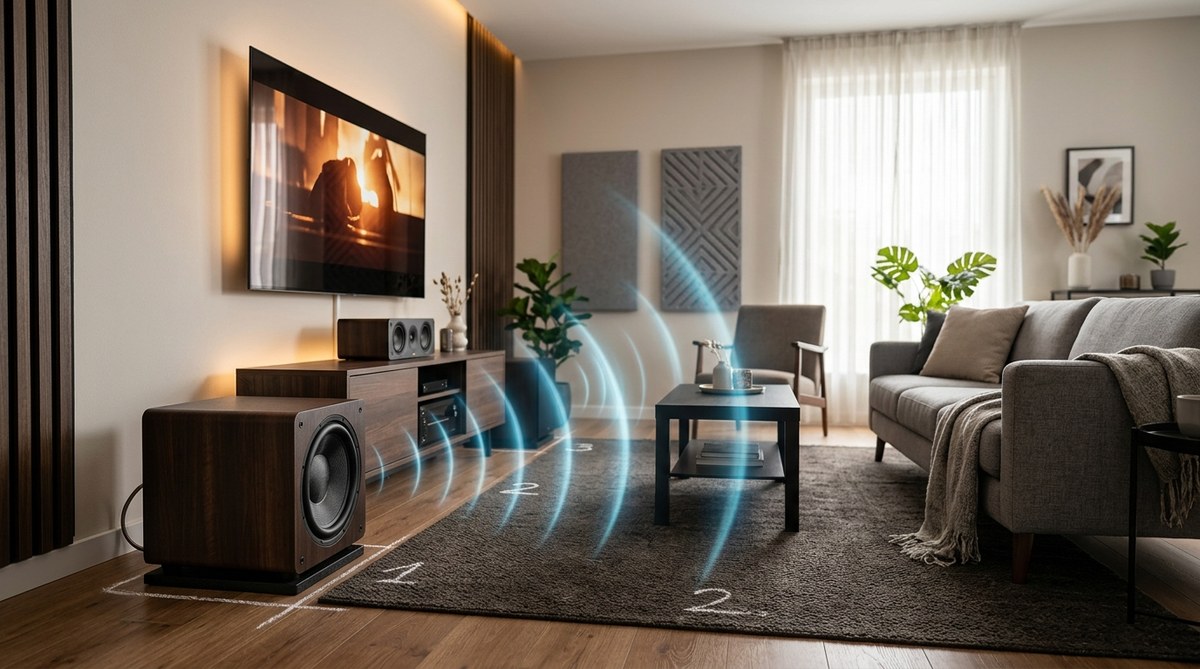
Getting the most out of your home theater or audio system means paying attention to your subwoofer’s placement. Proper positioning can transform your listening experience, delivering deep, punchy bass that fills the room. But finding that sweet spot isn’t always obvious. This subwoofer placement guide will walk you through simple steps to optimize your setup, ensuring you enjoy powerful, accurate low frequencies every time you press play.
Proper subwoofer placement is crucial for deep, even bass. Follow a step-by-step process, avoid common mistakes, and use practical techniques like the subwoofer crawl to find the ideal spot for your room. Achieving balanced bass enhances your entire audio experience and makes movies and music more immersive.
Understanding why placement matters
The position of your subwoofer has a huge impact on sound quality. Poor placement can lead to nulls, boomy sounds, or uneven bass. When a subwoofer is placed too close to walls or corners, it might produce overly boomy bass. Conversely, placing it far away from walls can make the bass seem weak or disconnected. The goal is to find a spot that gives you rich, balanced low frequencies without unpleasant resonances or dead zones.
Step-by-step process for ideal subwoofer placement
1. Assess your room’s layout and acoustics
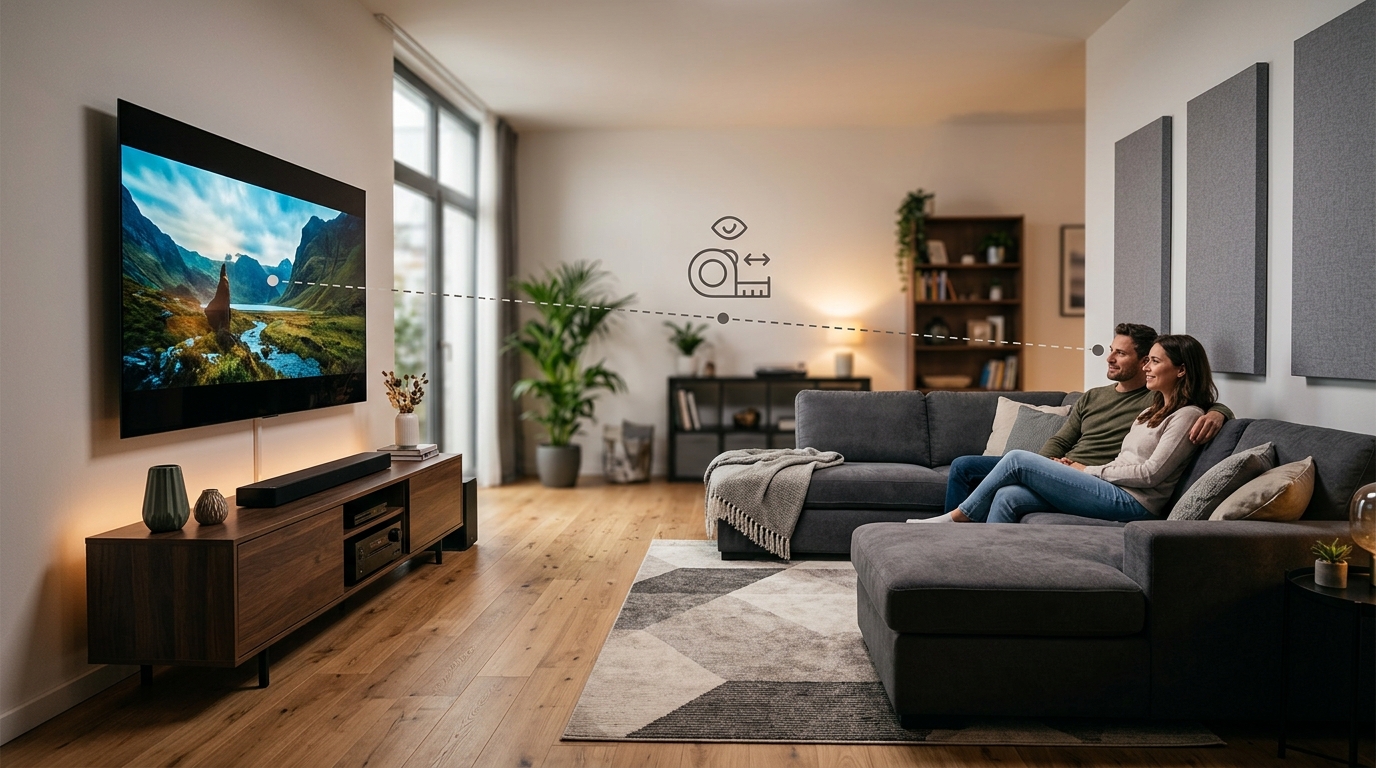
Start by examining your space. Notice where your furniture, walls, and windows are. Think about the size and shape of the room. Larger rooms may require a different approach than smaller ones. Take note of potential trouble spots like corners or narrow spaces where bass might resonate too much.
2. Use the subwoofer crawl technique
This classic method involves moving your subwoofer around the room to find the best sound. Here’s how to do it:
- Place the subwoofer in your main listening spot, such as your couch or chair.
- Play a bass-heavy track or test tone.
- Crawl around the room, listening carefully.
- When you hear the bass sound best, mark that spot.
- Move the subwoofer to that location and enjoy the improved sound.
This simple test helps you identify the optimal position without complicated measurements.
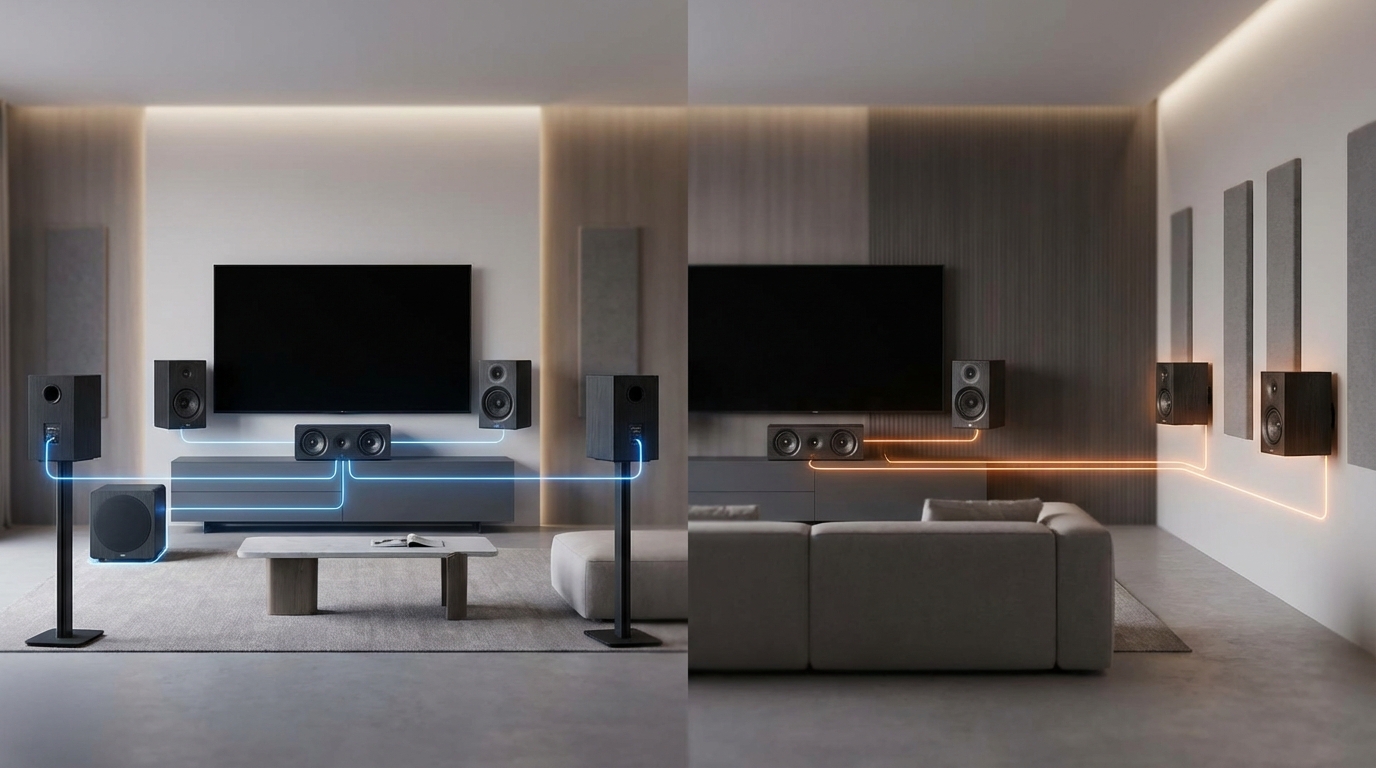
3. Experiment with placement locations
Once you have a good starting point from the crawl, try placing the subwoofer in different spots around the room:
- Near the front wall: Often a good choice to produce a more direct sound.
- In a corner: Can boost bass but might cause boominess if not carefully tuned.
- Along a side wall: Sometimes offers a balanced bass response.
Keep in mind that every room behaves differently. The key is to listen and compare.
4. Fine-tune with calibration tools
Once the subwoofer is in a promising location, use room calibration systems if available. Many AV receivers feature auto-calibration that adjusts for room acoustics. If not, manually adjust the subwoofer’s volume and crossover frequency for a seamless blend with your main speakers.
5. Confirm with real-world listening
Play your favorite music or movies. Walk around the room and listen from different spots. The bass should feel even and punchy without rattling or dead zones in certain areas.
Common mistakes to avoid when placing your subwoofer
| Mistake | Explanation | Result |
|---|---|---|
| Placing too close to walls | Can create exaggerated boomy bass | Uneven sound, muddiness |
| Sitting directly in front of the subwoofer | Can cause nulls or phase issues | Weak or canceled bass |
| Ignoring room reflections | Reflections can cause peaks and nulls | Unbalanced bass response |
| Using only one spot without testing | Different spots sound different | Suboptimal bass performance |
Techniques to optimize your subwoofer position
- The subwoofer crawl: As described, it helps you find the best spot.
- Distance from listening position: Keep the subwoofer within a few feet of your main seating area for balanced sound.
- Avoid placing directly behind furniture: Furniture can block or absorb bass.
- Experiment with corner placement: Corners amplify bass but may introduce resonances. Use acoustic treatments if needed to tame excessive boom.
“The key to great subwoofer placement is patience and listening. Move the sub around, test, and trust your ears. Small adjustments can make a big difference.” — Home theater experts agree that trial and error, combined with careful listening, leads to the best results.
Techniques and mistakes at a glance
| Technique | Advantage | Mistake to avoid |
|---|---|---|
| Subwoofer crawl | Finds optimal spot quickly | Relying solely on measurements without listening |
| Corner placement | Boosts bass response | Causes boominess if overdone |
| Distance testing | Ensures even coverage | Ignoring room acoustics |
| Manual calibration | Fine-tunes sound | Overlooking phase and crossover settings |
Adjust your system for the best sound
After positioning your subwoofer, calibrate your system. Use your receiver’s auto-calibration if it has one. Adjust the subwoofer’s volume and crossover frequency manually. Use test tones or a sound meter app to verify bass response. Remember that small tweaks often produce the most noticeable improvements.
Final tips for perfect subwoofer setup
- Avoid placing the sub near sensitive electronics: Interference can affect sound quality.
- Use acoustic treatments if needed: Bass traps or panels can tame excessive resonances.
- Revisit placement after adding new furniture or room modifications: Changes can alter acoustics.
- Trust your ears: Ultimately, your personal perception determines success.
Your path to deeper, more even bass
Finding the right spot for your subwoofer can seem like a game of trial and error. But with patience and a systematic approach, you can dramatically improve your sound. Remember to listen from your main seating area and test different locations. Small adjustments can unlock a richer, more immersive listening experience that makes movies and music come alive.
Final thought
A well-placed subwoofer is the backbone of a great home theater sound system. By following these steps and avoiding common pitfalls, you’ll enjoy deep, balanced bass no matter the room size or shape. Take your time, trust your ears, and enjoy the powerful soundscape you create.

Leave a Reply